Frederick, MD
Preventive Pest Service in Frederick, MD
Source-condition focused pest prevention — entry-point sealing, exclusion materials, exterior barrier treatment, and moisture guidance before infestations establish at your Frederick property.
Entry-Point Focused
Prevention starts with the gaps, cracks, and penetrations that pests use to enter. We identify them through inspection and address them with caulk, steel wool, hardware cloth, door sweeps, and chimney caps matched to the pest type and entry location.
Source Conditions — Not Just Barriers
A perimeter residual without addressing moisture, harborage, or food access is a temporary barrier over an active invitation. Preventive service addresses both the structural gaps and the conditions that attract pests to those gaps.
Best Before the Pest Season
Preventive treatment is most effective when applied before the pest's active season. Stink bug exclusion caulking in August. Mouse entry-point sealing in September before temperatures drop. Exterior ant barrier before spring foraging peaks. Timing is part of the prevention plan.
What Preventive Pest Service Addresses
Prevention is the IPM step that most service providers skip because it takes longer, requires more material, and is harder to sell than a spray visit. But it is the step that makes every other pest control effort last. If a mouse can enter through a 1/4 inch gap at a weep hole, bait stations in the interior will reduce population but not eliminate reinfestations. If stink bugs have an unnoticed gap above a window frame in a south-facing wall, fall perimeter spray will reduce infiltration but not stop it. Closing the entry points is the work that produces durable results.
The Prevention Toolkit: What Gets Used and Why
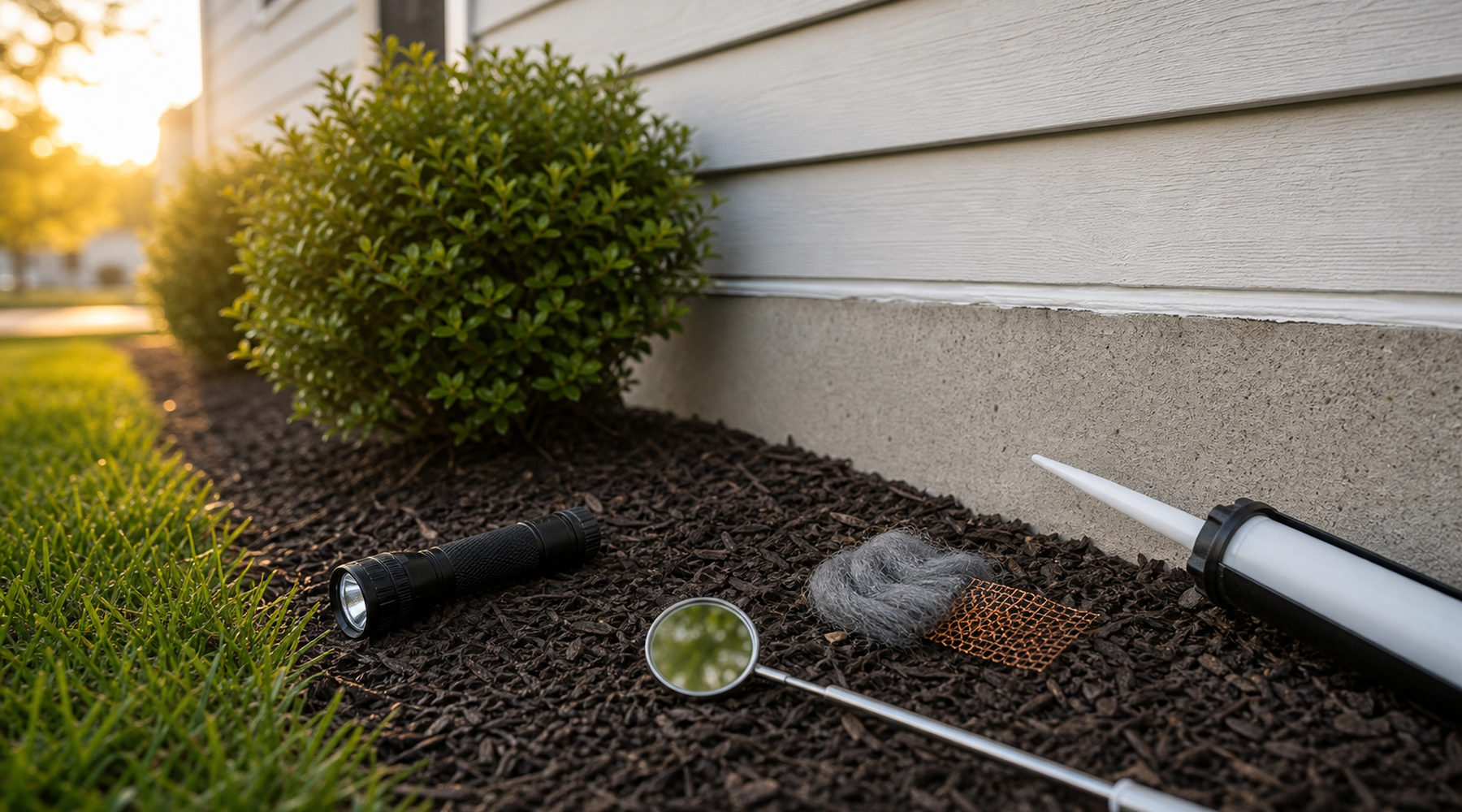
Caulk: Applied at foundation cracks, utility penetrations, window frames, door frames, and gaps in siding — effective for insects and overwintering pests like stink bugs and boxelder bugs seeking small entry gaps.
Steel wool: Compressed into pipe penetrations and larger gaps where rigid patching is not practical — mice cannot chew through it, making it effective for entry points around plumbing under kitchen sinks and in utility rooms.
Hardware cloth (1/4 inch mesh): Used over larger openings — crawl space vents, weep hole arrays, attic vents, and chimney openings — to exclude mice, rats, and larger insects while maintaining airflow.
Door sweeps: Installed at garage doors, exterior entry doors, and cellar doors where gaps under doors are large enough for mouse entry (1/4 inch clearance is sufficient).
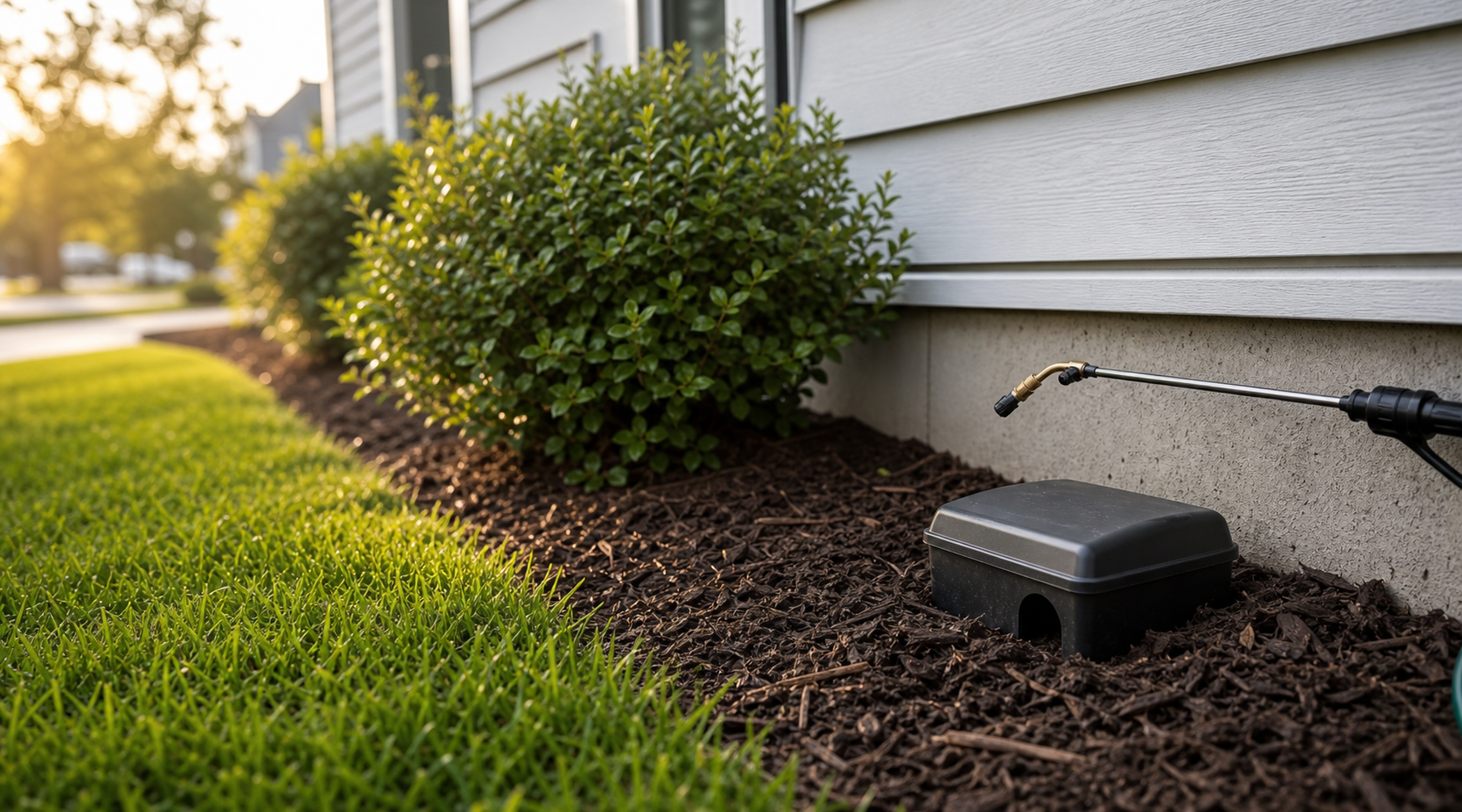
Residual barrier: Applied at the foundation perimeter, window wells, and entry zones before seasonal pest pressure peaks — creates a contact-kill zone for ants, cockroaches, and other crawling insects crossing the treated surface.
Moisture and Harborage Guidance
Entry points are only part of the prevention picture. Moisture conditions attract pests before they ever reach a gap — standing water near the foundation, grading that directs runoff toward the structure, mulch banked against siding, and leaking gutters that saturate wood framing all create pest-favorable conditions that chemical treatment cannot resolve. We identify those conditions during the inspection and give you specific, actionable guidance on what to address rather than a generic homeowner checklist.
When to Schedule Preventive Service
The most effective timing for preventive pest service in Frederick: Late summer (August) for stink bug and boxelder bug exclusion before the fall infiltration window. Early fall (September) for mouse entry-point sealing before population pressure increases. Early spring (March) for exterior barrier application before carpenter ant and pavement ant foraging begins. New construction and post-renovation: immediately after work is complete and before occupancy, when new gaps and disturbed entry points are freshest.
How Preventive Pest Service Works
Entry-Point Inspection
Systematic perimeter walk documenting all gaps, cracks, penetrations, and structural features that represent pest entry risks. Findings documented with location and severity notes.
Source Condition Assessment
Moisture zones, harborage areas, vegetation contact, mulch depth, grading issues, and food access conditions noted alongside entry-point findings.
Exclusion and Barrier Work
Caulk, steel wool, hardware cloth, and door sweeps applied to priority entry points. Exterior residual barrier applied at foundation and entry zones.
Guidance and Follow-Up Plan
Walk-through of findings, completed work, and remaining conditions the property owner should address. Follow-up inspection window set for seasonal verification.
Schedule Preventive Pest Service Before Your Property's Peak Season
Call (240) 555-0157 or contact us online. Late summer and early fall bookings for stink bug and rodent prevention fill quickly — schedule early in the season.
Request ServicePreventive Service Questions
Can you seal every entry point in an older Frederick home?
Older Frederick homes — especially historic downtown properties and homes built before 1980 — often have dozens of potential pest entry points in varying states of seal. We prioritize entry points by pest type and activity evidence: mouse-sized gaps (1/4 inch and larger) at ground level and around plumbing penetrations are the first priority for rodent exclusion. Stink bug exclusion focuses on upper-story gaps around windows, soffits, and roof penetrations. Some entry points in difficult-to-access locations require more than caulk — framing or siding repairs that fall outside pest control scope but that we will identify and document so you can address them separately.
Does preventive service replace the need for active pest treatment?
Preventive service reduces the probability and severity of infestations — it does not guarantee a pest-free property indefinitely. Exterior pressure is continuous, structural gaps reopen as buildings settle and weather, and new construction or renovation always creates new entry opportunities. Most properties benefit from a combination of preventive exclusion work and a recurring treatment plan. Preventive service makes each treatment visit more effective by reducing the re-entry rate between visits.
What is the difference between exclusion work and a standard perimeter treatment?
Exclusion is physical: closing gaps with materials that pests cannot pass through — caulk, steel wool, hardware cloth, door sweeps. A perimeter residual barrier is chemical: applying a contact-kill or repellent product at the foundation line and entry zones. Both have a role, but exclusion addresses the root cause (the gap exists) while a barrier addresses the symptom (pests crossing the treated surface). Exclusion work lasts until the building shifts again. A chemical barrier needs reapplication every 60-90 days. The most durable pest prevention combines both.
Related Services
Rodent Exclusion
Dedicated rodent entry-point sealing for Frederick homes — the structural component that makes mouse and rat control results last.
Stink Bug Control
Fall exclusion caulking and perimeter barrier for brown marmorated stink bug infiltration prevention in Frederick homes.
Quarterly Pest Control
Preventive service pairs naturally with quarterly treatment — each seasonal visit reinforces the prevention work done at your property.