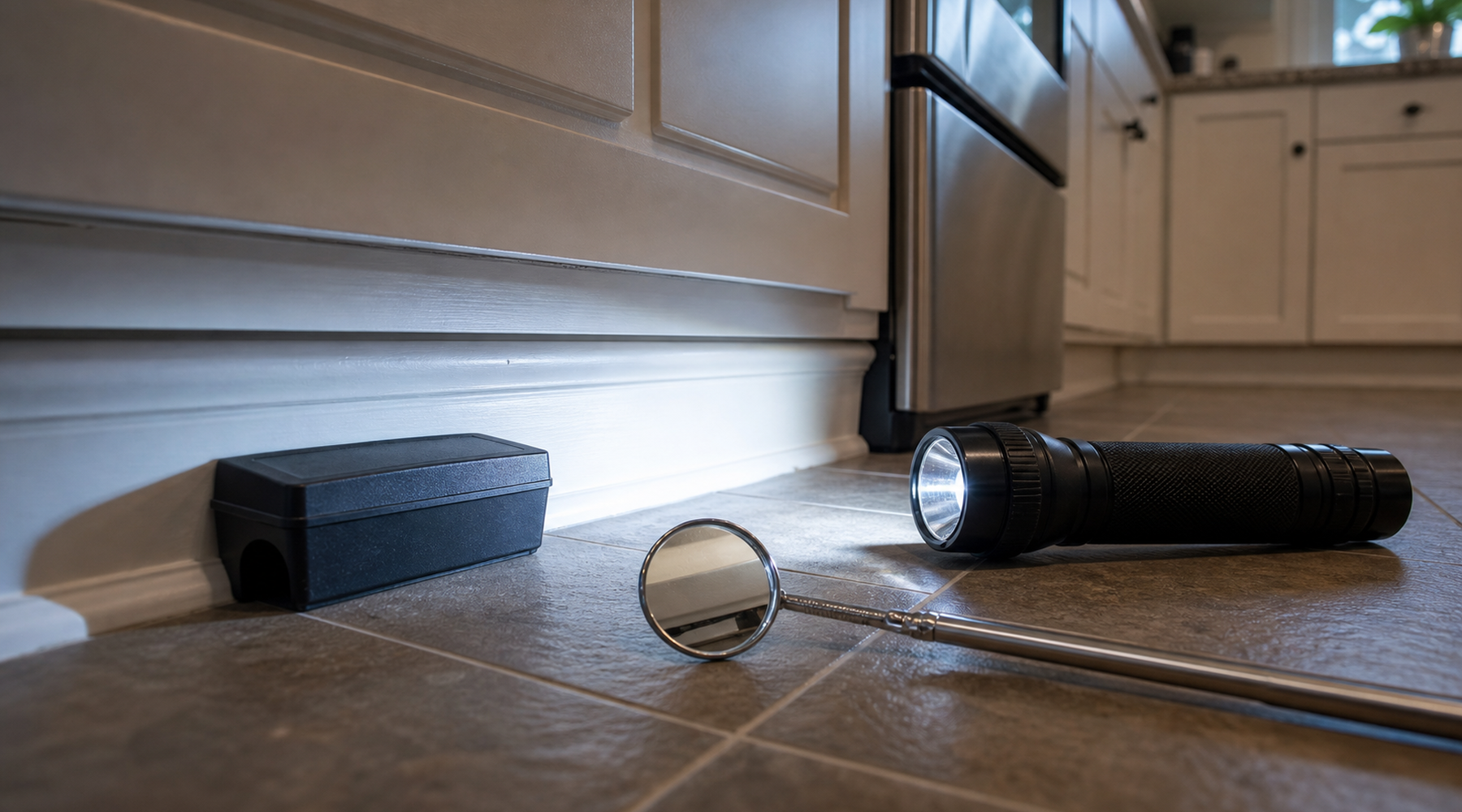
Frederick, MD
Residential Pest Control in Frederick, MD
Home pest service built around inspection and source identification — not a default spray package. We find what is driving the pest activity before recommending treatment.
Full Perimeter Inspection
Every residential service starts at the exterior: foundation gaps, utility penetrations, mulch lines, moisture zones, and pest entry routes documented before any interior treatment begins.
Species-Specific Treatment
Carpenter ants need moisture-source investigation and exterior baiting. German cockroaches need gel bait in harborage zones. Mice need snap traps and entry-point sealing. The treatment matches the pest — not a catch-all spray.
Prevention Built Into Every Visit
We identify the conditions that allowed the pest to establish — entry gaps, moisture, food access, harborage — and give you specific guidance on what to change to reduce return pressure.
What Residential Pest Control in Frederick Actually Covers
Frederick homes face a range of pest pressures year-round. Carpenter ants tunnel in spring and summer. Mice push inside as temperatures drop. Stink bugs aggregate in September and October. German cockroaches establish where moisture and food debris accumulate. A residential pest plan has to account for all of it — not just the pest you called about.
IPM Applied to Frederick Homes: What It Looks Like in Practice
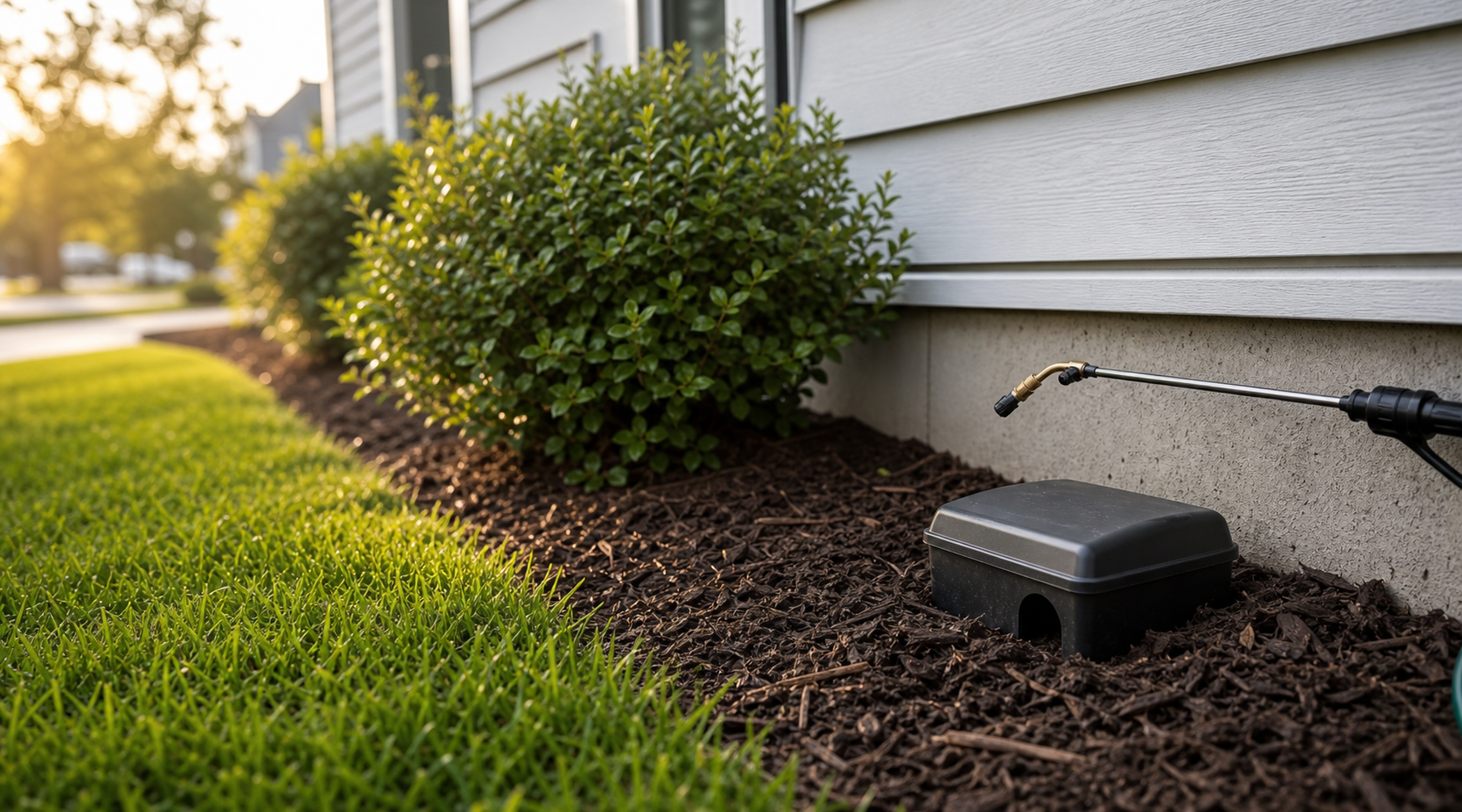
Integrated Pest Management at the residential level means we do not open the service call with a spray gun. We open it with questions: What are you seeing? Where? Since when? Have there been any changes — construction, new landscaping, pet food moved outside, a water leak? Those answers, combined with the exterior inspection, tell us which pests are active, where they are coming from, and what the pressure driver is.
For a typical Frederick home, that process might reveal carpenter ants trailing from a moisture-damaged soffit into the kitchen — which calls for exterior bait and moisture repair guidance, not interior residual spray. Or it might reveal a mouse entry gap at a weep hole in the brick veneer that has been open since the home was built. Or a stink bug exclusion gap above the window frame that becomes critical in late September. Each finding changes the plan.
Seasonal Residential Pest Pressure in Frederick
Spring through summer brings ant and spider pressure, occasional stinging insect nest establishment, and flea and tick activity in homes with pets or wooded yards. Late summer and fall bring stink bug infiltration, boxelder bug aggregations, and the beginning of mouse pressure as outdoor temperatures drop. Winter concentrations continue mouse activity and may surface German cockroach populations in kitchens that were manageable in warmer months. A year-round perspective lets you plan service timing before each pressure window rather than reacting after.
When to Call vs. When to Watch
A single ant in the kitchen in May is a watch situation. A line of ants trailing from an exterior wall joint to behind the refrigerator is a call situation. Two mouse droppings near the stove is a call situation — because where there is evidence of two mice, there are usually more, and the population grows through winter. A wasp nest under the deck eave 10 feet from your door is a call situation before it reaches full colony size in August. We are happy to help you sort visible signs from action thresholds if you are unsure.
How Residential Pest Control Works
Schedule and Brief
Tell us the pest, location, and timing when you schedule. We arrive prepared for the likely pest scenario based on your description.
Inspect Exterior and Interior
Full perimeter walk and interior inspection. We document pest activity, entry points, harborage, moisture, and conditions that contribute to pressure.
Treat Active Zones
Apply targeted treatment to active pest zones — bait, residual, trap, or exclusion materials based on species and infestation level. Safety steps explained before application.
Confirm and Follow Up
We explain what to expect after treatment, what activity signals warrant a follow-up call, and what prevention steps to take before the next pressure window.
Ready to Schedule Residential Pest Control in Frederick?
Call (240) 555-0157 or contact us online. Same-week scheduling available for most residential pest types throughout Frederick County.
Request ServiceResidential Pest Control Questions
How long does a residential pest control visit take?
A standard residential service visit including exterior and interior inspection and treatment typically takes 45 to 90 minutes depending on property size and the number of pest issues present. Larger homes with multiple active pest situations or extensive exclusion needs may take longer. We do not rush the inspection phase — finding the source conditions is what makes the treatment result last.
Is residential pest control safe for children and pets?
We explain all safety precautions before applying any products. Most residual treatments require people and pets to remain out of treated areas for 30 to 60 minutes while the product dries. Gel baits placed in cabinet crevices and harborage zones are low-exposure applications. We use the least-impact products that will resolve the active pest pressure. If you have specific concerns about product categories, let us know when you schedule — we can adjust approach or product selection accordingly.
What is the difference between a one-time treatment and a quarterly plan for my Frederick home?
A one-time treatment addresses active pest pressure at a specific point in time. It is appropriate for a single-species infestation, a pre-sale or pre-move service, or a pest event tied to a specific seasonal trigger. A quarterly plan visits your home four times per year — aligned to Frederick's spring, summer, fall, and winter pest pressure windows — and allows us to catch emerging issues before they become infestations. Homes with a history of multiple pest types, high exterior pressure, or proximity to woods or water typically benefit from a recurring program.
Related Services
Quarterly Pest Control
Four visits per year aligned to Frederick's seasonal pest windows — ants, insects, rodents, and stink bugs covered on a rotating schedule.
Rodent Exclusion
Entry-point sealing for Frederick homes — the permanent layer that makes any rodent treatment program last.
Ant Control
Carpenter ant, pavement ant, and odorous house ant treatment for Frederick homes — exterior baiting and source identification.