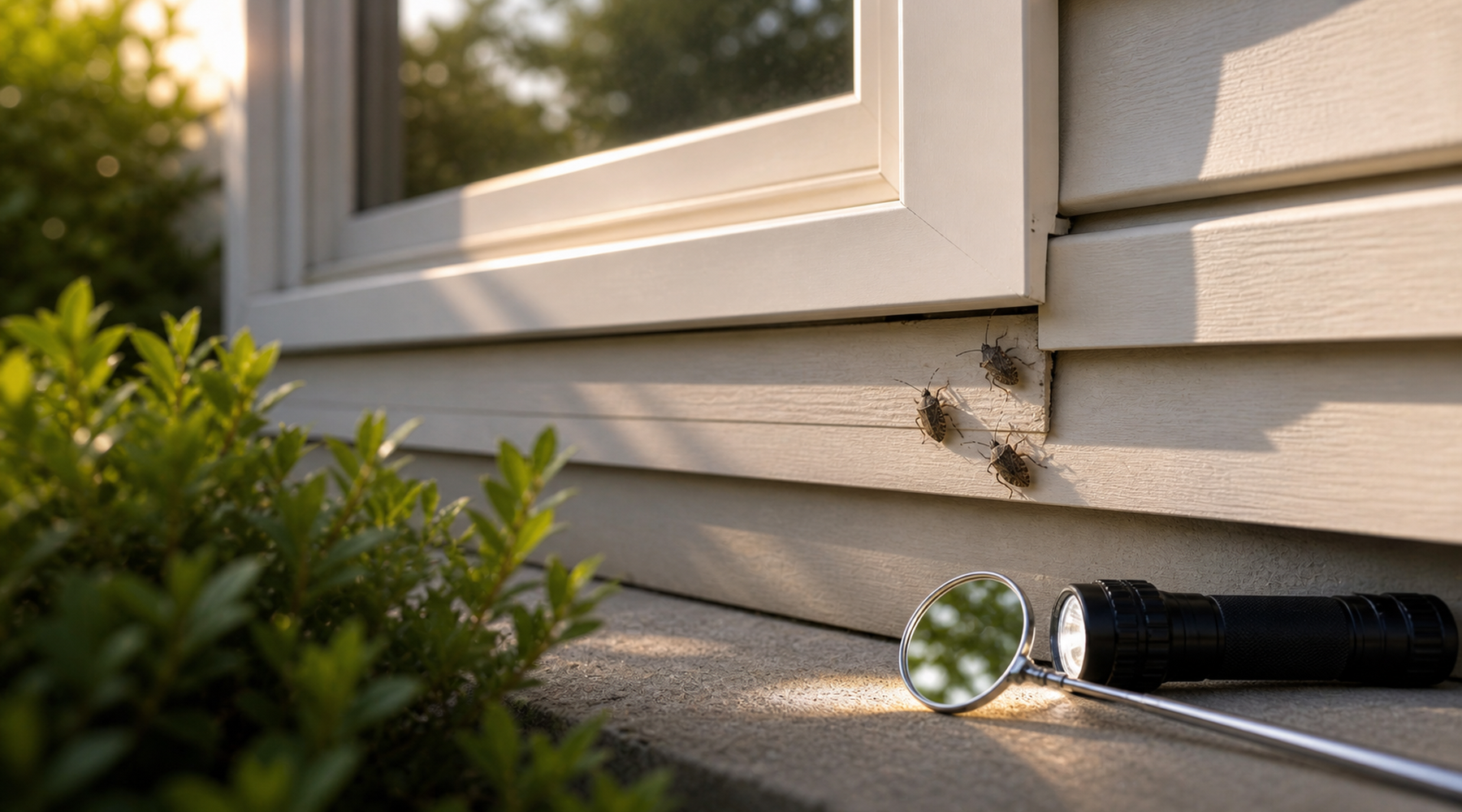
Frederick, MD
Stink Bug Control in Frederick, MD
Brown marmorated stink bugs arrive in Frederick in September and October seeking overwintering sites inside structures. Exclusion — caulking, screening, and gap sealing — is the most effective control strategy, and timing it before the infiltration window is critical.
Exclusion Before October Is the Strategy
Brown marmorated stink bugs (Halyomorpha halys) aggregate on south and west-facing walls in September as day length shortens and temperatures drop. They seek gaps to overwinter inside warm structures. Caulking those gaps in August and early September — before aggregation begins — is significantly more effective than treating after they are already inside.
Perimeter Barrier as a Secondary Layer
Exterior residual insecticide applied to the foundation perimeter, window frames, and south-facing wall surfaces in September creates a contact-kill zone for stink bugs crossing the treated surface. It reduces infiltration but does not replace exclusion work — open gaps will still admit bugs regardless of barrier treatment.
Interior Aggregations Are a Removal Problem
Stink bugs that have already overwintered inside the wall cavity will emerge in spring as temperatures rise. Interior aggregations in attics, window frames, and wall voids are best addressed with vacuum removal — crushing or spraying stink bugs inside releases the defensive odor compound and can attract other bugs to the site.
Stink Bug Season in Frederick, MD: What to Expect and When
Frederick, Maryland is in the core range of the brown marmorated stink bug (BMSB), an invasive species from Asia that was first detected in Allentown, Pennsylvania in the 1990s and spread rapidly through Maryland in the following decade. Frederick properties — particularly those adjacent to orchards, woodlands, or ornamental plantings that serve as BMSB host plants — face some of the most consistent stink bug pressure in the mid-Atlantic region. The September-October aggregation and infiltration window is predictable and plannable: properties that schedule exclusion work in August reliably see lower interior counts than those that do not.
Where Stink Bugs Enter Frederick Homes
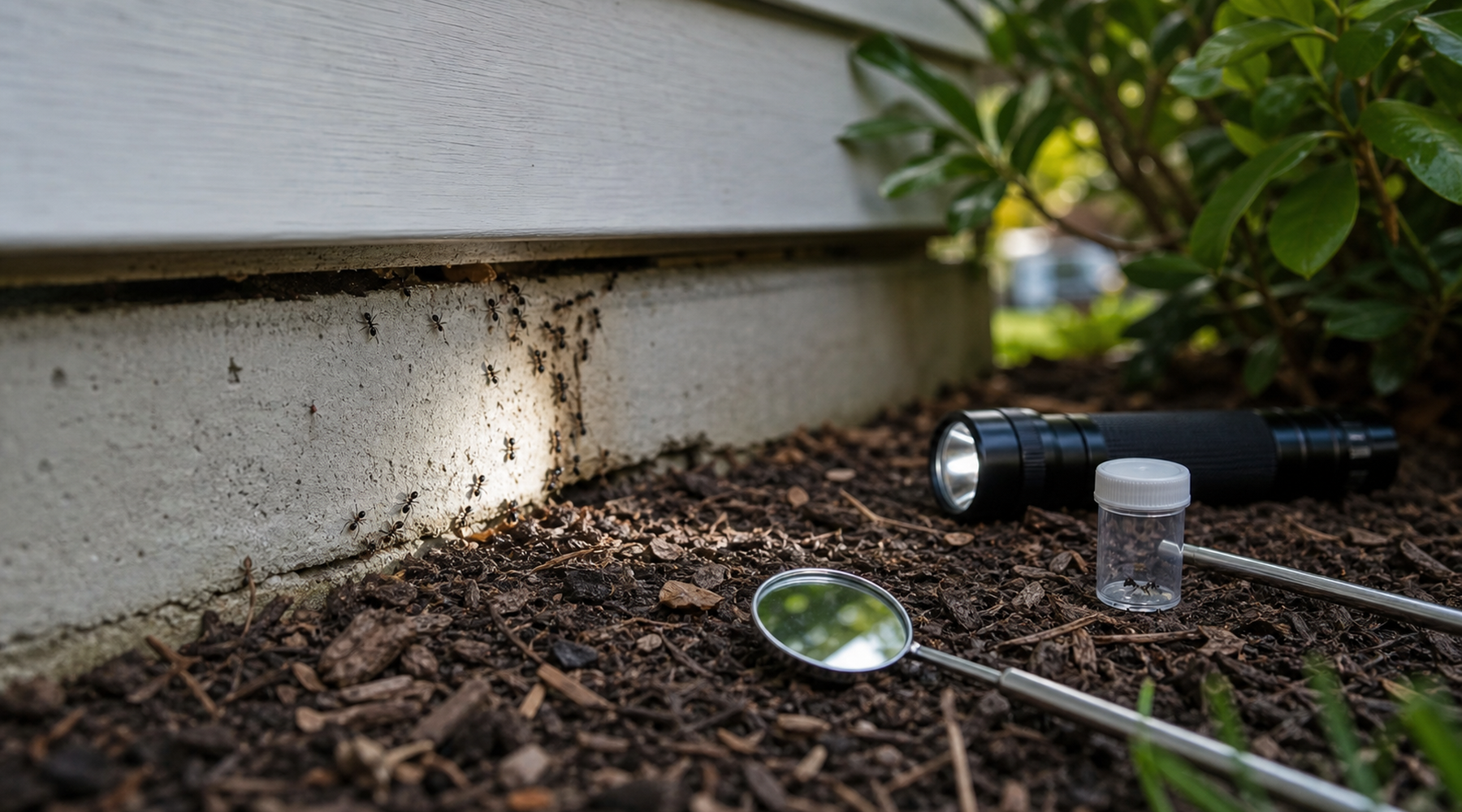
Brown marmorated stink bugs are skilled gap-finders. They seek small openings on warm, sunlit surfaces — typically south and west-facing walls — in September and October. The most common entry points in Frederick homes are: gaps around window frames and door frames where caulk has cracked or pulled away from the frame; gaps at the junction between siding and foundation; utility penetrations where electric, gas, and cable lines enter the structure; weep holes in brick veneer (standard construction in many Frederick neighborhoods); soffit-to-fascia gaps; and attic vent screens that have deteriorated or are not fine enough mesh to exclude the 14-17 mm adult bug.
South-facing walls concentrate the most stink bug aggregation because they receive the most direct sunlight in the late afternoon hours when stink bugs are most actively seeking entry. West-facing walls are the second most common aggregation surface. On warm October afternoons, hundreds of bugs can be visible on a single exterior wall — a phenomenon that alarms homeowners but is actually easier to intercept with exclusion than interior infestations that have already dispersed into wall voids.
What Happens to Stink Bugs That Get Inside
Stink bugs that successfully enter a structure in fall seek dark, cool, undisturbed spaces — attic insulation, wall voids, behind stored items in unused rooms, and inside hollow curtain rods. They enter a state of reduced activity (quiescence) through winter. As interior temperatures rise in late February and March, they become active again and begin moving toward light sources and warmth — which is when homeowners see them walking across walls, collecting on sunny windowsills, and falling from ceiling light fixtures. This spring emergence is the second peak complaint period, even for properties that saw only modest fall infiltration.
Why Chemical Treatment Alone Does Not Solve Stink Bugs
No pesticide eliminates the exterior aggregation behavior that drives stink bug infiltration — that is a biological response to photoperiod and temperature cues that external chemistry cannot override. Perimeter residual treatment reduces the number of bugs that successfully cross the foundation zone to reach entry gaps, but it does not stop aggregation on the wall surface above the treated zone. Exclusion — closing the gaps that bugs would use to enter — is the only method that directly blocks the pathway. Treatment and exclusion together produce the best result. Treatment alone produces a partial reduction that requires re-application each fall.
How Stink Bug Control Works
Exterior Gap Inspection
Walk all exterior walls, particularly south and west-facing, documenting gaps at window frames, door frames, utility penetrations, weep holes, soffits, and vents.
Exclusion Work
Caulk application at all documented gaps. Weep hole screens or covers at brick veneer entries. Replacement or reinforcement of deteriorated vent screens in attic and soffit areas.
Perimeter Barrier Application
Residual insecticide applied to foundation perimeter, lower wall surfaces, and window and door frames in September. Timed to coincide with the beginning of the stink bug aggregation window.
Interior Removal Guidance
For properties with existing interior infestations: vacuum removal protocol, spring emergence management, and guidance on not crushing or spraying bugs inside the living space.
Schedule Stink Bug Exclusion Before September
Call (240) 555-0157 or contact us online. August and early September are the optimal timing for stink bug exclusion work — schedule before the aggregation window begins.
Request ServiceStink Bug Questions
Is it too late to do stink bug treatment if they are already inside?
If stink bugs are already inside the wall cavity or attic in fall, exclusion work will prevent additional entry for the current season and significantly reduce infiltration in future seasons. It will not eliminate bugs already inside — they will need to be vacuumed out as they emerge in spring. Even if you missed the ideal pre-infiltration window, completing the exclusion work now still provides meaningful protection for the spring emergence period and gives you full protection for the following fall season. Do not skip the exclusion work because infiltration has already occurred — the problem will repeat for years if entry points remain open.
Why do stink bugs keep coming back every year to the same house?
Stink bugs use aggregation pheromones — chemical signals released by the first bugs to find a suitable overwintering site. Those pheromone deposits on the exterior of your structure persist from year to year and attract subsequent bug cohorts to the same location each fall. This is why properties that had stink bug problems in prior years tend to have them again — the structure is chemically marked as a suitable site. Thorough exclusion work that closes all entry gaps, combined with a fall perimeter barrier treatment, interrupts both the chemical signal effect and the physical entry pathway. Without both steps, the marking behavior brings bugs back to the same wall surfaces annually.
What about stink bug traps?
Light traps and aggregation pheromone traps are available for stink bugs and can capture significant numbers of individual bugs. They are most useful as monitoring tools to confirm presence and population density rather than as primary control. No trap system is capable of intercepting the full influx that occurs on a high-pressure aggregation day in October. They can supplement exclusion and barrier treatment by capturing bugs that enter through small gaps the exclusion work missed, but they should not be the primary strategy. Interior sticky traps near light sources capture emerging bugs in spring and are a reasonable addition to a spring emergence management plan.
Related Services
Boxelder Bug Control
Boxelder bugs follow the same fall infiltration pattern as stink bugs — exterior perimeter treatment and exclusion are the same tools, often scheduled together.
Preventive Pest Service
Comprehensive gap sealing and exclusion work for Frederick homes — the foundation of effective stink bug and overwintering pest prevention.
Attic Pest Control
Attic inspection for overwintering stink bug aggregations, bat entry, and insect harborage in Frederick homes.