Frederick, MD
Rodent Exclusion in Frederick, MD
Trapping controls the current population. Exclusion stops the next one. Full entry-point sealing with steel wool, hardware cloth, caulk, and door sweeps is the structural layer of rodent control that makes every treatment result last.
Steel Wool for Pipe Penetrations
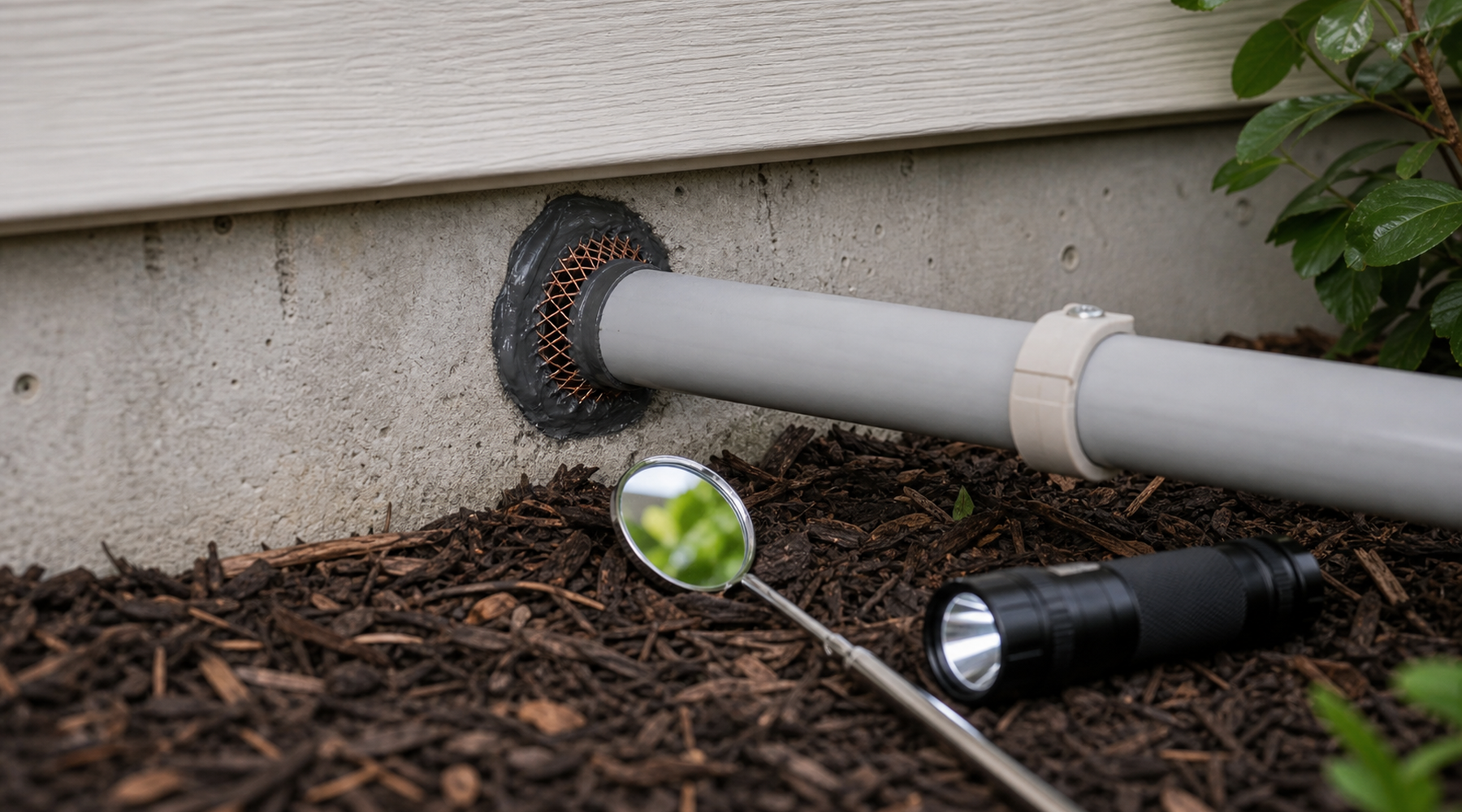
Compressed steel wool packed into gaps around pipe penetrations is the standard exclusion material for mouse entry points that cannot be rigid-patched. Mice cannot chew through steel wool, making it effective even at gaps that would require extensive carpentry to patch properly.
Hardware Cloth for Larger Openings
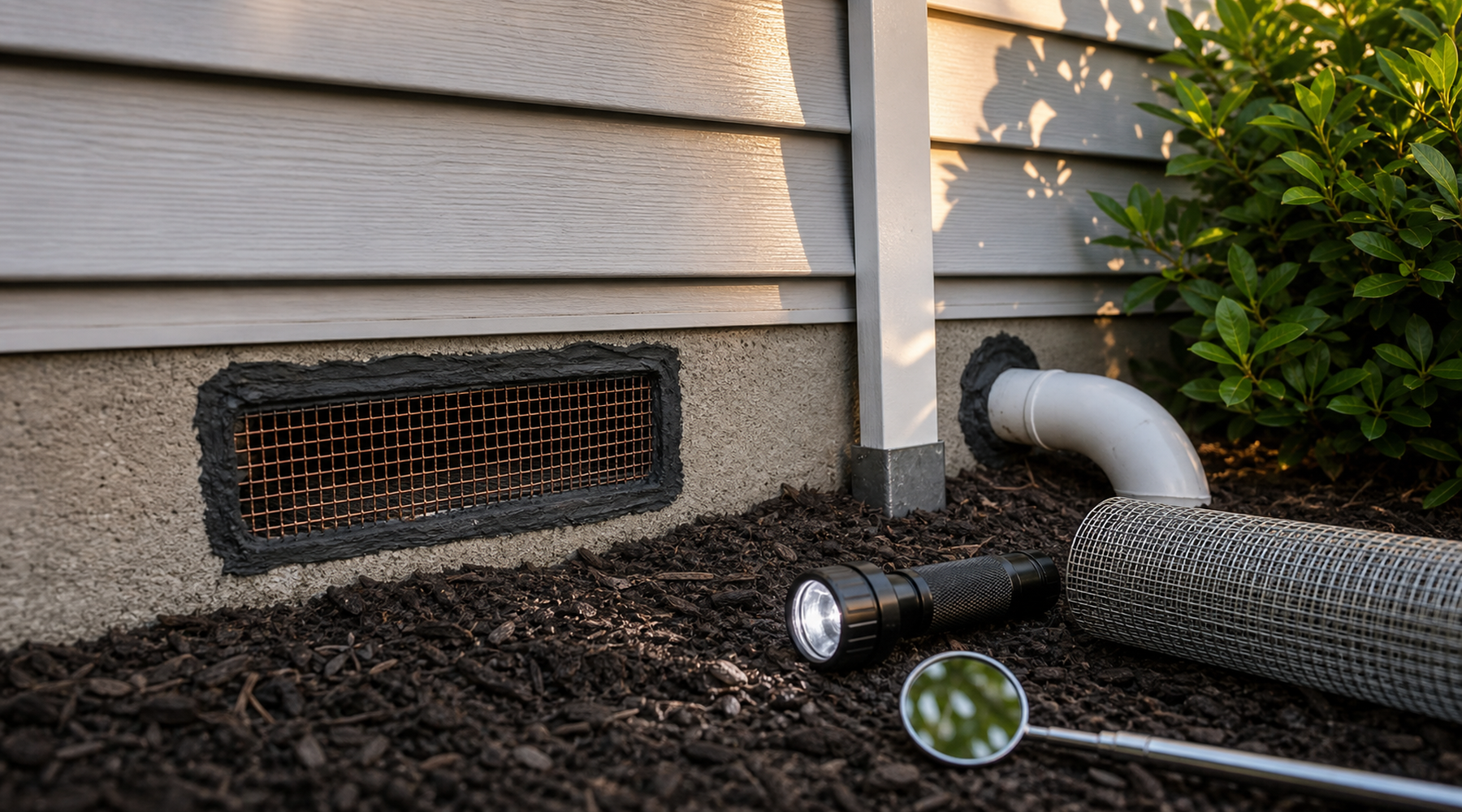
1/4 inch hardware cloth (galvanized wire mesh) is used to cover larger openings — crawl space vents, attic vents, weep hole arrays, and foundation openings — that need to remain functional for ventilation while excluding mice and rats.
Door Sweeps and Chimney Caps
Gaps under exterior doors, garage doors, and cellar doors are addressed with door sweeps. Chimney openings without caps are an attic access point for squirrels and occasionally rats — chimney caps close that route while maintaining proper draft function.
Why Exclusion Is the Only Permanent Rodent Solution
A trapping program that runs indefinitely without exclusion work is not rodent control — it is continuous population management at the property's expense. Without closing the entry points, a Frederick home near any outdoor rodent harborage will always have re-entry pressure. Mice establish scent trails at entry gaps, and those trails attract subsequent mice even after the original population is removed. Steel wool, hardware cloth, and caulk do not expire, do not require renewal, and do not have safety concerns. They are the answer to why treatment results do not last.
Exclusion Materials and Where Each Is Used
Steel wool (copper or galvanized): Packed tightly into gaps around pipe penetrations under kitchen and bathroom sinks, around utility chase openings, and at gaps in the base of interior walls where plumbing or wiring runs. Steel wool compressed to fill a gap cannot be chewed through by mice. It should be used with caulk or expanding foam applied over it for a more permanent seal — the foam adheres the steel wool in place and fills the gap edges. Copper steel wool (like Stuff-It brand) resists rusting better than galvanized in damp under-sink environments.
1/4 inch hardware cloth: Installed over crawl space vents, attic vents, gable vents, weep hole arrays, and any opening that needs to remain open for ventilation. The 1/4 inch mesh size excludes mice (which need a 1/4 inch gap) and with adequate material gauge also slows rat penetration at most access points. Hardware cloth should be secured with screws or staples and caulked at the edges to prevent peeling away from the siding or foundation over time.
Caulk: Paintable exterior caulk applied at foundation cracks, window frame gaps, door frame gaps, siding-to-foundation junctions, and gaps around utility entries. Effective for insect exclusion at the same time as rodent exclusion at small gaps. Caulk over a gap needs to be applied in adequate depth — a surface bead over a visible gap is a cosmetic fix, not an exclusion fix.
Door sweeps: Installed at the bottom of exterior doors, garage service doors, and cellar doors where the gap clearance is greater than 1/4 inch. Brush-type sweeps maintain function across uneven thresholds. Solid rubber sweeps provide better seal on even surfaces.
Exclusion in Older Frederick Construction
Historic downtown Frederick homes, pre-1980 residential construction, and older brick-construction properties have characteristically more exclusion needs than newer construction. Foundation settling creates gaps at the sill plate. Older plumbing has larger and less carefully finished penetrations. Weep holes in brick veneer are standard construction features that are never sealed. Window frames in older homes often have shrunken wood and gaps at the exterior frame edge. A systematic exclusion inspection of an older Frederick home typically identifies 10-20 entry-point candidates that newer construction would not have. This is not a failure of the building — it is the expected state of a structure that has experienced decades of thermal cycling and settling.
How to Tell if Your Exclusion Work Is Holding
After exclusion work is complete, the measure of success is zero new rodent entry evidence over 30-60 days of monitoring. Signs that entry points may have been missed or that new gaps have opened: fresh droppings in the kitchen or along baseboard runs; new gnaw marks at a previously clean area; scratching sounds returning in a wall that was quiet after trapping; or snap traps that were previously empty beginning to catch mice again. Any of these signals calls for a re-inspection of the exclusion work — often a single missed gap or a new gap opened by settling or seasonal temperature movement is the culprit.
How Rodent Exclusion Works
Gap Inventory Inspection
Full perimeter walk documenting every potential rodent entry point by location, size, and material type. Interior inspection to confirm active entry zones correlate with exterior findings.
Material Selection and Installation
Steel wool, hardware cloth, caulk, and door sweeps installed at priority entry points in sequence from highest-risk (confirmed active entry) to lower-risk (potential but unconfirmed) locations.
Documentation
Written record of all gaps addressed, materials used, and any gaps that require structural repair beyond exclusion material scope. Provided to property owner for reference.
Verification Follow-Up
Follow-up inspection 30 days after exclusion work to confirm no new entry evidence. Any gaps that require re-treatment or additional material are addressed at no additional labor charge within the follow-up window.
Ready to Permanently Close Rodent Entry Points at Your Frederick Property?
Call (240) 555-0157 or contact us online. Exclusion work is most effectively scheduled alongside or immediately following an active rodent trapping program.
Request ServiceRodent Exclusion Questions
How much does rodent exclusion typically cost in Frederick?
Rodent exclusion cost depends on the number of entry points found, the materials required, and the accessibility of gap locations. A straightforward exclusion visit for a typical Frederick home with 5-10 identified entry points is a half-day job for one technician. Larger older homes or properties with extensive weep hole arrays, multiple crawl space vents, and complex pipe penetration zones require more material and labor. We provide a written scope and price estimate after the inspection — we do not quote exclusion jobs sight unseen because the variable that matters most is the number and location of gaps, which can only be determined on site.
Can you do exclusion without an active rodent problem?
Yes — and this is actually the ideal scenario. Preventive exclusion done before a rodent infestation establishes is less costly than exclusion combined with a trapping program after the fact. Properties in Frederick neighborhoods with active rodent pressure from adjacent wooded areas, storm water corridors, or commercial food waste sources benefit significantly from preventive exclusion — it interrupts the establishment cycle before it begins. Annual inspection of prior exclusion work is a worthwhile maintenance step because thermal cycling, settling, and renovation work can open new gaps over time.
What gaps are too large for exclusion materials and need a contractor?
Gaps that exceed what can be bridged with hardware cloth and caulk — typically openings wider than 4-6 inches, large foundation cracks that indicate structural movement, rotted sill plate sections that need replacement, or missing foundation sections — are outside pest control exclusion scope and need a contractor for structural repair. We document those findings during the exclusion inspection and note them separately from the exclusion work we complete. Addressing structural issues alongside exclusion material installation produces the most durable result, and we can help you prioritize which structural repairs are most urgent from a pest entry standpoint.
Related Services
Mouse Control
Active population reduction that precedes and combines with exclusion work for complete Frederick house mouse management.
Preventive Pest Service
Comprehensive exclusion and source-condition prevention — extends beyond rodent entry points to address overwintering insects and general pest exclusion.
Crawl Space Pest Control
Crawl space vent screening and rodent entry-gap sealing — a critical zone for rodent exclusion in Frederick homes with crawl space foundations.