Frederick, MD
Wasp Nest Removal in Frederick, MD
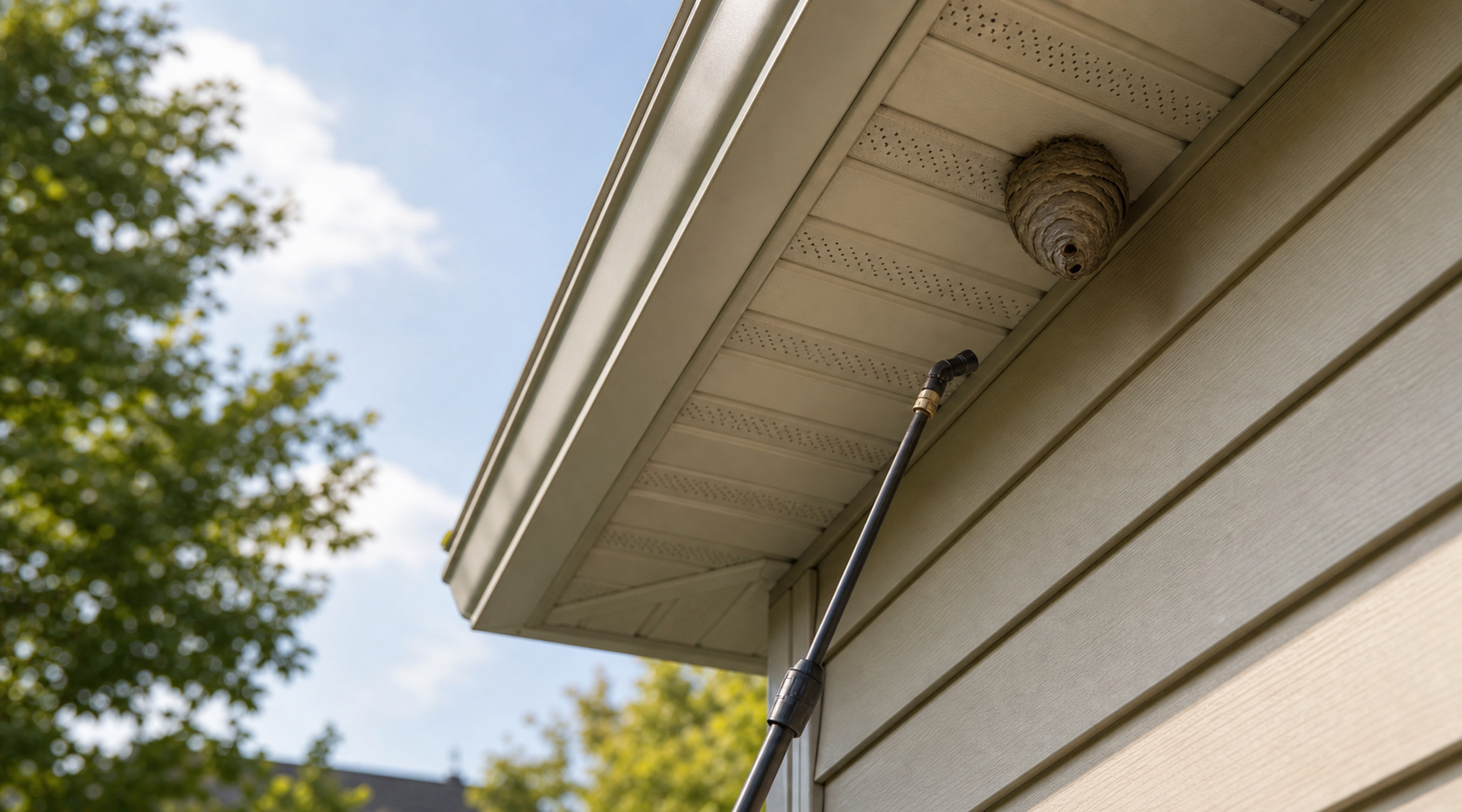
European paper wasps build open-comb nests under eaves, on railings, and beneath deck surfaces throughout Frederick. Same-day or next-day nest treatment available for nests near entry points or high-traffic areas.
Treatment at Dusk for Maximum Effectiveness
Wasp nest treatment is most effective at dusk when all foragers have returned to the nest. Treating during peak foraging hours leaves a significant portion of the colony away from the nest and able to re-establish after treatment. Dusk treatment eliminates the full resident population in a single application.
Open-Comb vs. Enclosed Nests
European paper wasps (Polistes dominula) build open-comb umbrella-shaped nests with exposed cells visible from below. This nest type responds well to direct contact insecticide application. Enclosed nests in wall voids or under composite decking require a different approach — dust or foam treatment into the void rather than surface spray.
Physical Removal After Treatment
After wasp nest treatment, the dead nest should be physically removed. An untreated nest left in place after prior use attracts new queens the following season who frequently reuse the same nest site. Removal plus prevention guidance reduces annual nest re-establishment at the same locations.
Paper Wasp Nests in Frederick: When to Call and When to Watch
A small paper wasp nest with fewer than 10 cells under a deck rail in an area you do not frequently use is a watch situation — it may be abandoned before the season ends. A paper wasp nest above your front door, at a gate latch you open daily, under a deck surface above a seating area, or at the hinge plate of your garage service door is a call situation. Wasp stings from incidental contact at a nest near a high-traffic area are a predictable outcome that escalates as the colony grows through summer. Early-season treatment when nests are small is faster, cheaper, and lower risk than treating a mature colony in August.
Paper Wasp Biology and Why It Matters for Treatment
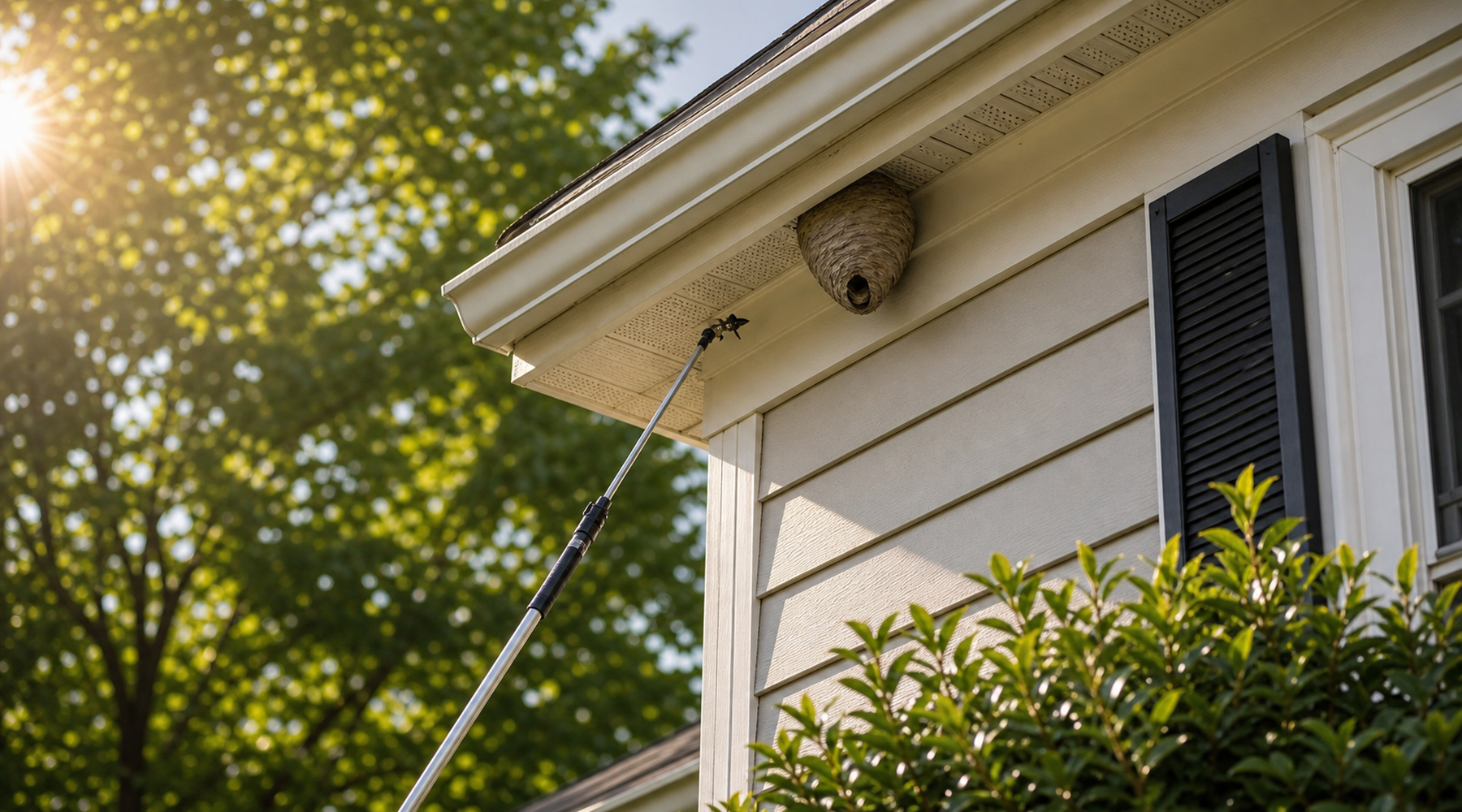
European paper wasps (Polistes dominula) are the most commonly encountered wasp species in Frederick residential settings. They are slender, yellow-and-black wasps (often confused with yellow jackets) that build the familiar open-comb papery nests under horizontal overhangs. A single overwintered queen starts a nest in March or April; by August a mature nest may have 150-200 cells and 30-50 workers. Workers are protective of the nest but not as aggressively defensive as yellow jackets — they do not typically pursue threats beyond the immediate nest zone.
The important biology for treatment: wasps treat the nest as the fixed resource they defend. A fast-acting pyrethroid spray applied directly to the nest surface at dusk — when all workers and the queen are on the nest — eliminates the colony in a single application. The same spray applied at noon, when a third of the workers are foraging, leaves a surviving cohort that returns to the treated nest site and may rebuild. Timing is not a minor detail — it is what determines whether the job is done in one visit.
After treatment, the dead nest should be scraped away. Paper wasp queens emerge from overwintering sites in March and search for previous-year nest sites to reuse as a foundress location. A nest left in place, even dead, provides a pheromone-marked location that new queens find and attempt to reuse the following spring. Removal eliminates this reuse attractant and reduces repeat-service calls at the same location year over year.
Common Wasp Nest Locations in Frederick Homes
Paper wasp nests in Frederick homes are most commonly found under the horizontal surfaces that receive the most shelter from rain and wind: the undersides of deck rails and ledger boards, the ceiling surface of open porches, the fascia and soffit junction at the eave line, under window trim and shutters, inside the frames of exterior light fixtures, under stair risers, and at the hinge and strike plate locations of exterior doors. Inspection of all of these locations before the mid-summer peak — when nests are still small and easier to treat — is part of every quarterly pest control visit we do.
Nests in Difficult Locations
Wasp nests in enclosed spaces — inside open-frame siding, behind shutters mounted flush against the wall, inside hollow post caps, inside electrical meter bases or HVAC equipment housings, or inside void spaces accessible only through a small opening — cannot be treated effectively with direct surface spray. These situations require aerosol or dust insecticide injected into the void opening, which requires knowledge of the space geometry and an appropriately directed application. Treating a wall-void wasp nest without the right approach drives wasps deeper into the void and can produce wasp emergence into interior spaces through electrical outlets or ceiling light fixtures if the void connects to interior space.
How Wasp Nest Removal Works
Nest Inspection and Species Confirmation
Identify paper wasp vs. yellow jacket vs. bald-faced hornet. Location, nest type, and colony size assessed. Treatment method and timing determined based on findings.
Dusk Treatment
Direct contact insecticide applied to nest surface at dusk when all foragers are present. For void nests: dust or aerosol treatment into the nest entrance.
Physical Nest Removal
Nest removed from attachment surface after confirmed treatment kill. Site cleaned of nest material and residual wasp debris.
Prevention Guidance
Site-specific recommendations for reducing nest re-establishment: surface treatment at prior attachment points, seasonal monitoring guidance, and notes on any secondary nest sites found during inspection.
Wasp Nest at Your Frederick Home? We Can Help Today.
Call (240) 555-0157 or contact us online. Same-day and next-day scheduling available for wasp nests near entry points or high-traffic areas in Frederick County.
Request ServiceWasp Nest Removal Questions
How do I tell a paper wasp from a yellow jacket?
European paper wasps are slender and long-legged, with a pinched waist and legs that hang down in flight. Their color is yellow-orange and black. Yellow jackets are stockier, more compact, with a brighter yellow and black pattern and legs that do not hang visibly in flight. Paper wasps build open-comb nests — the individual cells are visible from below and the nest has no paper envelope around it. Yellow jacket nests are enclosed in a grey paper envelope (when aerial) or entirely within a void or ground opening. The behavior difference is also significant: yellow jackets are notably more aggressive and will pursue threats further from the nest than paper wasps typically do.
Is it safe to treat a wasp nest yourself?
Small, accessible paper wasp nests on a still evening can be treated with an over-the-counter wasp and hornet spray by most homeowners without professional help. The key requirements: treat at dusk or after dark; wear protective clothing; have a clear retreat path; and stand as far from the nest as the spray's range allows. Where professional help is strongly recommended: any nest above head height requiring a ladder (falling while being stung is the primary risk); any enclosed nest in a void where spray access is limited; any nest where you are uncertain of the species (yellow jacket and bald-faced hornet nests require more caution than paper wasp nests); and any nest situation where allergic reaction to stings is a concern for you or nearby household members.
Will wasps come back to the same spot next year?
Wasps do not reuse the same nest — colonies die in fall and the physical nest is abandoned. However, new queens emerging in spring search for suitable nest locations and are attracted to sites where prior nests were built — the location's protection characteristics and pheromone residue from prior occupation make it attractive to successive generations. Removing the physical nest after treatment eliminates the most visible reuse cue. Applying a residual insecticide to the attachment surface and the surrounding area after removal creates a chemical deterrent that reduces re-establishment at the same site. Properties with multiple south-facing, sheltered surfaces tend to have consistent annual wasp nesting activity regardless of treatment — a spring walkthrough in April or May, when queens are building and nests are tiny, is the most effective management approach.
Related Services
Hornet Control
Bald-faced hornet and yellow jacket nest elimination for Frederick properties — larger nests, more aggressive species, different treatment approach.
Carpenter Bee Treatment
Carpenter bee gallery treatment for Frederick homes — often found at the same exterior wood surfaces as paper wasp nest sites.
Quarterly Pest Control
Year-round pest program that includes a summer wasp and stinging insect nest check before colonies reach peak size.