Frederick, MD
Carpenter Bee Treatment in Frederick, MD
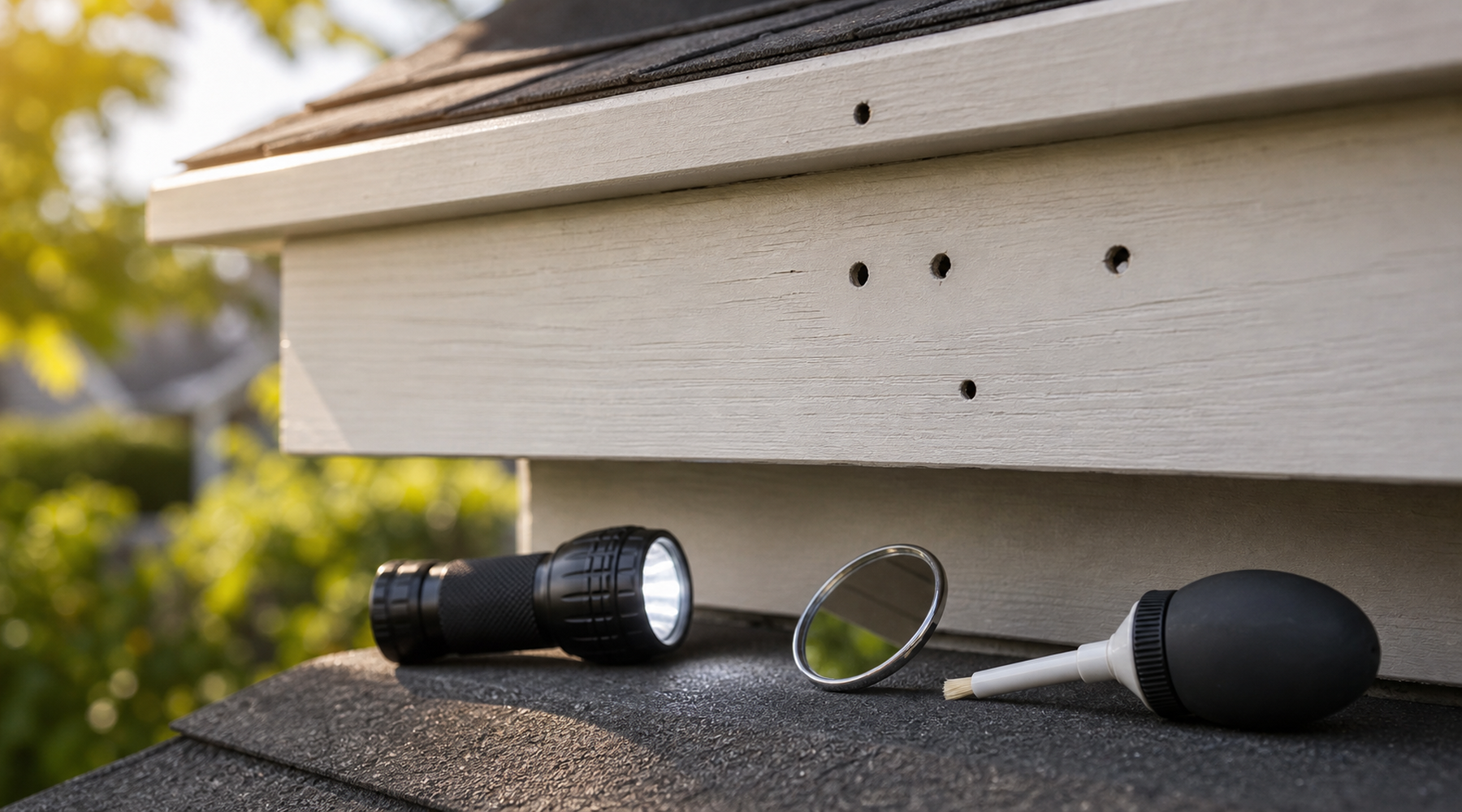
Eastern carpenter bees (Xylocopa virginica) bore perfectly round 1/2 inch holes in untreated wood on Frederick homes from April through June. Left untreated, woodpeckers follow — drilling into the galleries and causing damage that multiplies the original bore hole cost many times over.
Treat Before Galleries Are Sealed
Female carpenter bees lay eggs in the gallery tunnel and seal the chamber with wood pulp before leaving. Treating the gallery opening before the female seals it — April through June in Maryland — applies insecticide dust to the tunnel interior and eliminates the developing larvae before the cycle is complete. Treatment after sealing requires waiting for adults to emerge.
Wood Surface Residual Deters Boring
Residual insecticide applied to unpainted or weathered wood surfaces creates a contact-kill zone that carpenter bees contact when investigating wood for new bore locations. Annual application before April, when bees emerge from overwintering, reduces the rate of new gallery establishment at treated surfaces.
Woodpecker Damage Amplifies the Harm
Downy and hairy woodpeckers in Frederick feed on the carpenter bee larvae inside gallery tunnels. They detect larvae through the wood surface and drill to extract them — creating elongated holes and splitting the wood along the gallery line. A single carpenter bee bore hole can become a fist-sized excavation if woodpeckers work the gallery repeatedly. Treating carpenter bee activity promptly removes the food source before woodpecker damage begins.
Carpenter Bee Activity in Frederick, MD: What to Watch For
Carpenter bees are among the most visually noticeable pests in Frederick during spring. Large, robust, shiny-black bees (females are all black; males have a yellow patch on the face) hovering near exposed wood, particularly wooden deck fascia boards, porch ceilings, pergola beams, wooden fence rails, and the ends of untreated lumber, are the most reliable sign. Male bees establish territories near gallery sites and dive at perceived threats — they cannot sting, but their aggressive hovering behavior is alarming. The real damage comes from the females boring into wood and the subsequent woodpecker activity that their galleries attract.
Carpenter Bee Biology and the Gallery System
The Eastern carpenter bee's gallery system is more complex than the simple bore hole on the surface suggests. The entrance hole is drilled perpendicular to the wood grain — perfectly round, approximately 1/2 inch in diameter, typically in the underside or end grain of a horizontal wooden surface. After penetrating the wood surface by approximately an inch, the female turns 90 degrees and excavates a gallery along the wood grain, creating a smooth tunnel that may extend 4-6 inches in a single season. Repeat use of the same gallery over multiple years can produce tunnels 12 inches or more in length inside a single board.
The female deposits 6-8 brood chambers in the gallery, each containing one egg and a food ball of pollen and nectar. She seals each chamber with wood pulp, then seals the entrance. The larvae develop through summer and emerge as adults in late summer, where they feed to build fat reserves before returning to the same gallery to overwinter. The following spring, those overwintered adults emerge and begin new boring activity — often expanding or creating new galleries adjacent to existing ones. This return-to-site behavior means that properties with untreated carpenter bee activity in one season reliably have expanding damage in subsequent seasons.
Wood Types Most Susceptible in Frederick
Carpenter bees prefer soft, unpainted, weathered, or untreated wood. The highest-risk surfaces in Frederick homes: cedar, redwood, and pine deck fascia boards (particularly the end grain and bottom surface of boards exposed to UV weathering); wooden pergola and arbor beams; the underside of wooden porch ceilings; fence rails and posts in unpainted or weathered condition; and wooden trim boards at the gable ends of older construction. Painted wood is significantly less attractive to carpenter bees — maintaining paint coverage on all exterior wood is one of the most effective long-term prevention measures.
Treatment Timing in Maryland
The optimal treatment window for carpenter bee control in Frederick is April through early June, when females are actively boring and before galleries are sealed with developing larvae inside. Insecticide dust treatment in April, before females have completed their gallery and laid eggs, eliminates females inside active galleries and deters new boring attempts at treated surfaces. A wood surface residual applied before April, when bees first emerge from overwintering in existing galleries, creates a deterrent at the wood surface before new boring begins. Late-season treatment in July and August addresses active galleries but must wait for late-summer adult emergence before gallery sealing and wood repair is appropriate.
How Carpenter Bee Treatment Works
Inspect All Susceptible Surfaces
Walk all exposed wood surfaces: deck fascia, porch ceiling, pergola beams, fence rails, gable trim, and any unpainted structural wood. Document active galleries (fresh sawdust below entrance), prior-year galleries (darker, weathered entrances), and sealed chambers.
Gallery Dust Treatment
Insecticide dust applied into all active and prior-year gallery openings. Dust adheres to gallery walls and contacts bees entering and leaving the tunnel. Applied with a hand duster or bulb duster matched to the entrance opening size.
Surface Residual Application
Residual insecticide applied to all unpainted and weathered wood surfaces where boring activity was found or where susceptible wood condition is present. Protects surfaces through the active April-June boring season.
Gallery Sealing and Wood Repair Guidance
After late-summer adult emergence is complete, gallery openings can be sealed with wood putty to prevent overwintering re-use and to improve wood surface moisture protection. We advise on the appropriate timing and any surfaces where wood repair should precede sealing.
Seeing Round Bore Holes in Your Deck or Porch in Frederick?
Call (240) 555-0157 or contact us online. April and May treatment prevents woodpecker damage and stops the gallery system from expanding into a multi-season structural problem.
Request ServiceCarpenter Bee Questions
Will carpenter bees come back to the same boards every year?
Yes — this is one of the defining behavioral traits of Eastern carpenter bees. Adults overwinter inside existing galleries and emerge in spring. The overwintered adults expand or create new galleries adjacent to prior-year sites. Even if the original boring generation is treated, any adults that complete development and overwinter inside sealed chambers will emerge the following spring and continue activity at the same location. This is why carpenter bee treatment is most effective as a multi-year program rather than a single-visit job — the first year eliminates active adults and treats galleries; subsequent years address the new season's overwintered bees before they bore new galleries and maintain the wood surface residual that deters new boring attempts.
Can I fill the holes myself after treatment?
Yes — gallery sealing after the bees have been treated and after late-summer adult emergence is complete is an appropriate DIY step. Use wood putty or a hardwood dowel cut to fit and sealed with exterior wood glue. The key timing requirement: do not seal galleries before late-summer adult emergence is complete (late August to September in Maryland). Sealing a gallery with live developing larvae or overwintering adults inside traps them — they will chew through the putty or open a new exit hole, often in an adjacent location. Once you are confident the gallery is empty (no fresh sawdust, no bee activity at the entrance for several weeks), sealing and painting the repaired area is the appropriate final step.
Are carpenter bees dangerous to people?
Female carpenter bees can sting if directly handled or if the nest area is disturbed aggressively, but they are not defensive of the gallery the way social wasps and hornets are defensive of their nests. Stings from carpenter bees are uncommon compared to yellow jackets or bald-faced hornets. Male carpenter bees — the ones that hover aggressively and dive at people near the nest area — cannot sting. The danger from carpenter bees is primarily structural, not medical: untreated gallery systems combined with woodpecker activity can cause significant damage to wooden deck boards, porch ceilings, and structural wood members over multiple seasons. A board with 10 or more gallery tunnels is structurally weakened and may split or fail under load.
Related Services
Wasp Nest Removal
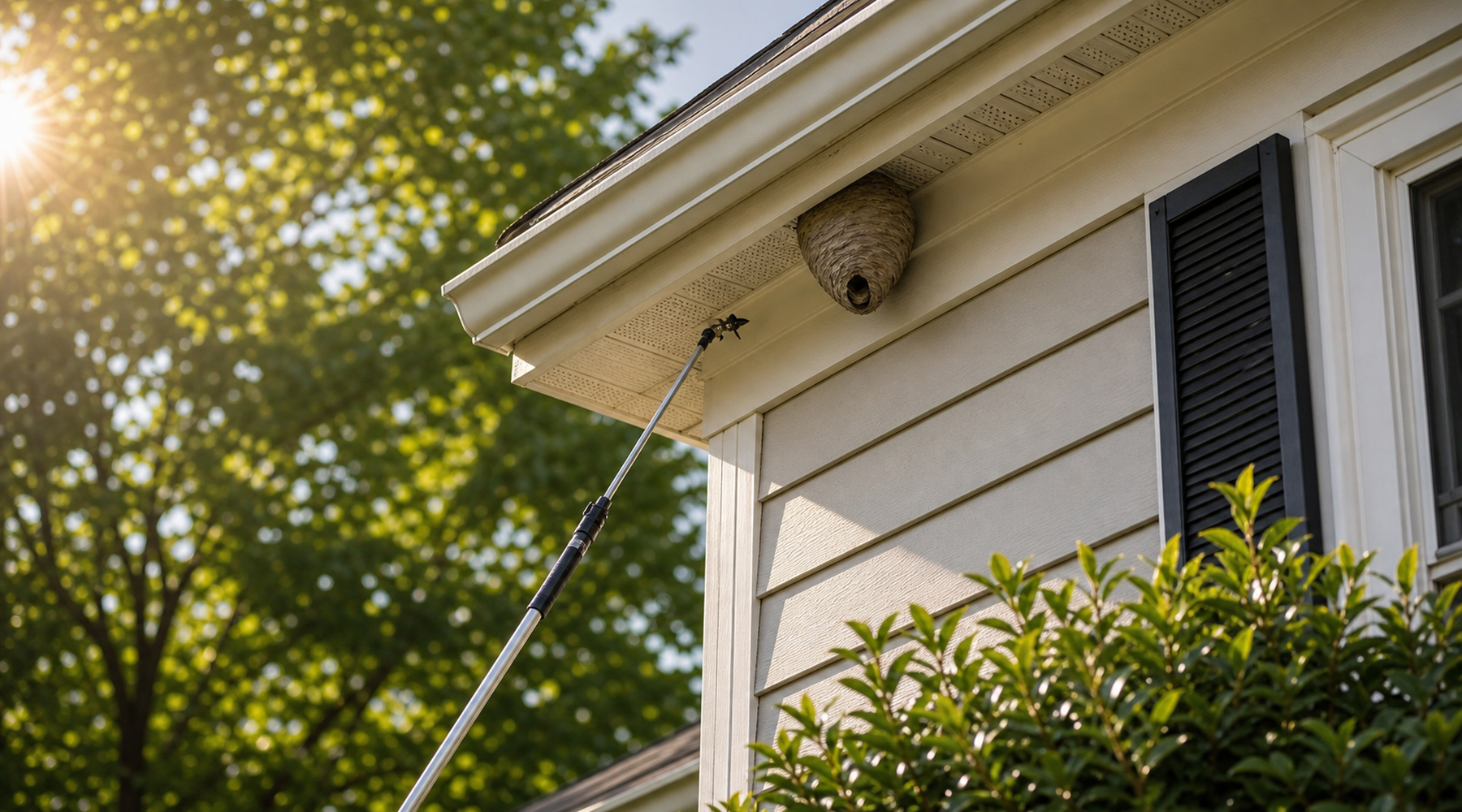
Paper wasp nests often appear at the same deck and eave surfaces as carpenter bee boring activity — both are addressed in a single spring exterior service visit.
Preventive Pest Service
Annual wood surface treatment before April keeps carpenter bee activity from establishing or expanding at susceptible surfaces on your Frederick home.
Quarterly Pest Control
Quarterly programs include a spring carpenter bee check timed to the April-June boring season for ongoing management.