Frederick, MD
Attic Pest Control in Frederick, MD
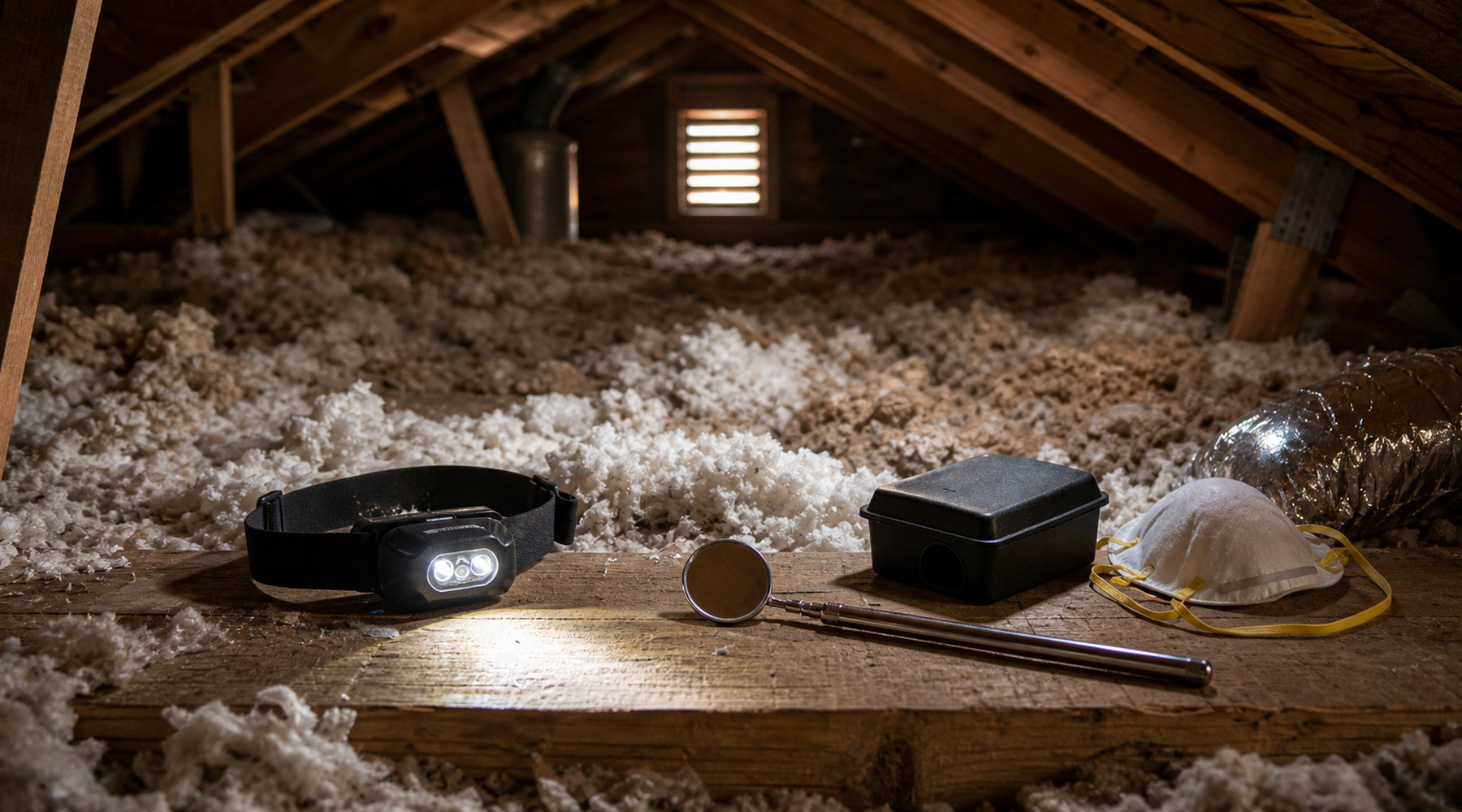
The attic is a zone where pest problems develop for months before any interior signs appear. Rodent nesting, insulation damage, stink bug overwintering, and bat entry are the most common attic pest situations in Frederick homes.
Rodents Nest in Attic Insulation
House mice nest in blown or batt insulation, creating galleries that compact the insulation, deposit urine and droppings throughout, and create fire risk when nesting material contacts wiring. Signs include scratching sounds at night, a faint ammonia odor, and visible trails through insulation during inspection.
Stink Bugs Overwinter in Attic Spaces
Brown marmorated stink bugs that enter roof vents, gable vents, or soffit-fascia gaps in fall aggregate in attic spaces for winter. Spring emergence sends them into living areas as interior temperatures rise. Attic inspection reveals overwintering populations that exterior caulking alone cannot address after infiltration has occurred.
Attic Vent Gaps Allow Multiple Pest Types
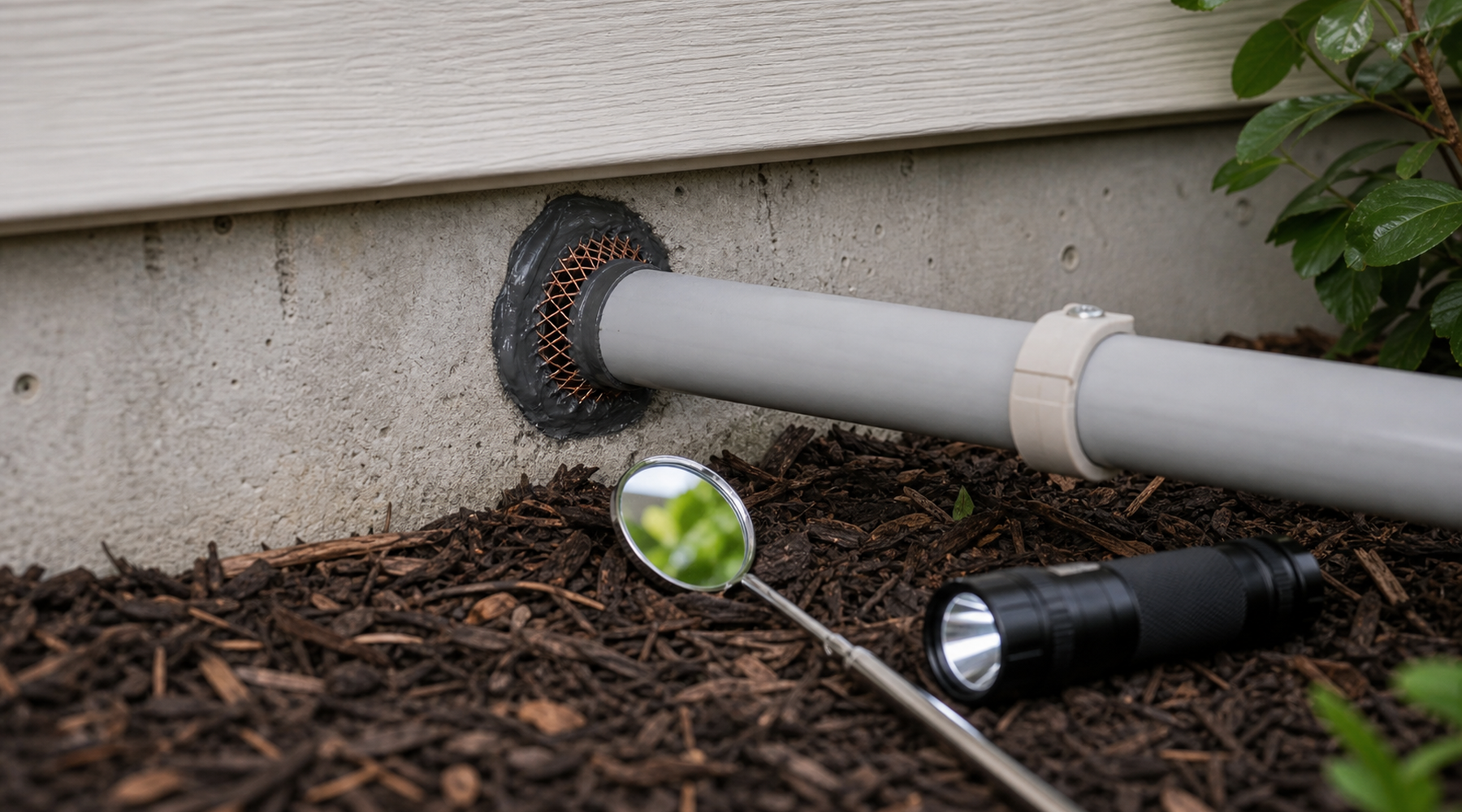
Deteriorated or inadequately screened attic vents are a common entry point for mice, stink bugs, boxelder bugs, and occasionally wasps or hornets establishing early-season nests in undisturbed attic corners. Hardware cloth installation at gable vents and soffit vents closes this entry route for multiple pest types simultaneously.
Why Attic Pest Problems Stay Hidden Longer
The attic is the last zone most homeowners inspect — and the first zone pests colonize when given an undetected entry point. A mouse nest in attic insulation does not produce the same immediate visible signals as a kitchen infestation. Stink bugs overwintering in an attic wall cavity do not produce obvious signs until they begin emerging into living areas in March. Wasps establishing a paper nest in an attic corner may build for weeks before colony size produces enough forager activity to be noticed. The attic inspection is the component that catches these situations before they reach a stage that requires significant remediation.
What an Attic Pest Inspection Covers
An attic pest inspection in a Frederick home typically covers: rodent entry points at gable vents, ridge vents, soffit-fascia junctions, and any gap in the roof sheathing adjacent to an exterior wall; rodent evidence including droppings, urine staining (visible under UV light), nesting material, and trail compression in insulation; stink bug and overwintering insect aggregation sites along south-facing rafters, at attic vent frames, and in wall cavity tops accessible from the attic floor; wasp and hornet nests at exposed rafters, ridge beam junctions, and in any undisturbed corner area; and moisture conditions — damp insulation from roof leaks, condensation from inadequate attic ventilation — that create pest-favorable conditions regardless of pest type.
The findings from an attic inspection inform both the immediate treatment scope (traps for active rodents, treatment for wasp nests, vacuum removal for stink bug aggregations) and the exclusion scope (which vents need hardware cloth, which soffit gaps need caulk, which ridge vent gaps need foam sealing) that prevents recurrence.
Insulation Damage from Rodent Activity
House mice nesting in attic insulation compress, void, and contaminate the material over time. A light infestation may damage a limited area of insulation; a multi-season population can compromise large sections of blown cellulose or fiberglass batt insulation with droppings, urine, and nesting galleries. Damaged insulation loses R-value (thermal resistance) and creates an ongoing public health concern from aerosolized droppings during HVAC operation. Insulation remediation — removal and replacement of heavily contaminated sections — is outside pest control scope but is a recommendation we make when findings warrant it, with documentation of what was found and where.
Bat Considerations in Frederick Attics
Little brown bats and big brown bats are common in Frederick County and are protected under Maryland law — they cannot be killed or removed during the active maternity season (May 15 through August 15). If bat guano (droppings) or roosting bats are found during an attic inspection outside of that exclusion window, exclusion work can proceed using one-way exclusion devices that allow bats to exit but not re-enter. We identify bat evidence during attic inspections and provide guidance on timing and legal requirements for bat exclusion so that work is done correctly and within the regulatory framework.
How Attic Pest Control Works
Attic Entry and Inspection
Full inspection of accessible attic space: rodent evidence, insect aggregation, nest sites, vent condition, and moisture indicators. Findings documented by zone within the attic.
Entry-Point Documentation
Gable vents, ridge vents, soffit gaps, and roof penetrations inspected for gaps that allow pest entry. Photographs taken at each entry-point candidate.
Treatment and Exclusion
Trap placement for active rodents. Treatment or nest removal for wasp or hornet nests. Hardware cloth installation at compromised vents. Caulk at soffit and rafter tail gaps.
Follow-Up and Monitoring
Follow-up inspection to confirm rodent activity has ceased and exclusion work is holding. Trap check for any remaining rodent population in the treated attic space.
Have Scratching in the Ceiling or Stink Bugs Emerging in Spring in Frederick?
Call (240) 555-0157 or contact us online. Attic pest problems are best addressed before they compound — early inspection prevents insulation damage and limits population growth.
Request ServiceAttic Pest Questions
How do I know if I have rodents in my attic vs. squirrels?
Timing and sound pattern help distinguish rodents from squirrels. House mice in an attic are typically heard at night — they are primarily nocturnal. Squirrels are diurnal and produce heavier, more deliberate movement sounds during daylight hours, often in the morning and late afternoon. Squirrel entry points are typically at the eave line, at damaged soffit sections, or at gaps in the fascia — larger openings than the 1/4 inch mouse-entry gaps. Squirrel droppings are larger (similar in size to Norway rat droppings) and are typically found concentrated near the entry point and roosting area. If you are hearing heavy thumping during the day in the attic, a squirrel situation is more likely than a mouse situation.
Can stink bugs in the attic come down into living areas?
Yes — and this is the most common spring stink bug complaint in Frederick homes that had fall infiltration. Stink bugs overwintering in the attic or wall cavity spaces adjacent to the attic become active when interior temperatures rise, typically starting in late February and continuing through April in mild years. They move toward light and warmth — which means they move down through gaps at ceiling light fixtures, through recessed lighting cans, down wall cavities toward baseboards, and through any gap at the attic floor hatch. Sealing those interior gaps at ceiling penetrations and the attic hatch frame significantly reduces the volume of spring emergence into living areas, even when the exterior exclusion work is already complete.
Should I clean up rodent droppings in the attic myself?
Rodent droppings and nesting material in attic spaces should be handled with appropriate respiratory protection — an N95 or higher-rated mask — because hantavirus (though rare in Maryland) and other respiratory pathogens associated with dried rodent waste can be aerosolized during disturbance. For small amounts of droppings in an accessible attic, thorough wetting of the area with a bleach-and-water solution followed by bagged removal is the recommended approach. For large-scale contamination of insulation — droppings throughout a section of blown insulation — insulation removal and replacement is the appropriate remediation, which is a contractor-level job rather than a DIY cleanup. We document what we find and make recommendations accordingly.
Related Services
Mouse Control
Complete mouse management for Frederick homes — attic treatment combined with kitchen and interior trapping for full-structure coverage.
Stink Bug Control
Exterior exclusion and fall perimeter treatment to reduce the attic stink bug population that produces spring emergence in Frederick homes.
Rodent Exclusion
Hardware cloth vent installation and gap sealing to close attic entry points for mice, stink bugs, and other overwintering pests.