Frederick, MD
Rat Control in Frederick, MD
Norway rats (Rattus norvegicus) burrow along foundation walls and enter structures through gaps as small as 1/2 inch. Population control requires exterior bait stations, burrow treatment, and entry-gap sealing — interior trapping alone does not resolve an exterior-based Norway rat infestation.
Norway Rats Are an Exterior Problem First
Norway rats are burrowing animals. Their primary harborage is in the ground — along foundation walls, under concrete slabs, beneath debris piles, and in overgrown areas adjacent to structures. They enter buildings to forage but return to exterior burrow systems. Effective rat control addresses the exterior population, not just interior evidence.
1/2 Inch Gap Is Enough for Entry
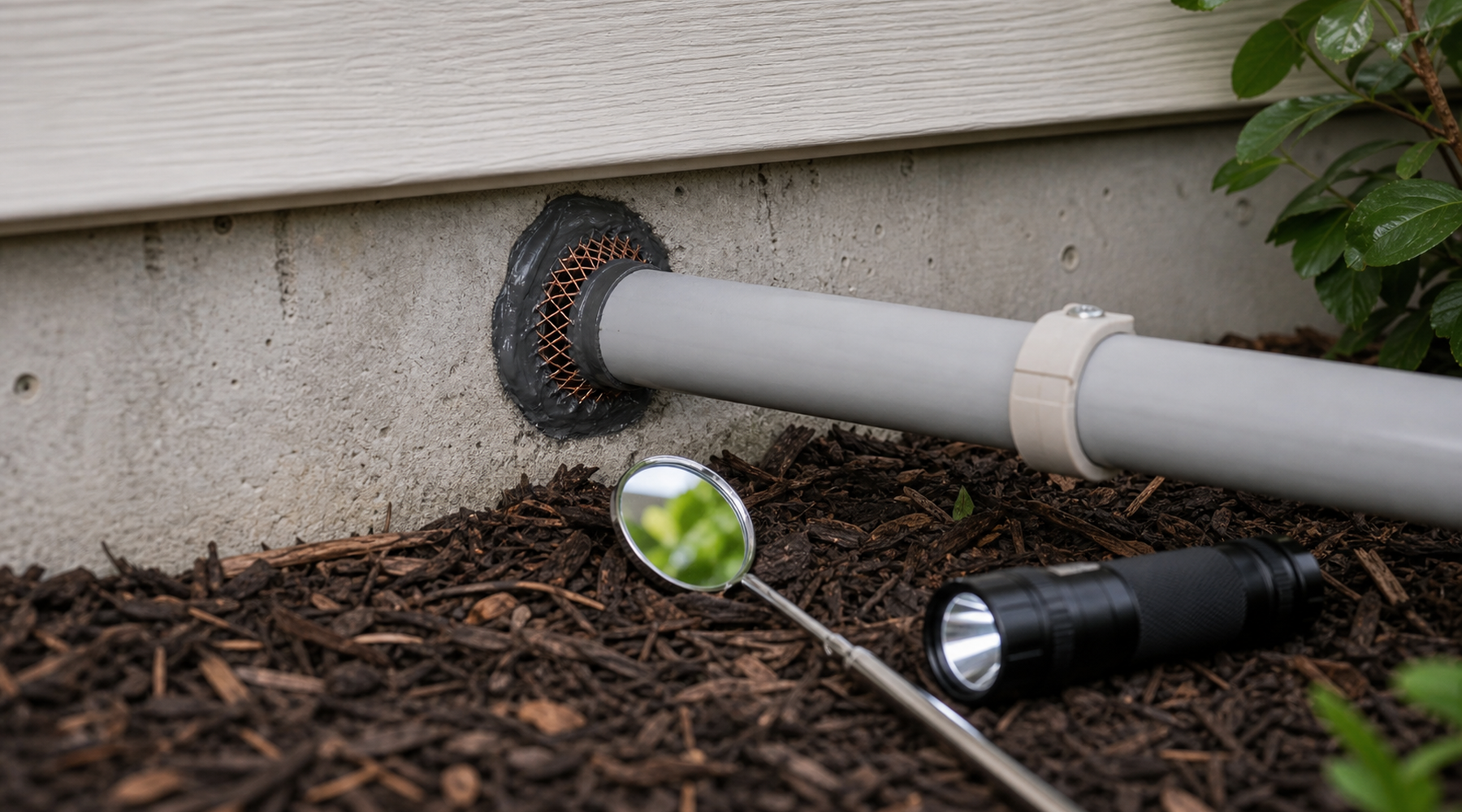
Norway rats need only a half-inch gap to enter a structure — the diameter of a quarter. Common entry points include gaps around utility penetrations, open or damaged crawl space vents, gaps at the foundation sill plate, and deteriorated areas around drain pipes or floor drains. Larger gaps are more common in older Frederick properties with aging foundations.
Block Bait in Tamper-Resistant Stations
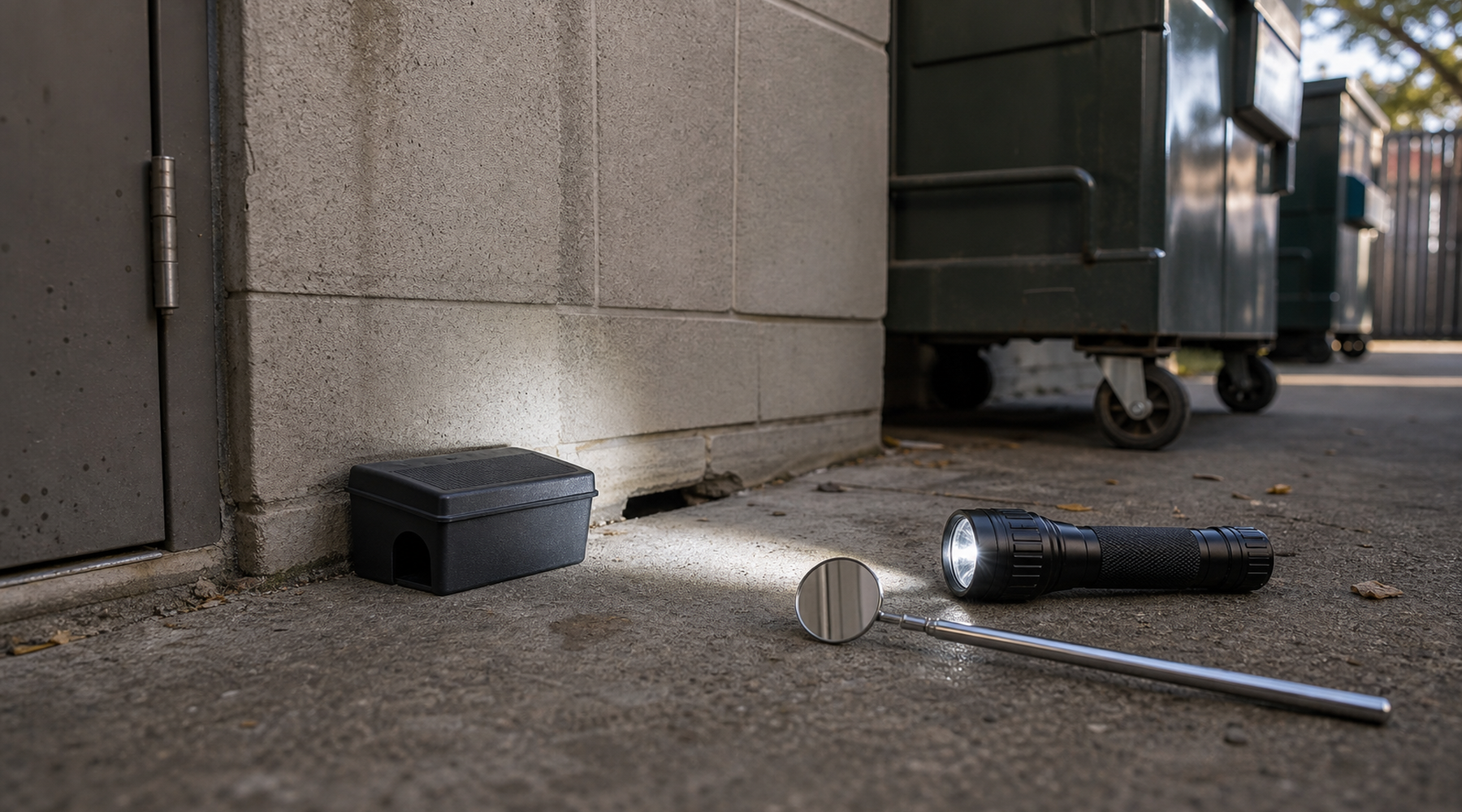
Rodenticide block bait in tamper-resistant exterior bait stations is the primary Norway rat control method. Stations are placed along exterior walls and burrow run lines at intervals appropriate for the population density. Block bait is anchored inside the station and inaccessible to non-target animals when properly positioned.
Norway Rat Activity in Frederick MD: What Drives It
Norway rat activity in Frederick is most commonly associated with properties that have consistent food waste, compost exposure, bird feeding, or dumpster adjacency — and structures with exterior conditions that provide undisturbed burrowing opportunity: overgrown shrubs against the foundation, dense ivy, wood or debris piles, and ornamental stone ground cover that creates covered run lines. Restaurant and multi-family properties with exterior dumpster areas face the most consistent Norway rat pressure, but residential properties in neighborhoods with poor compost containment or dense foundation plantings are also regularly affected.
Identifying Norway Rat Activity at a Frederick Property
Norway rat burrows are distinctive: smooth-walled tunnels 2-3 inches in diameter, most commonly found along the base of foundation walls, under concrete pads, and along the perimeter of debris or vegetation that provides overhead cover. Fresh burrow entrances have loose soil thrown outside the opening; established burrows are smooth and compacted. Burrows are often connected — a single rat population may maintain a network of burrows along the foundation perimeter of a property.
Exterior run lines — compressed paths through ground cover or grass where rats travel repeatedly between burrow and food sources — are visible as dark trails in vegetation or as matted paths through low-growing plants. Rub marks (dark grease smears) appear on any vertical surface along a regularly traveled route: fence posts, building corners, utility pipe supports, and door frames at ground level.
Interior evidence of Norway rats is typically found in ground-floor and basement areas: large droppings (12-20 mm, capsule-shaped with blunt ends), gnaw marks on structural framing or stored goods, and urine marks along floor edges. Norway rat droppings are significantly larger than mouse droppings — if you can see the dropping without bending down to floor level, it is probably a rat.
Bait Station Placement for Norway Rats
Tamper-resistant bait stations for Norway rats are placed flush against the exterior foundation wall or adjacent structures at intervals of 15-30 feet along the perimeter, with additional stations at or near active burrow entrances and along confirmed run lines. Stations are positioned so rats traveling along the wall run encounter the station opening during their normal foraging route. Block bait is secured inside the station on a rod — Norway rats prefer to gnaw on solid bait blocks rather than loose or powdered bait, which makes block bait the appropriate format. Stations are checked and refreshed at follow-up visits until activity in the station drops to zero and burrow activity ceases.
Properties With High Norway Rat Risk in Frederick
Rat activity in Frederick most commonly affects: restaurant and commercial properties with exterior dumpster areas (food waste is the primary attractant); multi-family and rental properties in older sections of the city where foundation conditions have deteriorated; residential properties adjacent to storm water channels, creek corridors, or areas of heavy leaf and debris accumulation; and properties with active compost systems or bird feeders positioned near the foundation. The common element is accessible food waste or harborage cover adjacent to a structure with a compromisable entry point.
How Rat Control Works
Exterior Survey
Document burrow locations, run lines, rub marks, and entry-gap candidates around the full exterior perimeter. Identify food access and harborage conditions contributing to rat pressure.
Bait Station Installation
Tamper-resistant stations placed at foundation wall perimeter, near burrow entrances, and along confirmed run lines. Stations secured and positioned for optimal rat encounter rate.
Follow-Up and Population Monitoring
Stations checked at 7-14 day intervals. Bait consumption documented. New burrow activity identified and addressed. Population decline confirmed by reduction in bait consumption and burrow activity.
Exclusion and Habitat Modification
Entry-gap sealing scope presented after population is reduced. Harborage modification guidance: debris removal, vegetation management, compost containment, and dumpster positioning recommendations.
Finding Rat Burrows at Your Frederick Property?
Call (240) 555-0157 or contact us online. Active Norway rat populations grow quickly when food and harborage are available — early bait station installation limits the population before it reaches a difficult-to-manage scale.
Request ServiceRat Control Questions
How do I know if I have rats vs. mice?
Size is the most reliable differentiator. Norway rat droppings are 12-20 mm long (roughly 3/4 inch) with blunt ends — significantly larger than mouse droppings, which are 3-6 mm with pointed ends. Norway rats themselves are much larger than mice: body length of 7-10 inches plus an equally long tail, with a blunt snout, small ears relative to head size, and coarse brown-grey fur. Burrows along the foundation are a rat indicator — mice do not typically burrow. If you are finding holes the diameter of a golf ball along your foundation line, those are rat burrows rather than mouse entry points.
How long does rat control take?
A moderate Norway rat infestation with active exterior burrowing typically requires 3-6 weeks of bait station management to achieve population control — measured by cessation of bait consumption and no new burrow activity. Larger populations or properties with ongoing food waste access that is not controllable may require longer programs. Rat control is not a single-visit event for any established population — the follow-up visits are what confirm the bait is working and allow adjustment of station placement or bait type if activity patterns shift.
Are exterior rat bait stations safe near children and pets?
Tamper-resistant bait stations are designed to allow rat entry and block access by larger animals and children. They meet EPA resistance standards for the rodenticide label's placement requirements. However, no bait station is perfectly secure from a determined large dog or from a station that has been knocked over or moved. We position stations at the foundation perimeter where rat activity is concentrated and away from areas of direct child or pet activity where possible. We discuss placement specifics with you during the service setup and adjust positioning if your yard has particular pet access or child safety concerns.
Related Services
Rodent Exclusion
Entry-gap sealing after rat population is reduced — the structural step that prevents recolonization of the building interior.
Crawl Space Pest Control
Crawl space inspection for rat entry, nesting, and harborage — a common rat access zone in older Frederick homes with pier-and-beam or partial basement construction.
Restaurant Pest Control
Ongoing rat monitoring and bait station management for Frederick food-service environments — documented and health-inspection ready.