Frederick, MD
Ant Control in Frederick, MD
Carpenter ants, pavement ants, and odorous house ants are the dominant ant species in Frederick homes. Species identification determines whether you need exterior baiting, a moisture investigation, perimeter barrier, or all three.
Carpenter Ants Need Moisture Investigation
Carpenter ants (Camponotus pennsylvanicus) excavate galleries in moisture-softened wood — they do not eat the wood, they nest in it. Finding the nest requires finding the moisture source: a leaking soffit, damaged window flashing, or a poorly ventilated crawl space. Treatment without that investigation produces temporary results.
Pavement Ants Respond to Exterior Baiting
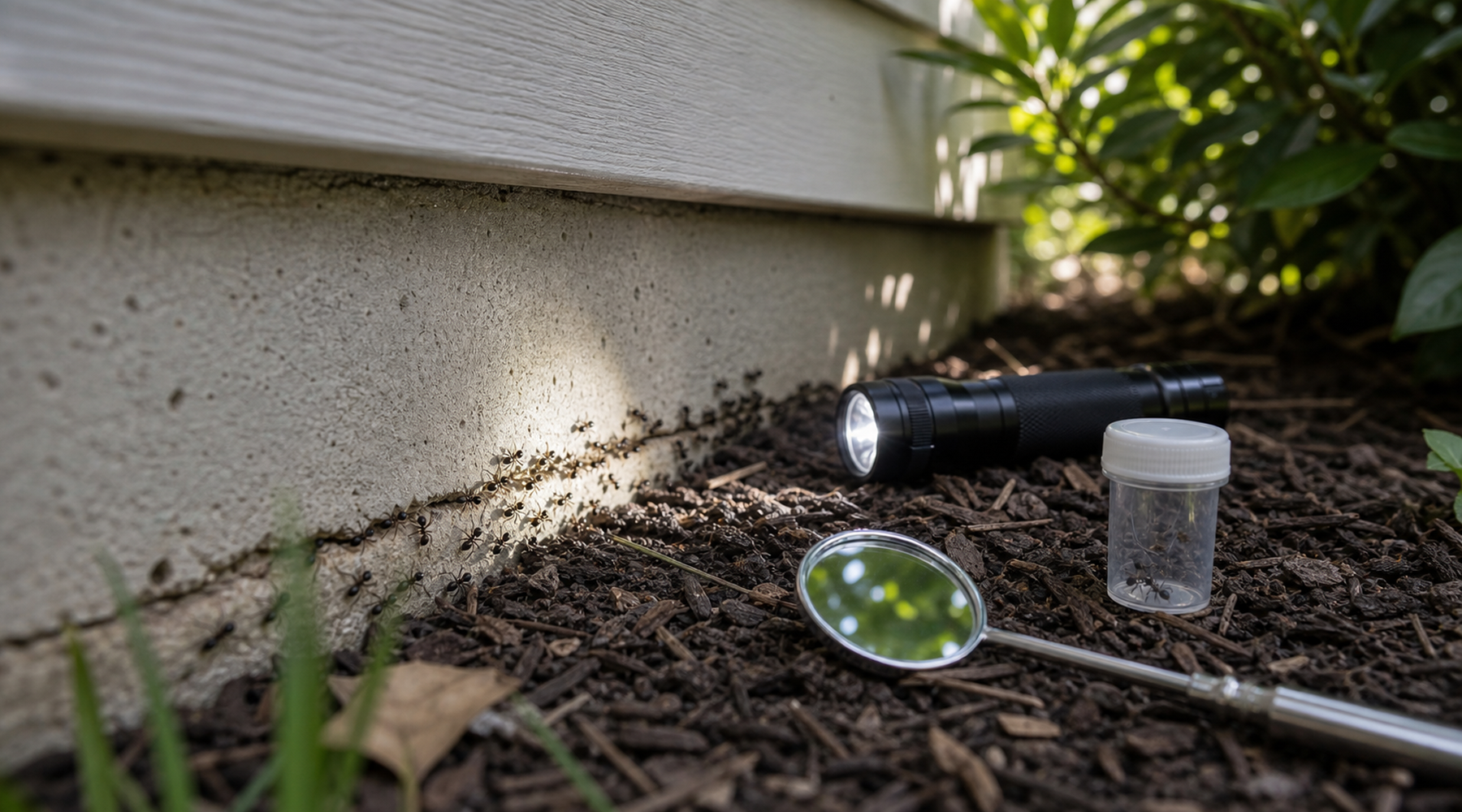
Pavement ants (Tetramorium immigrans) nest under slabs, patios, and foundations and trail through expansion joints and gaps. They respond well to slow-acting bait placed near exterior trail routes — interior spray drives them deeper without eliminating the colony.
Odorous House Ants Require Colony-Level Treatment
Odorous house ants (Tapinoma sessile) form multi-queen colonies that spread if stressed by repellent sprays. Bait-based treatment that workers carry back to the colony is the method that actually collapses the population.
Ant Control in Frederick: Why Species Identification Comes First
All ants are not the same pest requiring the same treatment. A carpenter ant trailing through a kitchen in April almost certainly has a nest site connected to moisture-damaged wood somewhere in the structure — and the trail you see indoors is a foraging route from a satellite colony, not the parent nest. Applying a perimeter residual barrier without finding that moisture source will disrupt the trail temporarily and accomplish little else. Getting ant control right in Frederick starts with identifying which ant species you are dealing with and where its colony is drawing resources from.
Frederick MD Ant Species: What You Are Likely Dealing With
Carpenter ants are the largest common ant in Maryland — solid black workers ranging from 1/4 to 1/2 inch. They are typically found trailing along structural members, baseboards, or exterior deck surfaces from spring through summer. Frass (coarse sawdust-like material) below a wall member or soffit is a strong indicator of an active gallery. They are primarily nocturnal foragers, so heavy activity at dusk or at night is a carpenter ant signature. The moisture source driving nest establishment is the critical finding — leaking flashing, wet framing, or a poorly sealed soffit are the common culprits in Frederick homes.
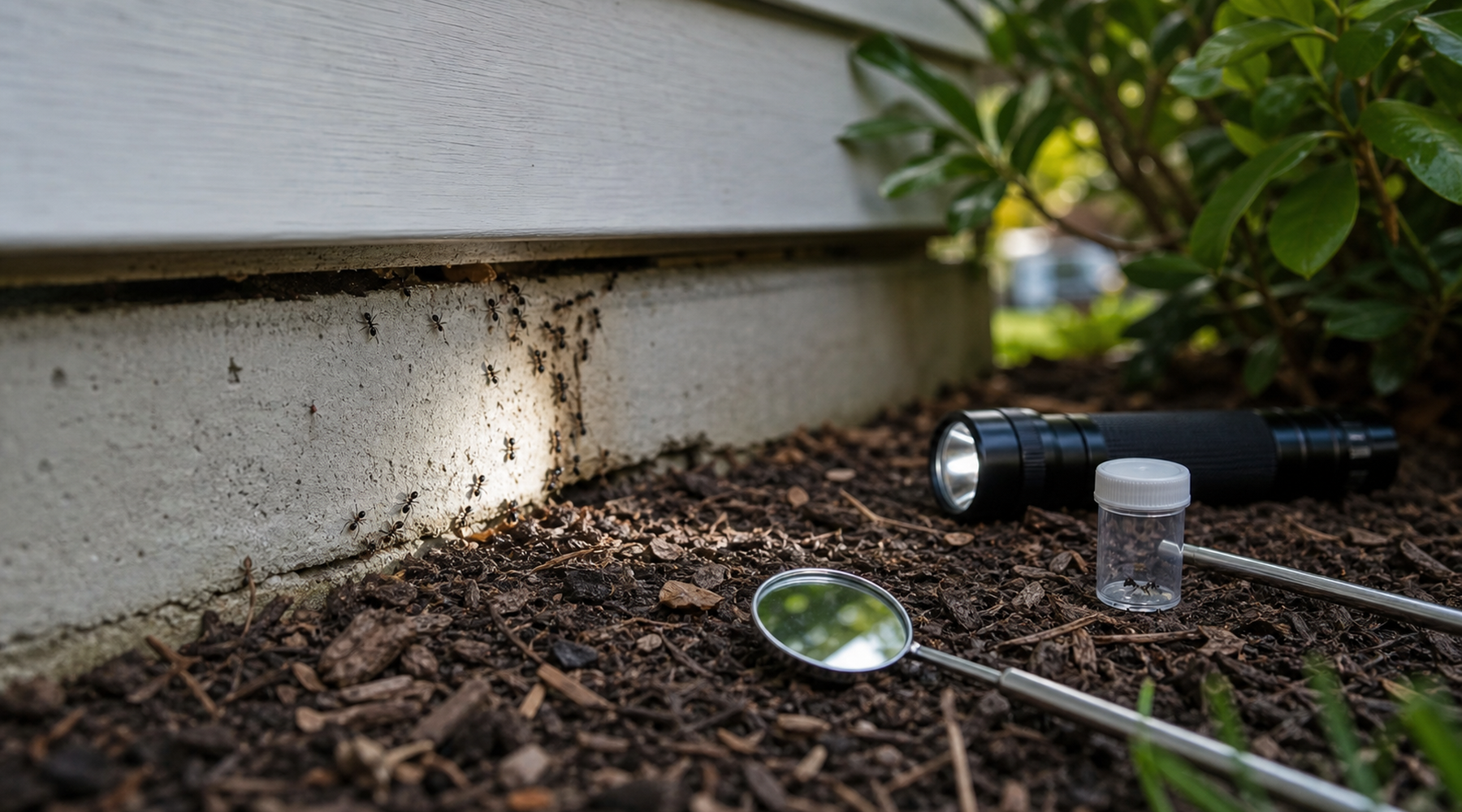
Pavement ants are small (1/8 inch), brown-black ants with parallel ridges on their head and thorax. They are most commonly found trailing through foundation cracks, expansion joints, and along concrete slabs. Springtime reproductive swarms on and near slabs — small winged ants and workers together — are a pavement ant signature. They respond well to slow-acting exterior granular or gel bait placed near the slab perimeter.
Odorous house ants are small (1/16 to 1/8 inch), dark brown, and emit a rotten coconut smell when crushed. They trail in long, erratic lines and are commonly found in kitchens tracking toward moisture and sweet food sources. Their multi-queen colony structure means repellent sprays cause budding — the colony splits and relocates rather than collapsing. Slow-acting bait is the only method that reliably collapses an odorous house ant population.
When Interior Ants Mean an Exterior Problem
Interior ant activity almost always traces back to an exterior colony. Ants trail inside for food and water — the colony itself is outside in the soil, under a slab, in a tree stump, or in moisture-damaged structural wood. Treating only the interior trail misses the source. Exterior bait placed on the trail between the interior entry point and the colony gives workers something to carry back that collapses the colony over 1-3 weeks. Interior treatment is a secondary step for active trails near food prep areas, not the primary control method.
Ant Activity Timing in Frederick
Ant activity in Frederick homes peaks in April through June as colonies expand and foraging increases after winter dormancy. Carpenter ants swarm in May and June — reproductive flights that indicate a mature colony nearby. Pavement ant swarms occur in spring on warm days after rain. Odorous house ant activity often spikes indoors during summer heat or rain events when outdoor foraging is disrupted. Fall activity is less common but can persist in kitchens through October if harborage conditions are favorable inside.
How Ant Control Works
Identify the Species
Confirm carpenter ant, pavement ant, or odorous house ant. Size, color, trail pattern, and location all inform species identification on site.
Map the Trail and Colony Source
Follow the trail from the interior entry point to the exterior. For carpenter ants, investigate structural moisture conditions connected to the foraging route.
Apply Colony-Targeted Treatment
Slow-acting bait on exterior trail routes. Perimeter residual barrier at foundation and entry zones. Dust treatment at gallery sites for confirmed carpenter ant nests in wood.
Moisture Guidance and Follow-Up
For carpenter ant situations: specific moisture-source findings and structural repair recommendations. Follow-up visit scheduled for two to three weeks out to confirm colony pressure has dropped.
Schedule Ant Control in Frederick, MD
Call (240) 555-0157 or contact us online. Same-week scheduling available for ant control throughout Frederick County.
Request ServiceAnt Control Questions
How long does it take for ant bait to work?
Slow-acting bait for pavement ants and odorous house ants typically reduces visible trail activity within 5-10 days and collapses the colony over 2-3 weeks. The slow action is intentional — it gives workers time to carry the bait back to the colony and share it with the queen and larvae before the effect is triggered. Fast-acting contact products kill workers on the trail but do not reach the colony. If you apply a repellent spray before bait has time to work, it disrupts the trail before workers can carry bait to the colony. We ask that you do not apply any store-bought ant products for at least two weeks before our visit.
We have large black ants in our kitchen — are they carpenter ants?
Possibly. Carpenter ants are the largest common ant in Maryland — solid black workers from 1/4 to 1/2 inch. If you are seeing large black ants in a kitchen, particularly near a window, a moisture source, or a wood structural member, carpenter ants are the likely candidate. However, Eastern black carpenter ants can be confused with other large ant species. The most reliable indicator beyond size is location — carpenter ants trail along wood members and toward moisture sources, and frass (coarse sawdust) below a wall member or near a window frame is a strong confirmation signal. Call us and describe what you are seeing — we can often make a preliminary identification from a detailed description before arriving.
Why do I keep getting ants in my Frederick home every spring even after treatment?
Annual spring ant recurrence usually indicates one of three conditions: the colony source was treated but not eliminated; the entry points were not addressed and new foragers are finding the same routes each year; or the moisture or harborage conditions that made your property attractive to the colony were not changed. Carpenter ants return repeatedly to structures with persistent moisture issues — treated or not, the conditions that supported the original colony will support a new one. Pavement ants return when the foundation perimeter still has the same gap and trail-route conditions year after year. A moisture investigation and entry-point audit combined with treatment produces more durable spring results than treatment alone.
Related Services
Cockroach Control
German cockroach elimination using IPM gel bait — the same bait-based, colony-targeting approach that works for odorous house ant control.
Preventive Pest Service
Entry-point sealing and moisture guidance that addresses the source conditions driving annual ant return pressure at Frederick homes.
Rodent Exclusion
Structural exclusion work that closes the same foundation gaps that ants, mice, and overwintering insects use to enter.