Frederick, MD
HOA Pest Control in Frederick, MD
Pest management for Frederick HOA communities — common area treatment, exterior perimeter service, stinging insect management, and coordination with property managers to protect the community without creating exposure concerns for residents.
Common Area Scope, Not Individual Unit Service
HOA pest control typically covers common areas: clubhouses, pool facilities, common landscaping, walking paths, parking structures, exterior building perimeters, and shared amenity spaces. Individual unit pest issues remain the responsibility of unit owners — but the exterior perimeter and common-area treatment that the HOA provides directly affects pest pressure in individual units.
Stinging Insect Management for Community Safety
Wasp and hornet nests in common areas — at playground equipment, along walkway lighting, in clubhouse eaves, and near pool facilities — create liability concerns and resident complaints. A scheduled inspection and removal program for stinging insect nests in common areas is one of the most consistently requested HOA pest services in Frederick.
Rodent Pressure in Shared Landscaping
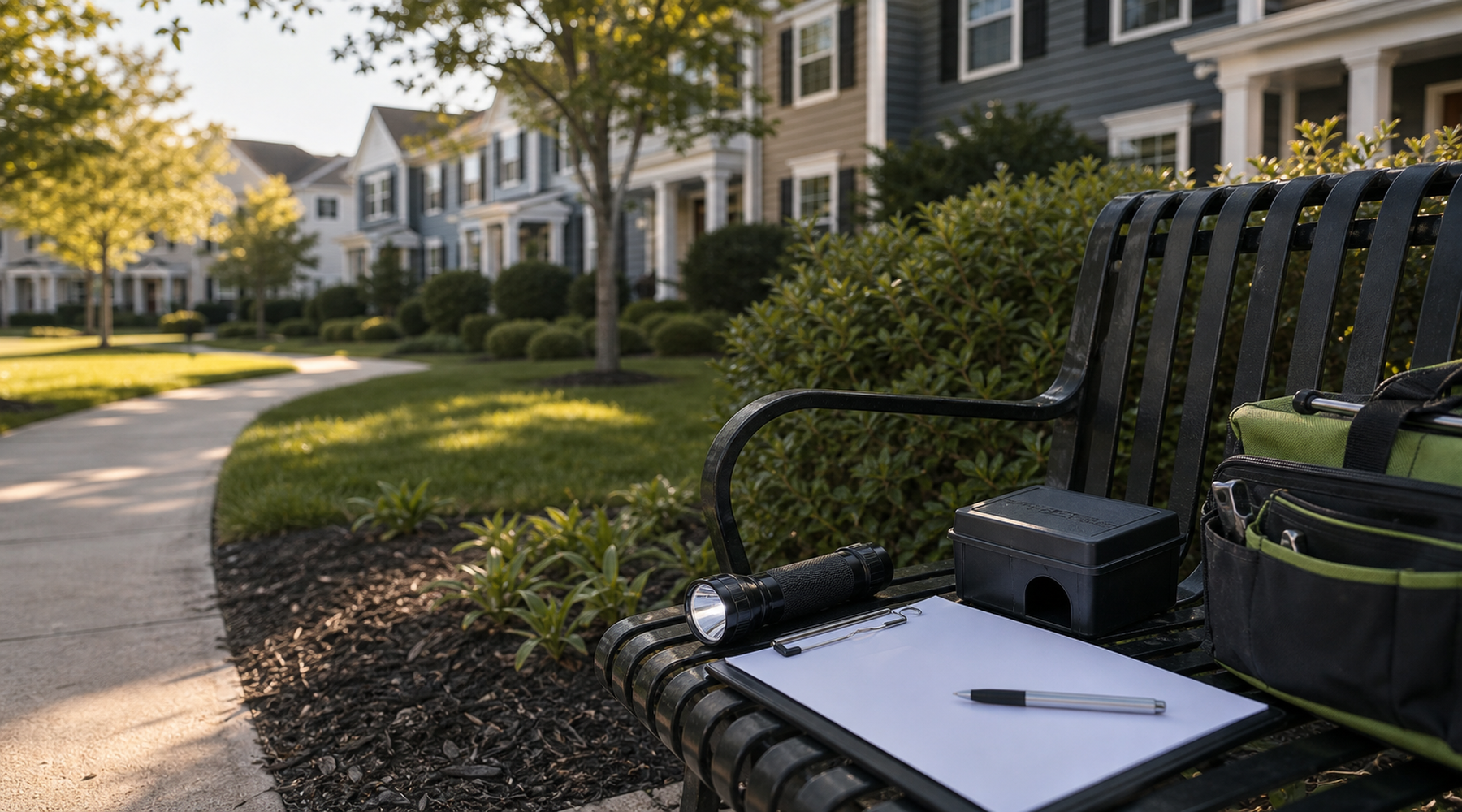
Common area landscaping in HOA communities — dense ornamental plantings, mulched beds, and wooded buffer zones — provides harboring and travel corridors for Norway rats and mice. Exterior bait station programs along common perimeters reduce the rodent population pressure that affects individual units adjacent to common areas.
HOA Pest Control Planning in Frederick Communities
HOA pest management in Frederick requires a different planning structure than individual property service. The HOA is responsible for common areas and shared building exteriors — individual unit owners are responsible for interior pest issues within their units, though the HOA's exterior program directly influences how much pest pressure reaches individual units. Planning an effective HOA pest program means defining the scope boundary clearly, scheduling around community activities and resident concerns, documenting service for HOA board and property management review, and addressing the seasonal pest issues that affect the community's shared outdoor spaces — particularly stinging insects, mosquitoes, and perimeter rodent pressure.

Designing an HOA Pest Program for a Frederick Community
An effective HOA pest program in Frederick starts with understanding what the community's common areas include and what the pest pressure profile looks like for the specific community type. A newer townhome community with dense ornamental landscaping, shared stormwater features, and a clubhouse has different pest concerns than an older condominium community with aging building exteriors, parking structure perimeters, and mature trees.
Core components of most Frederick HOA pest programs: monthly or quarterly exterior perimeter inspection and treatment at the community boundary and building foundations; seasonal stinging insect nest inspection at all common structures and amenity areas; exterior rodent bait station management at the community perimeter and near common area food waste facilities; and seasonal mosquito and tick management for common outdoor spaces including walking trails, tot lots, and pool surrounds. Documentation of each service visit is provided to the property management contact and available for HOA board review.
Chemical product selection for HOA common areas requires additional consideration of resident exposure — we prefer reduced-risk formulations for treatment adjacent to playgrounds and pool facilities, and we schedule treatments when common areas are not in active use. Organic and reduced-risk options are available for communities with specific product concerns and can be incorporated into the program design without a significant reduction in effectiveness for the pest types most commonly managed in community settings.
Stinging Insect Programs for HOA Communities
Wasp and hornet nests in Frederick HOA common areas are a consistent liability concern each summer. A single bald-faced hornet nest in a playground shade structure or a yellow jacket ground nest in a turf area adjacent to a walking path creates a stinging risk for community residents who may not see the nest before coming within its defensive range. A seasonal stinging insect inspection program — typically starting in late May or June when nests are small and easier to treat, and continuing through September when colonies are at maximum size — is the preventive approach that catches nests before they become safety concerns. We report each nest found with location and species and treat them during the same visit when the colony size and location allow safe same-visit treatment.
Mosquito Management for HOA Amenity Areas
Common area mosquito management for Frederick HOA communities focuses on the outdoor spaces where residents congregate: pool surrounds, clubhouse patios, walking trail edges, and tot lot perimeters. The Asian tiger mosquito (Aedes albopictus), which bites during daytime, is the primary nuisance species affecting outdoor use of community amenities. Barrier treatment of ornamental landscaping around these areas on a 3-4 week cycle significantly reduces adult mosquito density. Standing water source identification in common area drainage features, irrigation systems, and decorative water elements is the source-elimination component that supports the barrier treatment program. We coordinate treatment timing so pool areas and playground surfaces are avoided during application and dry before resident use resumes.
How HOA Pest Control Is Structured
Community Assessment
Walk common areas, exterior building perimeters, and amenity zones with property manager or HOA representative. Pest pressure assessment, scope definition, and program structure discussion.
Program Design and Board Approval
Written program proposal including service frequency, treatment zones, seasonal components, documentation format, and pricing. Program presented for HOA board or property management approval before service begins.
Scheduled Service
Regularly scheduled visits with property management coordination. Treatment scheduled around community activities. Written service records provided after every visit.
Reporting and Review
Annual or semi-annual program review with property management and HOA board. Service record summary provided. Program scope adjusted for any community changes — new amenities, landscaping modifications, or changing pest pressure.
Managing a Frederick HOA Community? Let's Design a Pest Program.
Call (240) 555-0157 or contact us online. We work with HOA property managers, board members, and community management companies throughout Frederick County.
Request ServiceHOA Pest Control Questions
Is the HOA responsible for pest control inside individual units?
In most Frederick HOA communities, the governing documents distinguish between HOA responsibility for common areas and unit owner responsibility for the interior of individual units. The HOA pest control program covers common areas, shared building exteriors, and community amenity spaces — not individual unit interiors. However, the HOA's exterior program directly affects what pest pressure reaches unit interiors: a thorough perimeter rodent bait station program and exterior exclusion maintenance on building common exteriors reduces the entry pressure that leads to individual unit pest events. When individual unit owners report pest problems that may originate from common area conditions, we can assess whether the source is in the common area scope or the unit owner's scope and advise both parties accordingly.
Can you treat the exterior of individual townhomes in the HOA?
Yes — when the HOA's program scope includes building exterior perimeters (as it does in many townhome and condominium community programs), exterior treatment of individual building foundations and entry-point zones is part of the common area service. This is the treatment zone that most directly affects pest entry into individual units. The distinction is that exterior perimeter treatment is common-area-funded and part of the HOA program, while interior treatment of individual units is the unit owner's responsibility and cost. Some HOA communities choose to offer individual unit treatment as an optional add-on service through the HOA account — we can structure that as a separate billing component if the HOA chooses to offer it.
How do you handle resident concerns about pesticide use in common areas?
We are happy to meet with HOA boards and property managers to discuss product selection, application zones, and any resident concerns about specific product categories. Our default approach for common areas adjacent to playgrounds, pools, and tot lots is to use reduced-risk formulations where possible, schedule treatments when areas are not in active use, and post notification of treatment dates in advance. If the community has specific product restrictions — organic-only requirements, no-spray zones near a community garden, or proximity to a water feature — we incorporate those into the program design before service begins. Written notification to residents before scheduled common area treatments is available on request and is standard practice for communities where HOA bylaws require advance resident notification of maintenance activities.
Related Services
Wasp Nest Removal
Stinging insect nest removal from HOA common structures — playground equipment, clubhouse eaves, and community walkways.
Mosquito Control
Community mosquito barrier treatment for HOA outdoor amenity areas — pool surrounds, clubhouse patios, and walking trail edges.
Rat Control
Norway rat perimeter management for HOA communities — exterior bait station programs along community boundaries and near dumpster facilities.