Frederick, MD
Spider Control in Frederick, MD
Wolf spiders and cellar spiders are the most common indoor spider complaints in Frederick homes. Controlling them means reducing the insect populations they feed on and the harborage conditions that bring them inside.
Wolf Spiders Follow Insect Prey Inside
Wolf spiders (Hogna carolinensis and related species) are ground hunters that follow insect activity indoors. Exterior harborage reduction — clearing leaf litter, mulch, and debris from foundation zones — reduces the habitat that supports the insect populations wolf spiders prey on.
Cellar Spiders Need Residual Treatment
Cellar spiders (Pholcidae family) build loose, irregular webs in basement corners, crawl space joists, and garage ceiling areas. Residual insecticide at web attachment points combined with web removal disrupts establishment and reduces re-webbing.
Exterior Lighting Contributes to Spider Pressure
Exterior lights attract flying insects, which in turn attract spiders that hunt or web near light sources. Switching to yellow or sodium-vapor exterior bulbs significantly reduces the insect food supply that drives spider activity near entry points.
Spider Control in Frederick: Managing the Pest Behind the Pest
Spiders are predators — they are in your home because there is something for them to eat. A property with heavy interior spider activity almost always has a concurrent insect issue that is less visible but more consequential. Reducing spiders without addressing the insect populations they feed on produces a temporary reduction. The most durable spider control strategy combines targeted residual treatment at high-activity zones with an assessment of the exterior and interior insect pressure driving spider populations inward.
Spider Species in Frederick Homes: What You Are Likely Seeing
Wolf spiders are the spider most commonly mistaken for brown recluses in Maryland. They are large (body up to 1 inch), hairy, brown-patterned ground hunters that do not build webs. They enter through ground-level gaps and trail along baseboards, in garages, and across basement floors. Their presence indoors usually increases in fall as temperatures drop — they follow crickets and ground beetles that are also seeking warmth. Wolf spiders are venomous but not medically significant for most people.
Cellar spiders (commonly called daddy longlegs) build delicate, irregular webs in basement corners, crawl space joists, and garage ceilings. They are long-legged, small-bodied spiders that hang upside down in their webs. They are harmless to people and are actually effective predators of other insects — but their webs accumulate and the cosmetic impact is significant in finished basements and garages.
Yellow sac spiders are small, pale yellow spiders that build silken tubes in upper wall-ceiling junctions. They are occasional biters when contacted while sleeping or handling clothing. They are active year-round indoors and are often found in upper room corners.
Exterior Conditions That Increase Spider Pressure
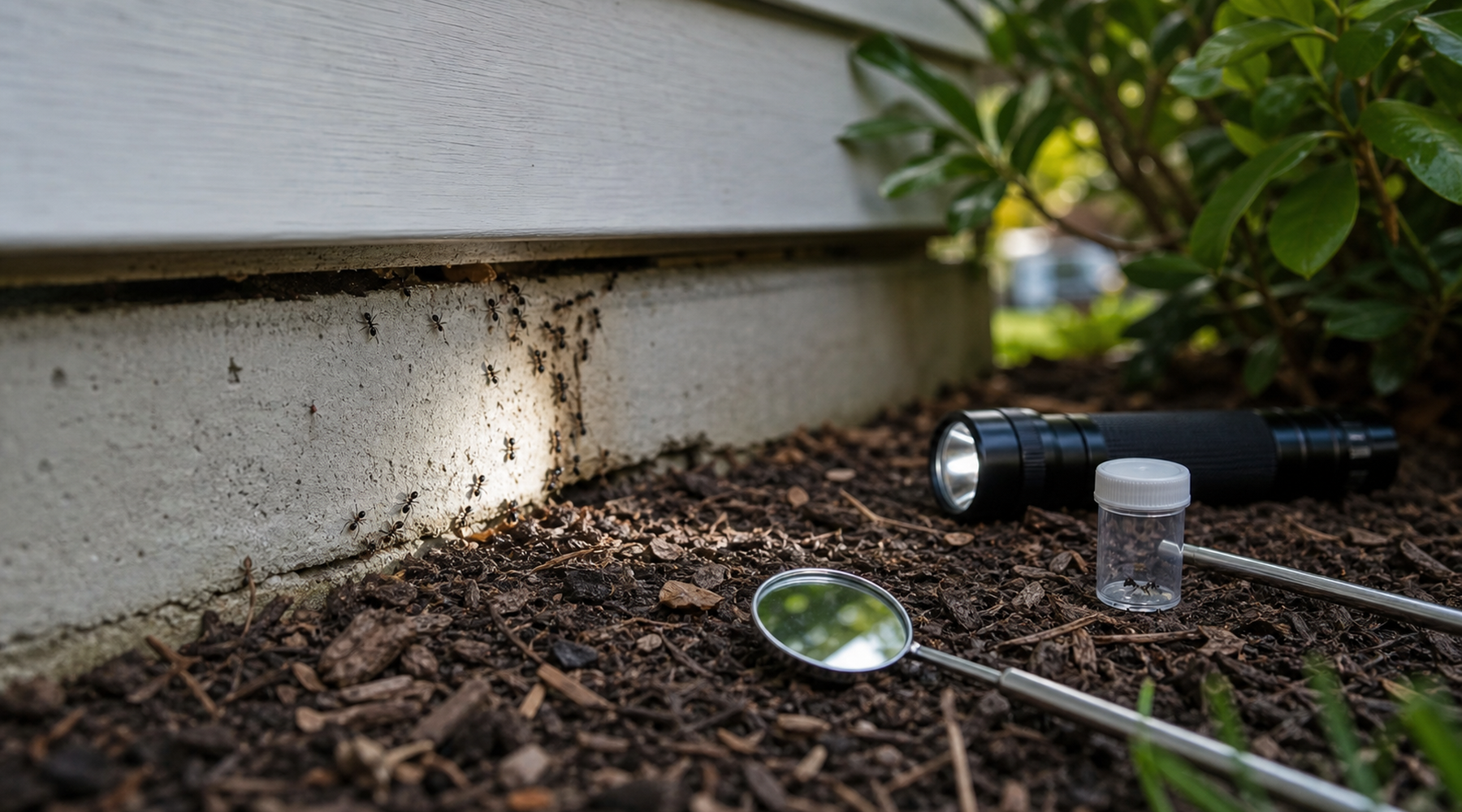
The exterior conditions most reliably associated with heavy indoor spider activity in Frederick homes: mulch banked against the foundation (supports insects and provides cover for wolf spiders), firewood stacked against the exterior wall (major spider harborage), dense ground cover or ivy on the foundation, leaf accumulation in window wells or along the foundation line, and bright exterior lighting that creates insect-attracting zones near entry points. Addressing these conditions is the most effective long-term spider management step for any property.
Interior Zones Most Affected by Spiders
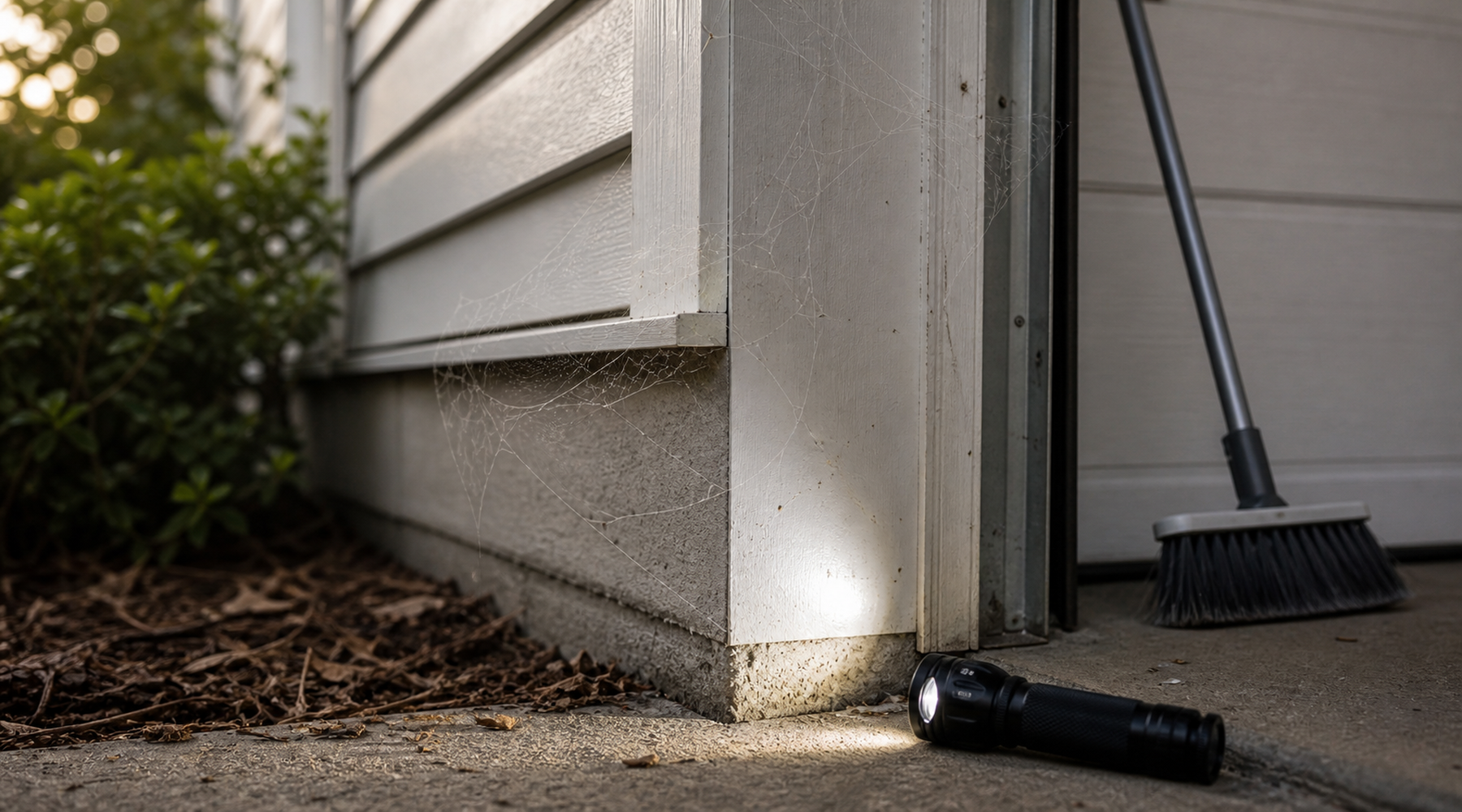
In Frederick homes, spider activity concentrates in basements, garages, crawl spaces, and any room with direct access to an exterior gap. Unfinished basement ceiling joists and rim joist areas are primary cellar spider zones. Garage corners, ceiling edges, and the gap under the garage door are wolf spider entry and travel zones. First-floor rooms adjacent to heavily landscaped foundation areas often see the most wolf spider sightings in fall. Upper room corners and window frames are yellow sac spider zones. Treatment is most effective when targeted to these specific areas rather than broadcast across the structure.
How Spider Control Works
Identify the Species
Determine wolf spider, cellar spider, sac spider, or other species. Location, web type (or absence of web), body size, and color pattern distinguish the common Frederick species.
Assess Exterior Harborage
Document mulch depth, debris zones, lighting placement, wood storage, and vegetation contact with the structure — the conditions that sustain spider food supply at the entry perimeter.
Apply Residual and Web Removal
Residual insecticide at web attachment zones, high-traffic corners, and entry-adjacent areas. Web removal at treated surfaces to reset visibility and reduce re-establishment sites.
Prevention Guidance
Specific exterior harborage reduction steps, lighting adjustment guidance, and entry-point sealing recommendations to reduce spider return pressure between service visits.
Schedule Spider Control in Frederick, MD
Call (240) 555-0157 or contact us online. Spider control scheduling is available year-round with same-week availability for most Frederick County locations.
Request ServiceSpider Control Questions
Are there brown recluse spiders in Frederick, MD?
Brown recluse spiders (Loxosceles reclusa) are not native to Maryland and are rarely found here. The range of the brown recluse extends through the Midwest and South but does not reliably include the mid-Atlantic region. Most large, brown, hunting spiders in Frederick homes are wolf spiders, which are similar in size and general coloring but lack the brown recluse's distinctive violin-shaped marking on the cephalothorax and have eight eyes arranged in three rows rather than the recluse's six eyes in two rows. If you have a spider you are concerned about, we can identify it on site.
How long does spider control treatment last?
Residual insecticide treatment at interior surfaces typically provides 30-60 days of contact kill effect. Exterior residual at foundation and entry zones degrades more quickly with rain and UV exposure — typically 30 days. Spider populations rebuild from outside pressure as new individuals enter through gaps or move in from exterior harborage. Long-term spider reduction requires addressing the exterior harborage and insect food supply conditions alongside treatment. A quarterly service program that re-applies exterior residual seasonally and addresses harborage conditions produces more durable results than a single application.
Why are there suddenly more spiders in my home every fall?
Fall spider increases in Frederick homes have two primary drivers. First, wolf spiders and other ground-hunting species move toward warmth as outdoor temperatures drop — the same behavior that drives mouse entry pressure in September and October. Second, male spiders of many species are most mobile in late summer and fall during mating season, which increases the number of spiders actively traveling and makes them more likely to be seen crossing floors and walls. Cellar spiders accumulate year-round but their populations are most noticeable in fall when other insects entering the structure provide an abundant food source in confined areas.
Related Services
Ant Control
Reducing interior insect populations — particularly ants — reduces the food supply that drives spider activity in Frederick homes.
Preventive Pest Service
Entry-point sealing and exterior harborage reduction — the structural steps that reduce spider entry pressure at the source.
Flea & Tick Control
Exterior insect management for homes with pets — addresses the same exterior harborage zones that support spider activity near the foundation.