Frederick, MD
Hornet Control in Frederick, MD
Bald-faced hornets and yellow jackets are the most aggressive stinging insects in Frederick. Aerial nest removal and ground-nest elimination require different treatment approaches — and both should be done at dusk when the full colony is in the nest.
Bald-Faced Hornets Build Large Aerial Nests
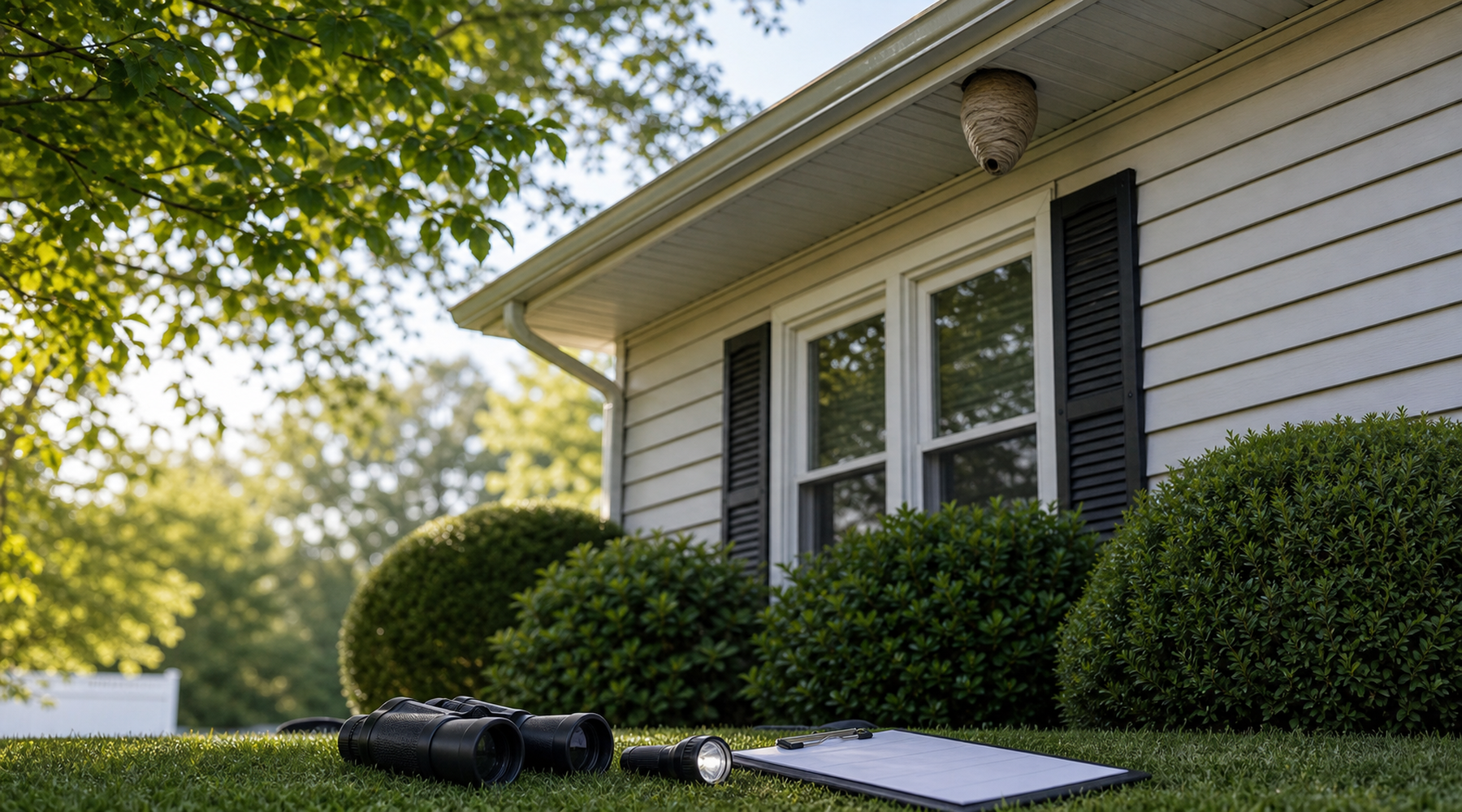
Bald-faced hornets (Dolichovespula maculata) build distinctive large grey paper nests in shrubs, tree branches, and building overhangs. A mature August colony can contain 400-700 workers and will aggressively pursue threats 25-30 feet from the nest. Size and placement make these nests dangerous to treat without proper protective equipment and approach protocol.
Yellow Jackets Nest in the Ground and Wall Voids
Yellow jackets (Vespula species) most commonly nest in underground cavities, abandoned rodent burrows, and wall voids in structures. Ground nest entrances are small openings in lawn or mulch with high flight activity. Wall void nests in older Frederick structures can develop behind siding with colonies of several thousand workers by late summer.
Late Summer Aggression Peaks
Yellow jacket colonies reach maximum size in August and September — the same period when their preferred food source (caterpillars and other insects) becomes scarce. This drives foragers to seek sugary foods at outdoor dining areas, trash receptacles, and fruit trees, increasing the encounter rate with people and the probability of defensive stinging behavior.
Hornet and Yellow Jacket Nests in Frederick: What Makes Them Different
Bald-faced hornets and yellow jackets are significantly more aggressive than paper wasps. Both species have a highly defensive response to perceived nest threats and will pursue intruders away from the nest — bald-faced hornets are particularly noted for aggressive pursuit, and yellow jackets in wall voids can respond to the vibration of nearby construction work, lawn mowing, or even loud footsteps above a ground nest. Both species can sting multiple times without losing the stinger, and large colonies can deliver a substantial number of stings before a person can retreat. Do not attempt to treat these nests without protective clothing and a clear retreat path.
Treatment Approach by Nest Type
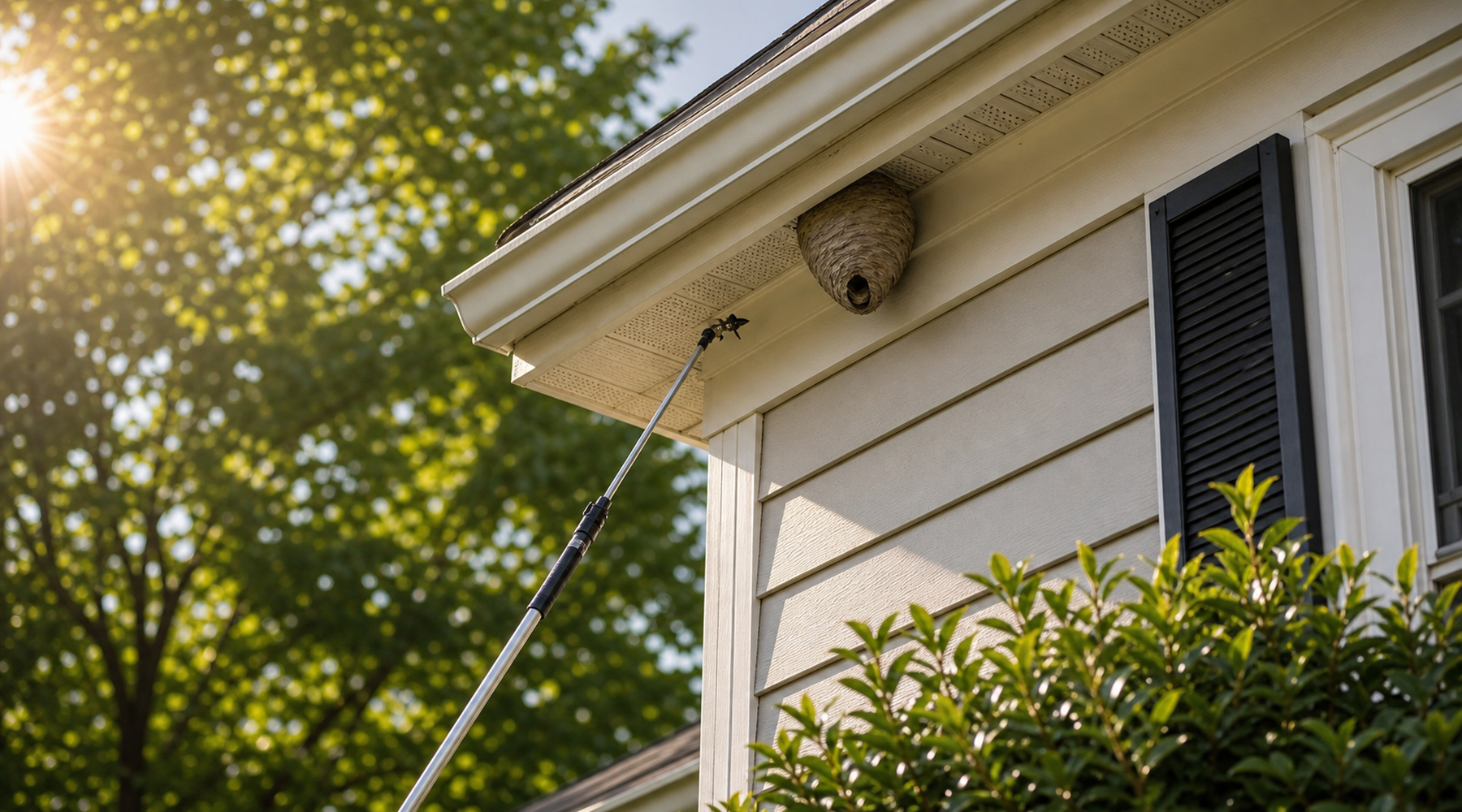
Bald-faced hornet aerial nests: Visible grey paper nests in tree canopy, shrubs, or building structure. Treatment approach: fast-acting pyrethroid aerosol applied directly to the nest entrance opening and over the nest surface at dusk. The nest envelope (the grey paper covering) should not be disturbed before treatment — it insulates the colony and the hornets will not fly through a compromised envelope section. Treatment at the entrance eliminates emerging and entering workers; surface spray reaches workers on the interior nest surface. After confirmed kill, the nest is removed and disposed. Nests in tree canopy at heights requiring ladder work require proper fall protection protocols.
Yellow jacket ground nests: Treatment at dusk with pyrethroid dust applied into the nest entrance opening. Dust penetrates through the underground gallery system and adheres to workers passing through. A second treatment 5-7 days later addresses workers that were foraging during the initial treatment. The entrance should not be sealed after the first treatment — sealing before the colony is eliminated drives workers to create secondary exits inside the structure or into adjacent areas. After confirmed elimination, the entrance can be plugged with soil or expanding foam.
Yellow jacket wall void nests: The most complex hornet control scenario in Frederick. Wall void nests require dust or aerosol treatment injected into the void through a small opening — typically through a weep hole, through the siding gap, or through a drilled access hole as a last resort. The colony response to treatment can drive workers inward into living spaces through gaps at electrical outlets, switch plates, and ceiling fixtures. Property occupants should be prepared for this possibility and a temporary interior count increase for 24-48 hours after wall void treatment is common and expected.
Yellow Jacket Nest Timing in Frederick
Yellow jacket colonies in Frederick follow a predictable annual cycle. A single overwintered queen starts a new ground or void nest in April. By June the colony has several dozen workers. By August a ground nest may have 1,500-3,000 workers and a wall void nest may have several thousand. The colony dies in fall — workers die with the first hard frost and the mated new queens disperse to find overwintering sites for the following year. The nest itself is not reused the following year, but the same landscape features (south-facing slopes, abandoned rodent burrows, deteriorated wall void access points) attract new queens each spring. Filling abandoned rodent burrows in fall reduces the following year's available nesting sites near the structure.
How to Avoid Provoking Yellow Jackets Near Your Frederick Property
Yellow jackets in the ground near patios and outdoor dining areas become a significant nuisance in August and September when their natural insect food supply decreases. They are attracted to protein foods, sugary beverages, and ripe fruit — all common on outdoor tables. Keep outdoor food covered, empty trash cans frequently, pick up fallen fruit from fruit trees, and avoid wearing sweet-scented colognes or perfumes near known nest sites. If a yellow jacket nest is in a lawn area, mark the entrance with a stake or garden flag and advise family members to avoid that area until treatment. Mowing over a ground nest entrance or trimming vegetation near a nest entrance triggers a defensive response — never mow near a suspected ground nest entrance without first confirming it is inactive.
How Hornet Control Works
Species and Nest Identification
Confirm bald-faced hornet, yellow jacket species, or other stinging insect. Determine nest location — aerial, ground, or void. Assess colony size and treatment complexity.
Dusk Treatment
Direct nest treatment with fast-acting pyrethroid aerosol, dust, or foam matched to nest type. Full protective equipment. Property occupants and pets cleared from treatment zone before service begins.
Nest Removal
Aerial nest removed and disposed after confirmed treatment kill. Ground nest entrance plugged after confirmed colony elimination. Wall void nest debris assessed for removal options.
Follow-Up Assessment
Follow-up visit or call within 5-7 days to confirm colony elimination and address any surviving forager activity. Second treatment if warranted by remaining activity.
Active Hornet or Yellow Jacket Nest Near Your Home in Frederick?
Call (240) 555-0157 or contact us online. Same-day and next-day scheduling available for bald-faced hornet and yellow jacket nests near entry points or high-traffic areas.
Request ServiceHornet Control Questions
Why does the yellow jacket nest seem to get bigger after I sprayed it?
If you applied a repellent spray to a yellow jacket ground nest entrance without eliminating the colony, the surviving workers may have dug secondary exits nearby, making flight activity appear to have increased from more locations. Additionally, workers returning from foraging that encountered the sprayed entrance may redirect to an alternate exit rather than abandoning the colony — this is why you may see increased surface activity after a partial treatment. The colony is not actually larger — the same population is now using more exit points. Proper treatment requires dust or aerosol applied into the nest gallery at dusk, when all workers are inside, not surface spray at the entrance opening during the day.
How large can a bald-faced hornet nest get in Frederick?
Bald-faced hornet nests in Frederick typically reach the size of a football by July and the size of a basketball or larger by August and September. Large nests in locations with reliable foraging territory — near fruit trees, flowering vegetation, or areas with abundant insect prey — can reach the size of a large watermelon in an exceptional season. Colony populations in mature nests range from 400-700 workers. The nest grows through the season as workers add new paper cells to the exterior — the characteristic layered structure of the grey paper envelope is built one layer at a time as the colony expands. Nests do not survive winter — the colony dies in fall and the nest structure deteriorates through the following winter and spring.
Can yellow jackets come through my wall into my home?
Yes — and this is a documented outcome when a wall void nest is treated improperly or discovered late in the season at a high-population stage. Workers whose exit is blocked or whose colony is partially treated may chew through drywall or force their way through existing gaps at electrical outlets, switch plates, and recessed ceiling fixtures to find an alternative exit. This is most likely with late-season wall void nests where colony size is at maximum. If you discover a yellow jacket nest in your wall void, do not seal the exterior opening — contact us so we can treat the void in a way that accounts for the interior breakthrough risk and allows you to prepare the living space for any temporary worker emergence.
Related Services
Wasp Nest Removal
Paper wasp nest removal from Frederick eaves and deck surfaces — less aggressive than hornets but treated with the same precision.
Rodent Exclusion
Filling abandoned rodent burrows reduces the ground-nest site availability that attracts yellow jacket queens in spring.
One-Time Pest Treatment
A single visit with full treatment is the right scope for most Frederick hornet and yellow jacket nest situations.