Frederick, MD
Crawl Space Pest Control in Frederick, MD
The crawl space is the least inspected zone in most Frederick homes — and one of the most active for rodents, moisture-related insects, and structural pest harborage. Inspection reveals what living areas never show.
Crawl Space Vents Are Rodent Entry Points
Standard foundation vents in older construction typically lack adequate screening — or have screening that has deteriorated. Mice and Norway rats enter through open or damaged vents and establish nesting in vapor barrier folds, in floor joist bays, and against the foundation wall.
Moisture Drives Insect Activity
Damp crawl spaces create ideal conditions for wood-boring beetles, fungus gnats, pillbugs, springtails, and camel crickets — all moisture-dependent insects that establish in damp soil or decaying organic material. Vapor barrier integrity and ventilation adequacy directly affect insect pest pressure in crawl spaces.
Crawl Space Inspection Finds What Living Areas Cannot
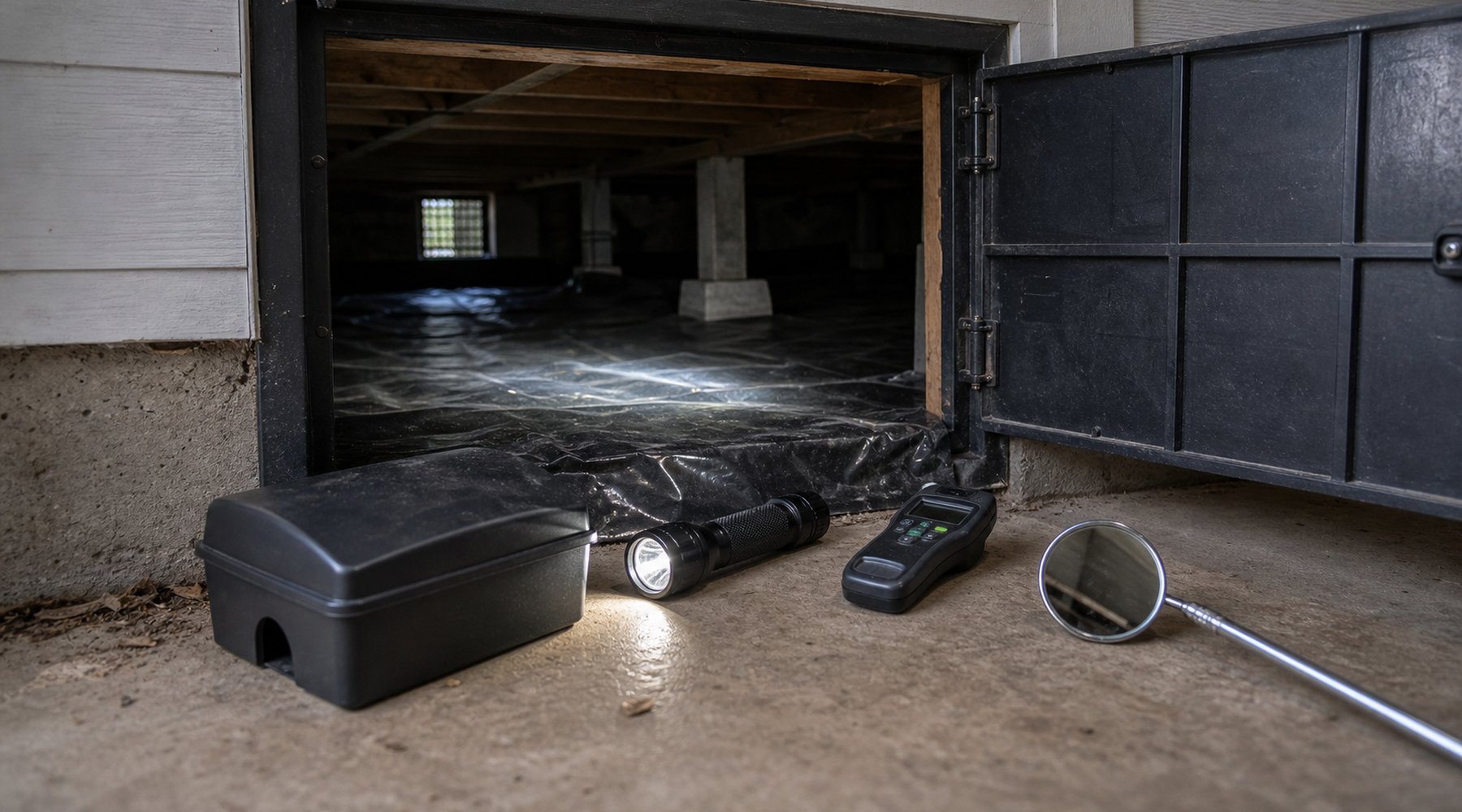
A crawl space inspection documents rodent entry points, nesting material, vapor barrier damage, wood moisture conditions, insulation status, and any structural pest evidence — termite shelter tubes, carpenter ant frass, or wood damage consistent with decay-related pest activity — that would not be visible from living areas above.
Crawl Space Pest Conditions in Frederick Homes
Many Frederick homes — particularly those built before 1980 with partial or full crawl space foundations — have crawl spaces that have never been systematically inspected for pest conditions. A crawl space that appears normal from the access hatch may have rodent runways under the vapor barrier, moisture-damaged insulation falling from joist bays, open vent screen gaps providing continuous mouse entry, and insect harborage in damp soil along the foundation wall. None of these conditions produce obvious signs in the kitchen or living areas until they reach a level of severity that involves either direct pest incursion into living spaces or structural damage to floor system components.
What Drives Pest Activity in Frederick Crawl Spaces
The conditions that most reliably produce pest activity in Frederick crawl spaces: inadequate vapor barrier coverage or tears in existing barrier that allow soil moisture to evaporate into the crawl space; standing water after heavy rainfall from grading that directs surface runoff toward the foundation; insulation fallen from joist bays that provides ground-level nesting material for mice; open or deteriorated foundation vents that allow direct rodent entry; and organic debris — leaf material, wood scraps, cardboard — left in the crawl space during construction or renovation that decomposes and supports fungus gnats, beetles, and other moisture-dependent insects.
Camel crickets (Ceuthophilus species) are a frequent crawl space occupant in Frederick homes — they prefer the cool, dark, humid conditions that crawl spaces provide and are often found in large numbers in undisturbed crawl spaces. While they are primarily a nuisance pest, their presence indicates the moisture conditions that support more damaging pest activity. American cockroaches entering crawl spaces from exterior soil enter through the same open vents and travel up through floor penetrations into kitchens and basements. Sowbugs (Porcellio scaber) establish in damp soil under or at the edge of the vapor barrier and are an indicator of consistent moisture at the soil surface.
Foundation Vent Screening for Crawl Spaces
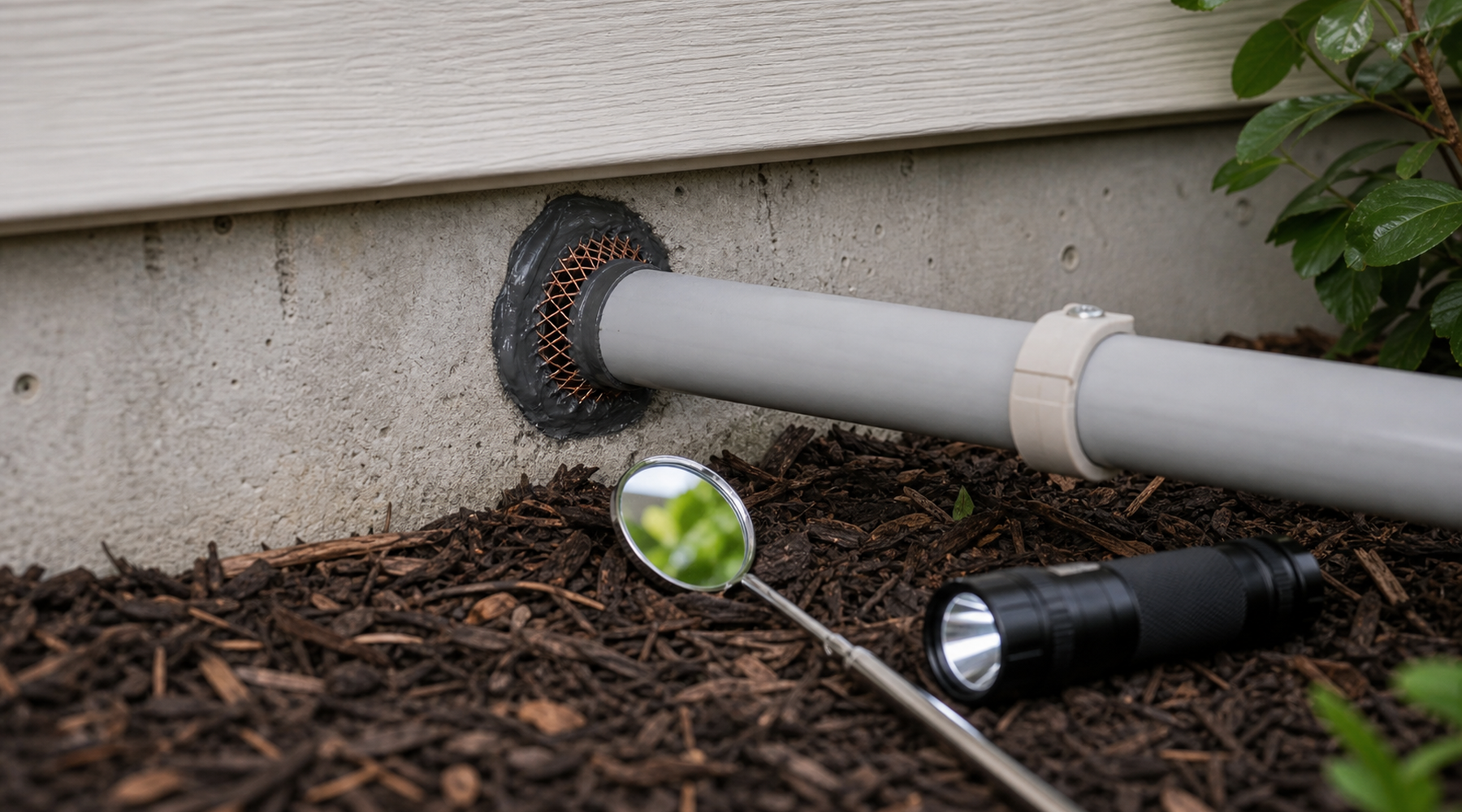
Standard foundation vents in older Frederick construction use louvered metal or plastic covers that deteriorate over time and often have gaps well in excess of the 1/4 inch threshold for mouse exclusion. Hardware cloth installation over foundation vents — secured with screws and caulked at the frame edges — excludes mice, rats, and larger insects while maintaining the ventilation function required to manage crawl space humidity. For properties where the foundation venting strategy is being reconverted to a conditioned crawl space, vent blocking combined with a dehumidifier is a different scope that a contractor manages, but we can assess and screen existing open vents as an interim or permanent exclusion measure.
Signs of Crawl Space Pest Activity You Can See From the Hatch
Even without entering the crawl space, certain signs at or near the access hatch indicate active pest use: droppings at the hatch threshold or on the hatch cover; insulation pieces or debris near the hatch opening; spider webs and concentrated insect activity at the hatch frame suggesting the crawl space has a large insect population; and visual confirmation of rodent runs or bare-soil trails visible from the hatch opening. Any of these findings warrant a full-access crawl space inspection to determine what is happening in the zones not visible from the hatch.
How Crawl Space Pest Control Works
Full Crawl Space Inspection
Entry and inspection of the full accessible crawl space area. Rodent evidence, insect harborage, vent condition, vapor barrier status, insulation condition, and moisture indicators documented with photographs.
Vent Screening and Entry-Point Sealing
Hardware cloth installation at all open or deteriorated foundation vents. Steel wool and caulk at any pipe penetration entry points accessible from the crawl space. Sill plate gap documentation for exclusion planning.
Trap Placement and Insect Treatment
Snap traps at active rodent routes inside the crawl space. Moisture-related insect treatment at harborage zones. Findings and treatment locations documented.
Moisture and Structural Recommendations
Written findings on vapor barrier integrity, moisture conditions, and any structural observations relevant to pest establishment. Contractor referral guidance for conditions outside pest control scope.
Schedule a Crawl Space Pest Inspection in Frederick
Call (240) 555-0157 or contact us online. Crawl space pest conditions are best caught early — before moisture damage and rodent nesting reach a scale that involves structural remediation.
Request ServiceCrawl Space Pest Questions
Can insects from the crawl space come up into my living space?
Yes. American cockroaches traveling through crawl spaces access living areas via floor penetrations around plumbing pipes, gaps at floor registers, and any opening in the subfloor. Camel crickets occasionally move upward into basements and ground-floor spaces through the same routes. Fungus gnats emerging from damp crawl space soil can move upward through floor cracks and into basement rooms. The floor system between the crawl space and the first floor is permeable in most older Frederick homes — sealing floor penetrations alongside crawl space pest treatment is the complete approach to preventing upward migration.
Do I need a vapor barrier in my crawl space to control pests?
A properly installed vapor barrier significantly reduces the moisture conditions that support pest activity in a crawl space — it does not eliminate pest entry, but it removes one of the primary attractants. A missing or heavily damaged vapor barrier in a damp Frederick crawl space will sustain moisture-dependent insect populations regardless of how thoroughly the insects are treated, because new individuals re-establish from the same damp soil conditions. Vapor barrier repair or replacement is a contractor job, but we assess its condition during the pest inspection and document what we find so you have the information needed to prioritize the repair.
How often should a crawl space be inspected for pests?
Annual inspection is appropriate for most Frederick homes with crawl space foundations — particularly before fall, when rodent pressure increases and any exclusion gaps need to be identified before the winter mouse season begins. Properties that have had prior rodent activity in the crawl space, homes adjacent to active wildlife corridors, and properties that have had recent construction or plumbing work (which opens new penetrations) benefit from inspection before each potential high-pressure season: once in late summer for fall rodent pressure and once in spring to assess any winter activity and to identify moisture conditions before summer humidity peaks.
Related Services
Rodent Exclusion
Full structural exclusion for Frederick homes — extends crawl space vent screening to all foundation and exterior entry points for comprehensive rodent exclusion.
Mouse Control
Active mouse trapping for Frederick homes — crawl space trap placement combined with interior and kitchen treatment for complete coverage.
Attic Pest Control
Full-structure pest inspection covering both attic and crawl space — the two zones where pest problems develop without early visible signs in living areas.