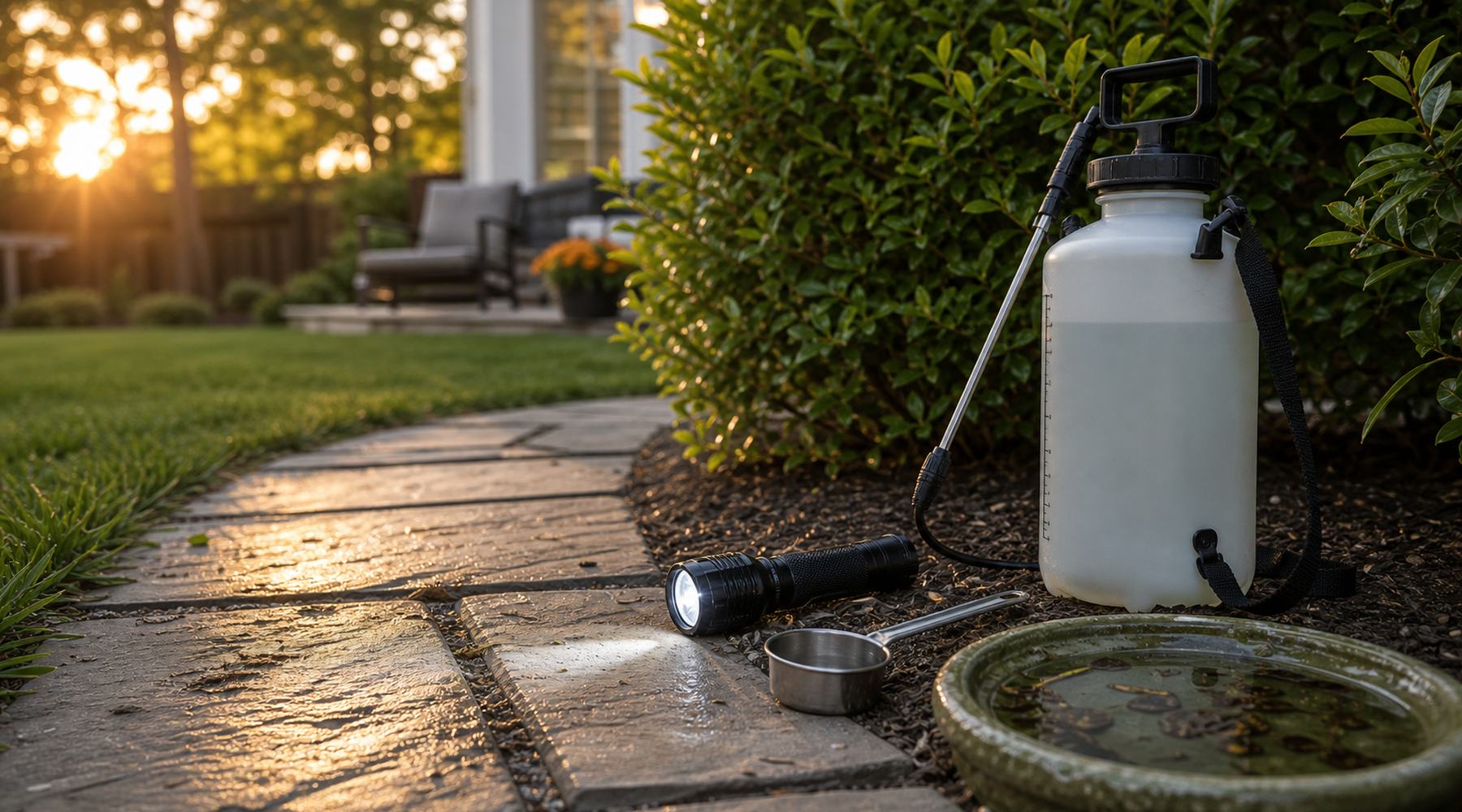
Frederick, MD
Mosquito Control in Frederick, MD
The Asian tiger mosquito (Aedes albopictus) is the dominant nuisance species in Frederick, MD. It is a daytime biter that breeds in any container of standing water — even a bottle cap. Barrier treatment and source elimination are the two-part control strategy.
Asian Tiger Mosquito Bites During the Day
Aedes albopictus is an aggressive daytime biter unlike Culex mosquitoes that peak at dawn and dusk. This makes conventional dusk-active repellent timing less effective and makes outdoor daytime activities in Frederick yards consistently uncomfortable from June through September without barrier treatment.
Breeds in Small Containers
The Asian tiger mosquito breeds in any small volume of standing water that persists for 7-10 days — flower pot saucers, bird baths, clogged gutters, children's toys, tarps with puddles, and even bottle caps. Source elimination — removing or treating all standing water sources — is the most important single step in mosquito population management.
3-4 Week Treatment Cycle
Perimeter vegetation barrier treatment uses a residual insecticide applied to shrubs, ground cover, and shaded vegetation where adult mosquitoes rest during the heat of the day. Treatment breaks down over 3-4 weeks with sun and rain — a recurring cycle application is required to maintain protection through the Frederick mosquito season from May through October.
Mosquito Pressure in Frederick, MD: What Makes It So Persistent
Frederick properties face consistent Asian tiger mosquito pressure from late May through mid-October because the species breeds in the ubiquitous small water-holding containers and yard features that every property has: bird baths, planter saucers, hollow logs, the folds of tarps over firewood, the puddle that forms in the low spot of your driveway, the clogged gutter over the garage. The breeding sites are everywhere, the adults fly only 100-150 feet from their breeding source, and the daytime biting habit means that morning and evening gardening, outdoor dining, and children's play time are all active risk windows. Barrier treatment combined with thorough source elimination is the only approach that produces meaningful relief.
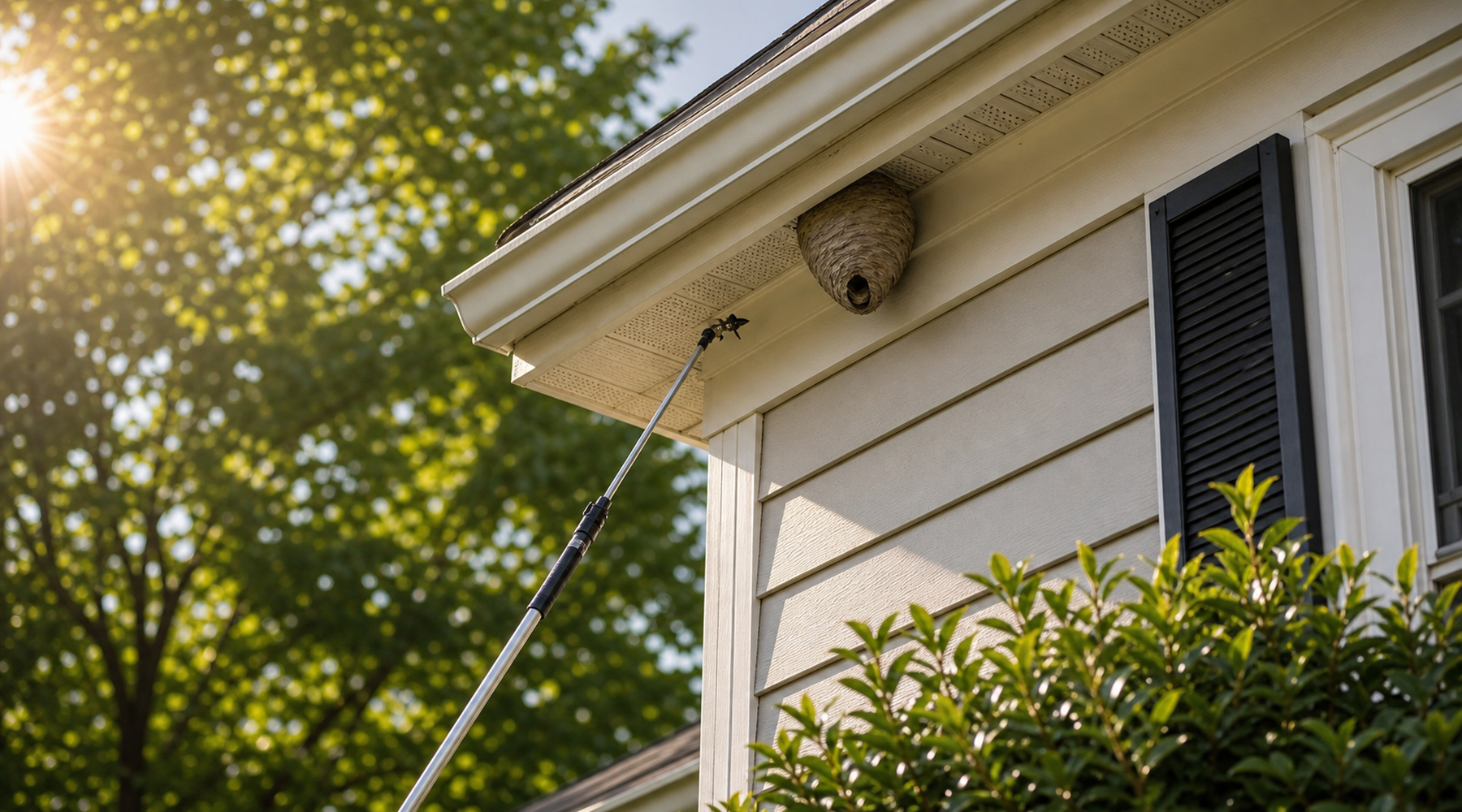
How Mosquito Barrier Treatment Works in Frederick Yards
Adult Asian tiger mosquitoes do not fly in direct sunlight or in heat — they rest in the cool, shaded microhabitat created by shrub foliage, ground cover, and the lower canopy of ornamental trees during mid-day hours. This resting habitat is where the barrier treatment is most effective. A residual pyrethroid insecticide applied to the undersides of foliage and the interior of shrub canopies creates a contact-kill surface for resting adults and a residual zone that affects mosquitoes landing on treated surfaces for 3-4 weeks.
The treatment targets: the shrub perimeter of the yard, foundation plantings, ornamental ground cover, wooded lot edges, and any dense vegetation adjacent to the outdoor living area. Lawn areas are generally not effective treatment zones for Asian tiger mosquitoes — they are a resting habitat species that concentrates in shaded foliage rather than open turf.
Larvicide applications (Bacillus thuringiensis var. israelensis, or Bti, in dunks or granule form) are used in any standing water source that cannot be eliminated: ornamental ponds, rain barrels, catch basins, and water-holding drainage features. Bti is a biological larvicide that kills mosquito and fungus gnat larvae without affecting other aquatic organisms — it is appropriate for water features where you do not want a chemical residual effect.
Standing Water Sources to Eliminate
A thorough source elimination walk at a typical Frederick residential property typically identifies 5-15 water sources: bird baths (change water every 3-4 days or add a recirculating pump); flower pot saucers (drill a drainage hole or empty weekly); clogged gutters (clean and ensure water flows freely); tarps over firewood or equipment (fold so water does not pool); children's play equipment (store buckets, wading pools, and sand toys inverted when not in use); hollow ornamental logs or stumps; and any low spot in the lawn that holds water after rain. These are the sources that a single property contributes to the neighborhood mosquito population.
Mosquito Season Timing in Frederick MD
The Asian tiger mosquito season in Frederick runs from late May through mid-October, with peak activity from July through September. Culex quinquefasciatus (southern house mosquito), which is associated with West Nile virus transmission, is also present in Frederick County and peaks at dusk — it breeds in larger standing water bodies including storm water retention features, storm sewers, and stagnant ponds rather than the small containers that are Aedes albopictus's preferred breeding site. Starting mosquito barrier treatment in late May, before the population builds, produces better cumulative results through the season than starting treatment in July after the population has established.
How Mosquito Control Is Structured
Source Identification Walk
Walk the property to identify and document all standing water sources — containers, drainage features, gutters, and water-holding landscape elements. Source elimination guidance provided before first treatment.
First Barrier Treatment
Residual insecticide applied to all shaded vegetation at the yard perimeter and throughout landscape beds. Larvicide applied to water features that cannot be emptied.
Recurring Cycle Visits
Return visits every 3-4 weeks from May through October. Treatment refreshed as prior application breaks down. New standing water sources identified and addressed at each visit.
Season Closeout
Final treatment in October before the first hard frost. Season summary of treatment dates, standing water sources found, and conditions to address before the following spring season begins.
Ready to Reclaim Your Frederick Yard This Mosquito Season?
Call (240) 555-0157 or contact us online. Start your mosquito program in May before peak season — early start means fewer mosquitoes through the whole summer.
Request ServiceMosquito Control Questions
Does mosquito barrier treatment affect bees and beneficial insects?
Pyrethroid barrier treatments applied to foliage can affect pollinators that contact treated surfaces — this is a legitimate concern. We take mitigation steps: treatment is not applied to flowering plants or actively blooming shrubs; applications are made in early morning or evening when bee foraging activity is lowest; treatment is targeted to shaded interior foliage where resting mosquitoes concentrate rather than to flower surfaces or open lawn areas. If you have a bee hive or significant pollinator garden area on the property, let us know when you schedule so we can plan treatment zones accordingly and discuss whether an organic or Bti-based only program is more appropriate for your property situation.
Why are mosquitoes so bad in my yard but not my neighbor's?
Asian tiger mosquito populations are highly localized — adults fly only 100-150 feet from their breeding source. A yard with two or three unaddressed breeding containers can have measurably higher mosquito density than an adjacent property that eliminated its standing water sources. The other variables: shade cover (more shaded resting habitat supports more adults), proximity to larger standing water bodies, vegetation density, and wind exposure (open, windy yards have lower resting mosquito counts than sheltered, heavily planted yards). The source elimination walk often reveals the specific containers driving the problem — and in many cases, fixing three or four sources produces a dramatic improvement before barrier treatment even begins.
Is mosquito barrier treatment safe for children and pets?
We ask that people and pets remain out of treated areas for 30-45 minutes while the product dries. Once dry, the treated vegetation is safe for contact. We do not treat vegetable garden areas, herb beds, or surfaces where children play directly. If you have specific concerns about product category for your yard — particularly for homes with young children or pets with known sensitivities — we can discuss a Bti-only larvicide program for water sources combined with source elimination guidance as an alternative to residual barrier treatment. Source elimination alone, done thoroughly, reduces mosquito pressure significantly on properties where all contributing water sources can be identified and addressed.
Related Services
Flea & Tick Control
Outdoor tick management for Frederick yards — often combined with mosquito control in a single exterior pest program covering May through October.
Quarterly Pest Control
Year-round pest program that can incorporate mosquito control as a seasonal add-on service from May through October.
Wasp Nest Removal
Paper wasp and hornet nest service often scheduled alongside mosquito treatment visits during the summer season.