Frederick, MD
New Home Pest Inspection in Frederick, MD
A pre-move-in pest inspection for new construction and recently purchased Frederick homes — documents active pests, entry points, and conducive conditions before you move in, when resolution is easiest and least disruptive.
New Construction Has Unique Pest Entry Points
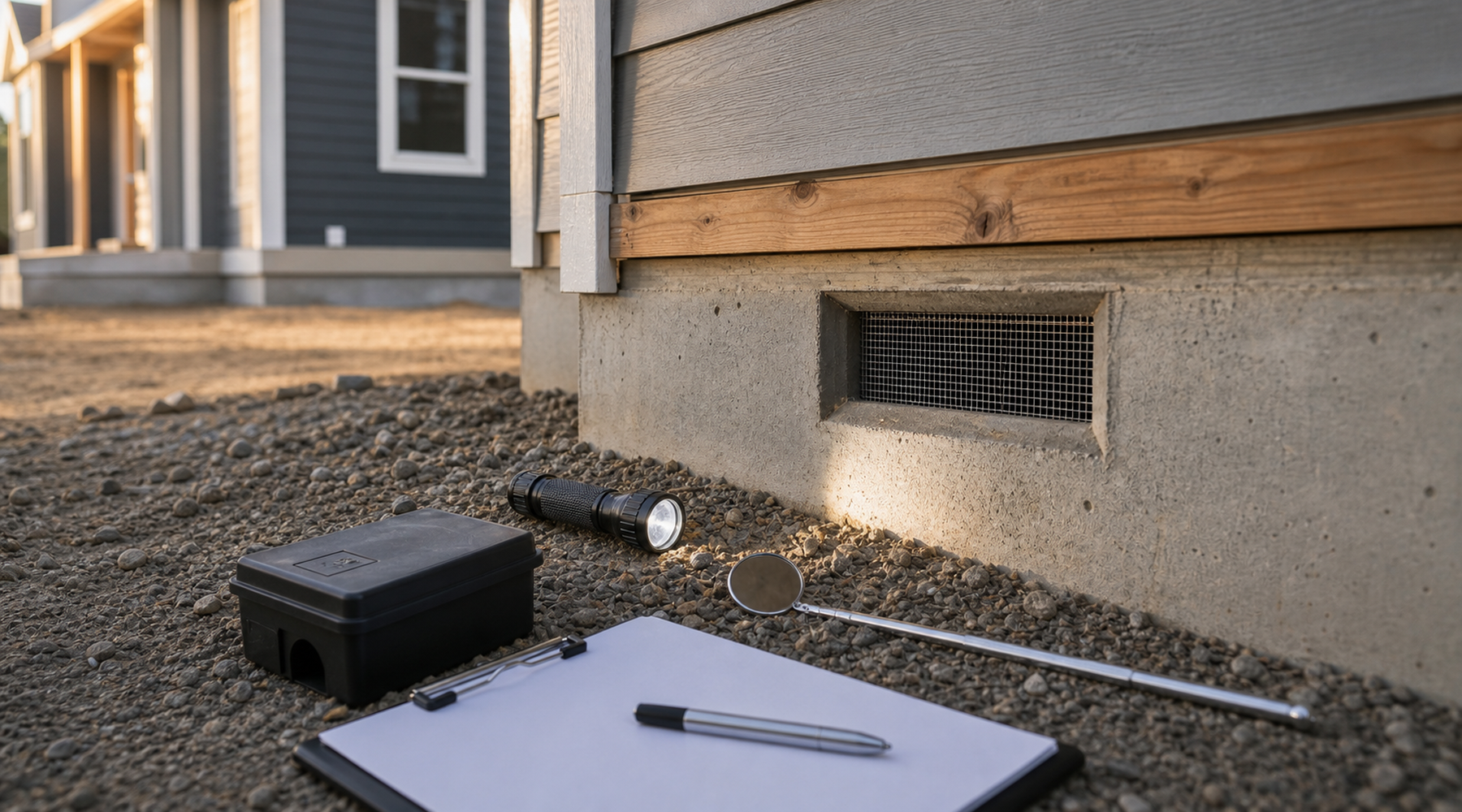
New construction creates pest entry opportunities that finish-ready inspections do not always catch: unsealed plumbing penetrations in freshly drywalled walls, weep holes in new brick veneer that have never been screened, and disturbed soil at the foundation perimeter that creates ideal Norway rat and mouse burrowing conditions before landscaping is established.
Document Before Occupancy
A pest inspection before move-in establishes the condition of the property at the point you take occupancy. Any pest activity or conducive condition found and documented before occupancy is clearly the builder's or prior owner's responsibility — not a condition introduced during your occupancy. That documentation protects you if warranty or disclosure disputes arise.
Conducive Conditions Are Easier to Fix Pre-Occupancy
Sealing a plumbing penetration, installing a door sweep, or caulking a foundation crack is significantly easier before furniture is moved in and before the home is fully occupied. Pre-occupancy inspection findings give you a punch list of pest prevention work to complete before the first season of occupancy.
Why a New Home Pest Inspection Is Worth Doing Before Move-In
New construction and recently purchased homes in Frederick start with conditions that are different from an established, previously occupied property — but not necessarily better from a pest prevention standpoint. A new-construction home in Frederick may have fresh lumber that is still at attractive moisture content for carpenter ants, an unsealed weep hole array in the brick veneer, or a grading condition that directs stormwater toward the foundation. A recently purchased home may have conditions from prior occupancy — mouse evidence in the attic, cockroach evidence behind appliances left by the prior owner, or a decades-old moisture problem in the crawl space — that a general home inspection did not fully document. A pest-specific inspection before move-in catches these before they become your problem in your new home.

What a New Home Pest Inspection Looks For
New construction concerns: Unsealed plumbing penetrations through the concrete slab or framed floor — especially under kitchen and bathroom installations; fresh weep holes in brick veneer that were never screened; soil conditions at the foundation perimeter that are still disturbed from grading and will settle into Norway rat burrowing conditions; gaps at the base of vinyl or fiber-cement siding that were left unsealed by the framing contractor; attic vent screens that were not installed or were installed in the wrong mesh size to exclude mice; and construction debris left in the crawl space or under the slab that provides pest harborage as it decomposes.
Previously occupied home concerns: Evidence of prior rodent activity in the attic or crawl space — droppings, nesting material, urine staining — that indicates the property had a mouse or rat problem the prior owner may not have disclosed; cockroach evidence in the kitchen or bathrooms — egg cases behind appliances or in cabinet hinges — that indicates a prior infestation; moisture conditions in the basement or crawl space that sustained prior insect activity and will sustain new activity in your occupancy; and carpenter ant damage in wood members near moisture sources that indicates a prior colony and an active moisture problem that will attract carpenter ants again if not addressed.
The Written Report: What It Includes
The new home pest inspection report documents: active pest activity found (species, location, evidence type); conducive conditions that increase pest risk (entry gaps, moisture zones, harborage conditions); recommended corrective actions in priority order (urgent structural items, recommended prevention steps, and optional monitoring); and an overall assessment of the property's pest pressure profile. This report is in plain language — not pest control jargon — so you can understand what was found and what to do about it without needing a second translation. The report is the document you keep, reference during your first season of occupancy, and use to hold your builder accountable if new construction items need correction.
After the Inspection: What Happens Next
Most new home pest inspections in Frederick produce a report with a mix of immediate treatment needs and longer-term prevention recommendations. Common immediate findings: a mouse entry gap that should be sealed before move-in; carpenter ant activity from a moisture condition that needs investigation; cockroach evidence in a kitchen left by the prior occupant that warrants a single gel bait treatment before the home is fully occupied. Less urgent but important findings: grading correction needed to direct water away from the foundation; caulking at window frames before the first stink bug season; attic vent screening before the fall rodent pressure season. We prioritize the findings in the report so you know what to address before move-in and what can wait until you are settled.
How the New Home Pest Inspection Works
Schedule Before Move-In
Inspection is most valuable before occupancy begins. Schedule as soon as the property is available for inspection access — after closing for a purchase, or after the punch list walkthrough for new construction.
Exterior and Interior Inspection
Full exterior walk: foundation, entry points, grading, and landscaping conditions. Full interior walk: kitchen, bathrooms, utility areas, basement, and attic and crawl space if accessible.
Findings Documentation
Written report produced after the inspection with findings by zone, severity classification, and recommended actions. Photos included for each significant finding.
Treatment or Prevention Scope
If active pest activity is found, treatment can be scheduled at the same visit or as a follow-up before move-in. Prevention scope items are presented with prioritization guidance so you can address the most urgent items first.
Moving Into a New Frederick Home? Schedule a Pest Inspection First.
Call (240) 555-0157 or contact us online. Same-week scheduling available for new home pest inspections throughout Frederick County.
Request InspectionNew Home Inspection Questions
Is a pest inspection the same as a home inspection?
A general home inspection and a pest inspection serve different but complementary purposes. A home inspector evaluates structural components, mechanical systems, roofing, and general condition — they are looking at the whole building, and pest evidence is one item among many that may be noted but not thoroughly investigated. A pest inspection is focused entirely on pest activity, entry points, conducive conditions, and pest-related structural evidence — it is a deeper investigation of pest-specific indicators that a general home inspector does not have the training or the time to fully evaluate. We recommend scheduling both before closing on a Frederick property purchase: the home inspector catches structural and mechanical issues; the pest inspector catches pest-specific conditions and entry points that the home inspection is not designed to fully address.
Can a new home pest inspection identify termites?
Our new home pest inspection includes visual inspection for termite evidence — shelter tubes on foundation walls or structural wood, damaged wood consistent with termite activity, and moisture conditions conducive to termite establishment. However, comprehensive termite inspection in Frederick MD is typically a separate service (a wood-destroying organism inspection, or WDO inspection) that is specifically designed for real estate transactions and is often required by lenders. If termite evidence or concerns are identified during our pest inspection, we will note the finding and advise you to schedule a separate WDO inspection. Our inspection documents general pest activity, conducive conditions, and entry points — not a real estate disclosure-grade termite inspection.
What if the builder disputes the findings from the pre-move-in inspection?
Our written inspection report documents what was found, where it was found, and the evidence basis for each finding — with photographs at each significant location. This level of documentation provides a factual basis for any conversation with a builder about warranty items. If a builder disputes a finding — for example, claiming that an unsealed plumbing penetration is outside their scope or that a moisture condition in the crawl space is within acceptable parameters — the written report with photographs provides a dated, specific record of the condition as it existed at the time of your occupancy. We are happy to discuss findings with builders or their representatives and clarify the pest risk basis for any item we have documented.
Related Services
Real Estate Pest Inspection
Transaction-timed pest inspection for Frederick home buyers and sellers — written findings for disclosure and negotiation purposes.
Preventive Pest Service
Entry-point sealing and exclusion work to address the conducive conditions found during a new home pest inspection.
Quarterly Pest Control
Year-round pest program to start your new home occupancy right — four visits aligned to Frederick's seasonal pest pressure calendar.