Frederick, MD
Mouse Control in Frederick, MD
House mice (Mus musculus) enter through gaps as small as a dime. Trapping reduces the active population — but without finding and sealing the entry points, the population rebuilds from outside pressure within weeks.
Entry Points as Small as 1/4 Inch
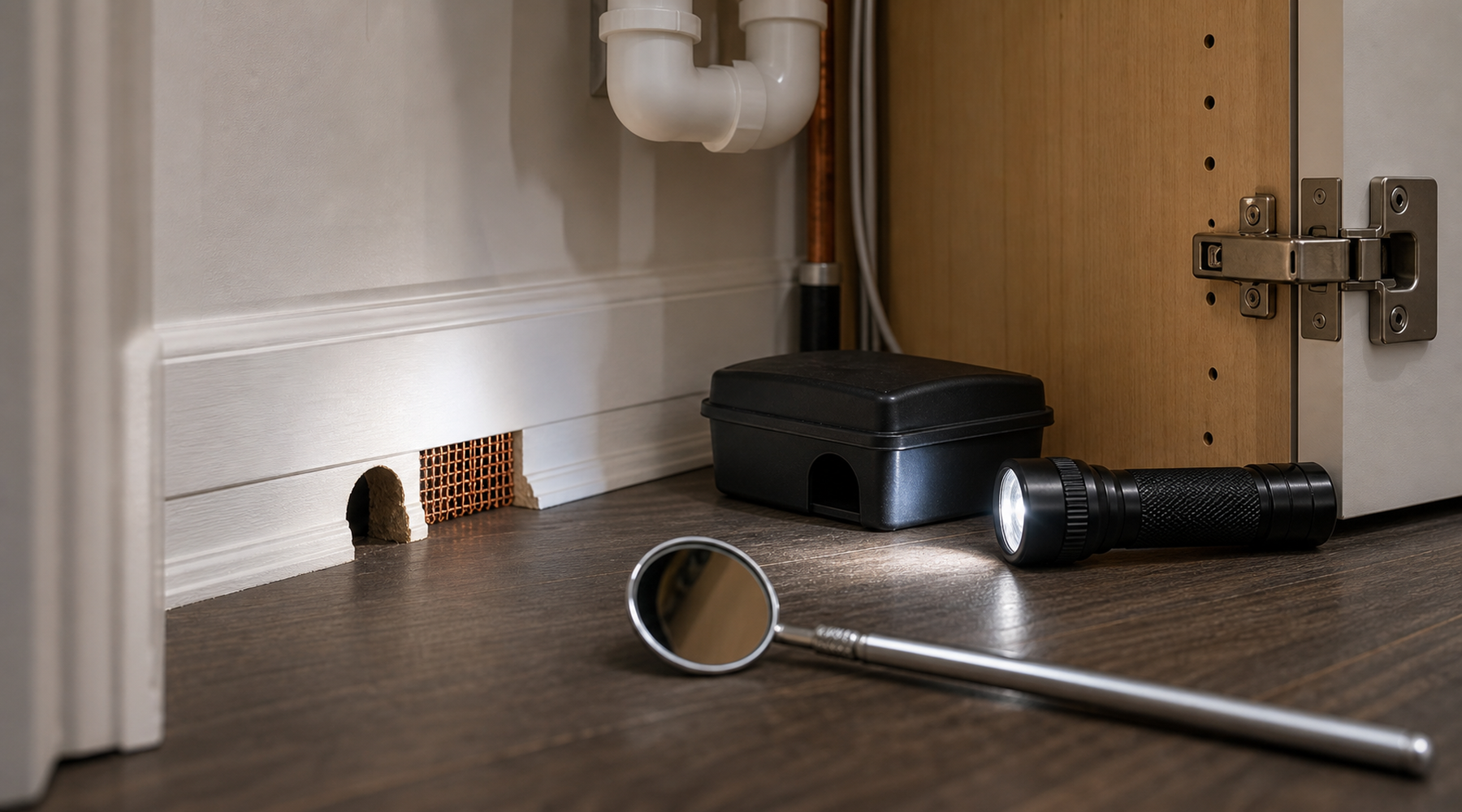
A house mouse can compress its body to fit through any gap approximately the diameter of a dime — 1/4 inch. Common entry points in Frederick homes include pipe penetrations under kitchen sinks, weep holes in brick veneer, gaps at the base of exterior doors, utility chases, and foundation cracks. Identifying these gaps is the first step in stopping re-entry.
Population Grows Through Winter
House mice reproduce rapidly — a single female can produce 6-10 litters per year, with 5-6 pups per litter. An active population inside a structure from October through March can grow from a pair to dozens without cold weather stopping them the way it limits outdoor populations. Early intervention limits the population before it reaches that scale.
Trapping Plus Exclusion
Snap traps placed in active travel routes reduce the interior population. Entry-point sealing reduces the re-entry rate. Both are required for durable control — trapping without exclusion is a treadmill; exclusion without active population reduction leaves existing mice inside.
Mouse Control in Frederick: What the Right Plan Looks Like
Frederick homes, especially older downtown construction, brick-veneer townhomes, and homes with slab or crawl space foundations, have numerous potential mouse entry points that are not visible without a systematic inspection. A house mouse is motivated by warmth, food, and nesting material — the same resources that your kitchen, basement, and attic spaces reliably provide. Once a mouse establishes a scent trail from an entry gap to an interior resource, subsequent mice follow that trail. Closing the gap and removing the active population are both required to break that cycle.
Where Mice Enter Frederick Homes
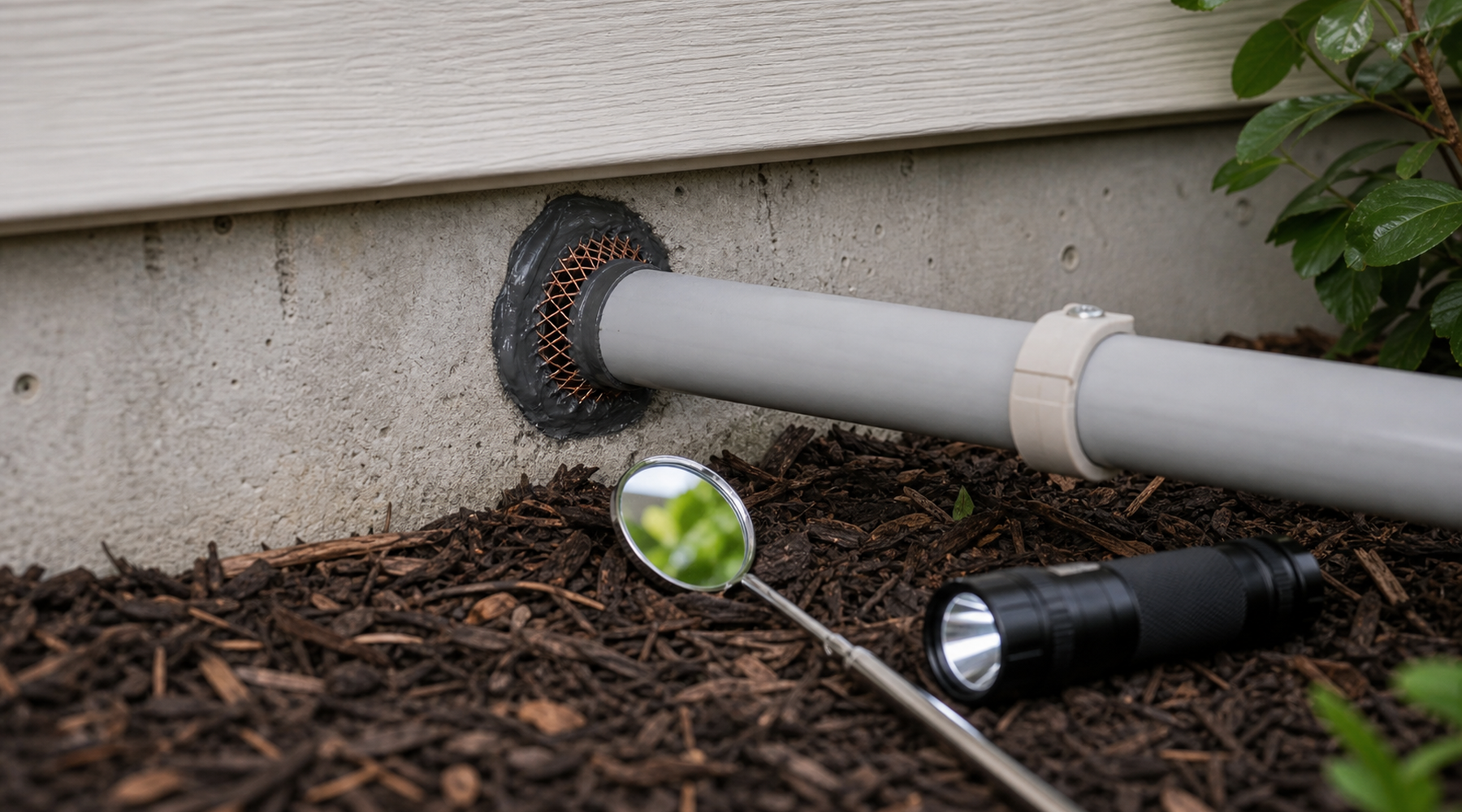
The most reliable mouse entry points in Frederick residential properties are: pipe penetrations under kitchen and bathroom sinks where the gap around the pipe through the cabinet floor is not sealed; weep holes in brick-veneer construction (the small gaps left intentionally at the base of brick courses to allow moisture drainage — 3/8 inch wide, open directly to the wall cavity); utility entry points where electrical, cable, and HVAC lines pass through the foundation or exterior wall; gaps at the base of garage doors where the rubber seal is deteriorated or absent; foundation cracks and gaps at the sill plate junction where the wood framing meets the foundation; and dryer vent openings that lack functional covers or are covered with louvered plastic flaps mice can push open.
Interior evidence tells you where mice are active: droppings concentrated along walls and behind appliances indicate regular travel routes; gnaw marks on food packaging, wood, or wiring indicate feeding and nesting activity; rub marks (dark grease smears) on baseboards near entry gaps indicate repeated travel; and nesting material (shredded paper, insulation, fabric) in undisturbed areas like behind the refrigerator, inside wall voids accessible through utility penetrations, or in attic insulation indicates nesting sites that need to be addressed alongside the active population.
Trap Placement: Why Location Matters
Snap traps placed randomly in a kitchen rarely catch mice — mice travel along walls and run tight to structural edges rather than crossing open floor areas. Effective trap placement puts the trap trigger end against the wall surface with the trap perpendicular to the baseboard at the midpoint of a regularly traveled wall run. Active travel routes are identified by finding droppings, rub marks, or gnaw damage — placing traps at those locations produces catches within the first 24-48 hours in an active infestation. Bait stations used near food-prep areas should be tamper-resistant models for safety around children and pets.
Signs You Have a Mouse Problem in Frederick
The first signs of mouse activity are most often noticed in the kitchen: small, dark, rod-shaped droppings (2-4 mm long) in drawers, under the sink, along the back wall of lower cabinet shelves, and behind or under the refrigerator. Gnaw marks on food packaging — particularly cardboard and plastic bags — are another early sign. Scratching or scurrying sounds in walls or ceilings at night are a sign of active travel routes inside the structure. A faint musty odor without a clear source can indicate mouse urine along travel routes. Any of these signs warrant an inspection — waiting for visual confirmation of a live mouse typically means the population is already established.
How Mouse Control Works
Inspect Exterior Entry Points
Systematic perimeter walk: foundation gaps, pipe penetrations, weep holes, door seals, utility entries, and vents. Findings documented with location and entry-gap size.
Inspect Interior Activity Zones
Document droppings, gnaw marks, rub marks, and nesting material locations to map active travel routes and feeding or nesting sites.
Set Traps
Snap traps placed perpendicular to walls at high-activity locations. Bait stations where snap trap placement is impractical. Follow-up visit scheduled for 5-7 days.
Exclusion and Follow-Up
Entry-point sealing with steel wool and caulk at confirmed mouse entry gaps. Follow-up trap check and population decline assessment. Full exclusion scope presented for structural gaps requiring material installation.
Hearing Mice in Your Frederick Home?
Call (240) 555-0157 or contact us online. Mouse populations grow quickly through winter — early action limits the scale of the infestation and the number of visits needed to resolve it.
Request ServiceMouse Control Questions
How do I know if I have one mouse or many?
The number and distribution of droppings is the best indicator of population size. Fresh mouse droppings are dark and moist; older droppings are dry and grey. Droppings concentrated in a single area (under the sink, behind the refrigerator) suggest a localized infestation with one entry point. Droppings in multiple kitchen areas, plus droppings in other rooms like a basement or utility closet, suggest a larger population with multiple travel routes. Scratch sounds from multiple wall areas at the same time also indicate more than one mouse. Any evidence of nesting material — particularly in the attic or wall voids — suggests an established population rather than a single wandering mouse.
Is rodenticide bait safe to use in a home with children and pets?
Tamper-resistant bait stations that allow mouse access but prevent children and pet access are the appropriate format for rodenticide bait in residential settings. Block bait inside a locked bait station significantly reduces the secondary poisoning and direct contact risks compared to loose bait placement. That said, we typically prioritize snap traps for interior residential mouse control because they produce faster results, provide confirmed captures, and eliminate all secondary toxicity concerns. Rodenticide bait stations are most appropriate in exterior settings, garages, and utility areas where they can be positioned away from children and pets. We discuss the approach with you before placing any bait products.
Will sealing entry points trap mice inside the walls?
Entry-point sealing is done as part of an active trapping program, not as a standalone measure before the population is reduced. When trapping and exclusion are combined, mice inside the structure are caught in traps while new entry is being blocked. Any mice that remain in wall voids after the trapping phase has concluded will exhaust food and water resources relatively quickly — mice cannot survive long in a sealed wall void without access to food and water. Exclusion combined with active trapping is the standard approach, and the sequencing (trap first, seal after population is declining) minimizes the wall-void retention concern.
Related Services
Rodent Exclusion
Full structural exclusion for Frederick homes — steel wool, hardware cloth, and caulk installation at all documented mouse entry points.
Rat Control
Norway rat control for Frederick properties — larger entry gaps, exterior bait stations, and foundation burrow management.
Attic Pest Control
Mouse nesting inspection and treatment in attic insulation — where populations often establish undetected for months before interior signs appear.